Another look at Milkweed
Common milkweed is sometimes dismissed as a messy weed growing in old fields or along roadsides. Its leaves are bulky and full of sticky sap. Its flowers pale in comparison with showier blooms. And its seed pods split open to send thousands of winged seeds into new pastures. Look again. This remarkable plant is tenacious, growing where many other plants would wither. Its heft makes it hardy, its sap protects it, and its fragrant flowers fuel monarchs. Its abundant, gossamer seeds dance like fairies in the late autumn sun. No wonder I keep coming back for another look.
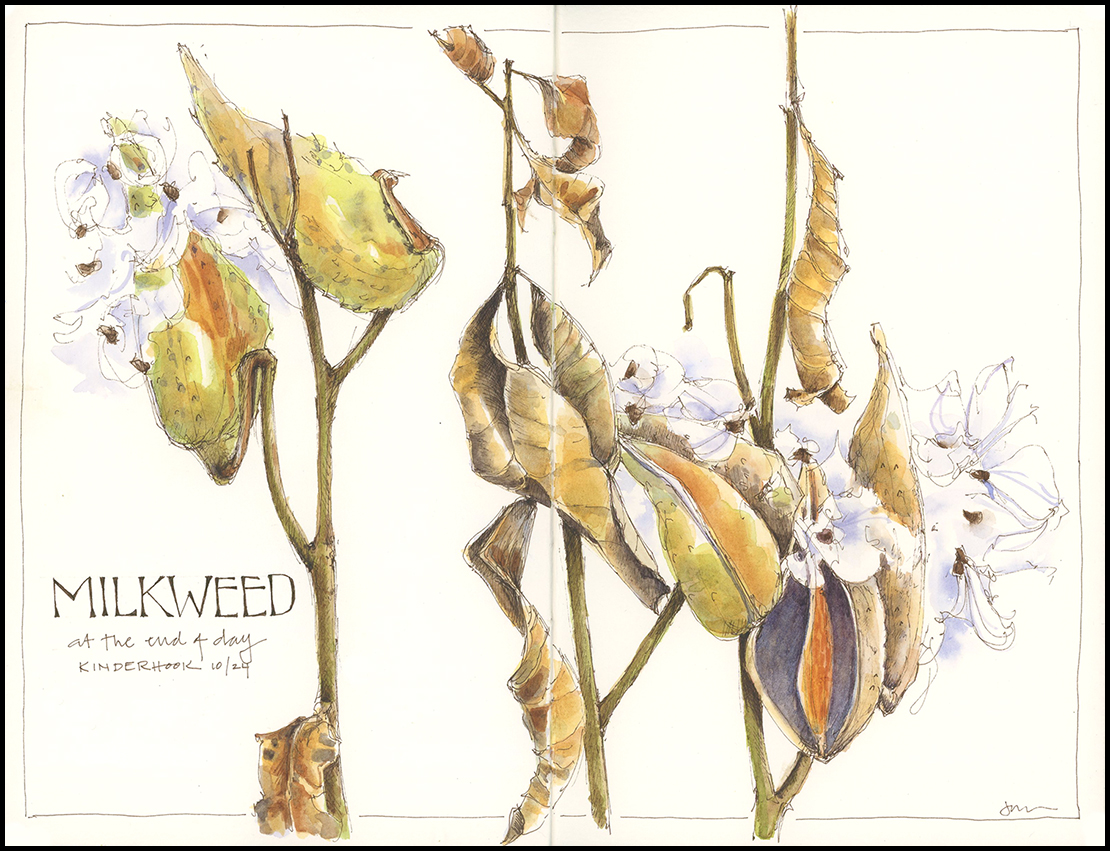
Tips and Techniques- Drawing milkweed demands careful observation, but once you get the hang of how it grows it’s a really fun fall subject. Notice the curl of it’s opposite leaves, it’s spiny pods, and the fluff of seeds breaking out. If you’re not adding a background, you’ll need to add some color to the silky seeds to make them stand out against the white of the paper. A loose wash of any pale shadow color will do the trick. And while you’re at it, carry a few seeds home and plant them in a sunny place where they might take hold and attract monarchs in future years.


Amazing what you do to glorify the weeds the rest of us pull from the yard! Another beauty.
Thanks so much! Glad to give you another look!
Whoever named the milkweeds “weeds” failed to take another close look! With over 200 species, all of these plants can truly be described by every fascinating adjective in the English language. Definitely not surprised you’ve zeroed in on the ‘so cool’ seed stage of growth, from the pods to the gossamer connected seeds. Having studied and written about milkweeds, I’m completely smitten with your post and gorgeous illustrations highlighting the open pods bursting with seeds ready to fly and the twisted dried leaves. You’ve captured this species perfectly! Thanks so much for sharing, Jean!
Nice to hear that you have studied and written about milkweed. I find this is the best stage for drawing it.
😊
I do love the way you use very faint color to illuminate whites in your paintings!
They really help to bring out the whites. Thanks much!