
Frozen
With much of the U.S. locked in single‑digit temperatures and snowstorms, it felt like the perfect moment to embrace the cold and venture into the depths of our freezer— which had evolved into a gigantic, cluttered heap of unidentifiable objects. I decided to make the most of this otherwise uninspiring chore by sketching my findings, partly for posterity and partly to prove I survived the expedition. When I unearthed seven bags of peas and corn, I knew I’d made the right call. And so, at the risk of oversharing, here’s the inventory. Not bad for a frigid afternoon’s work.
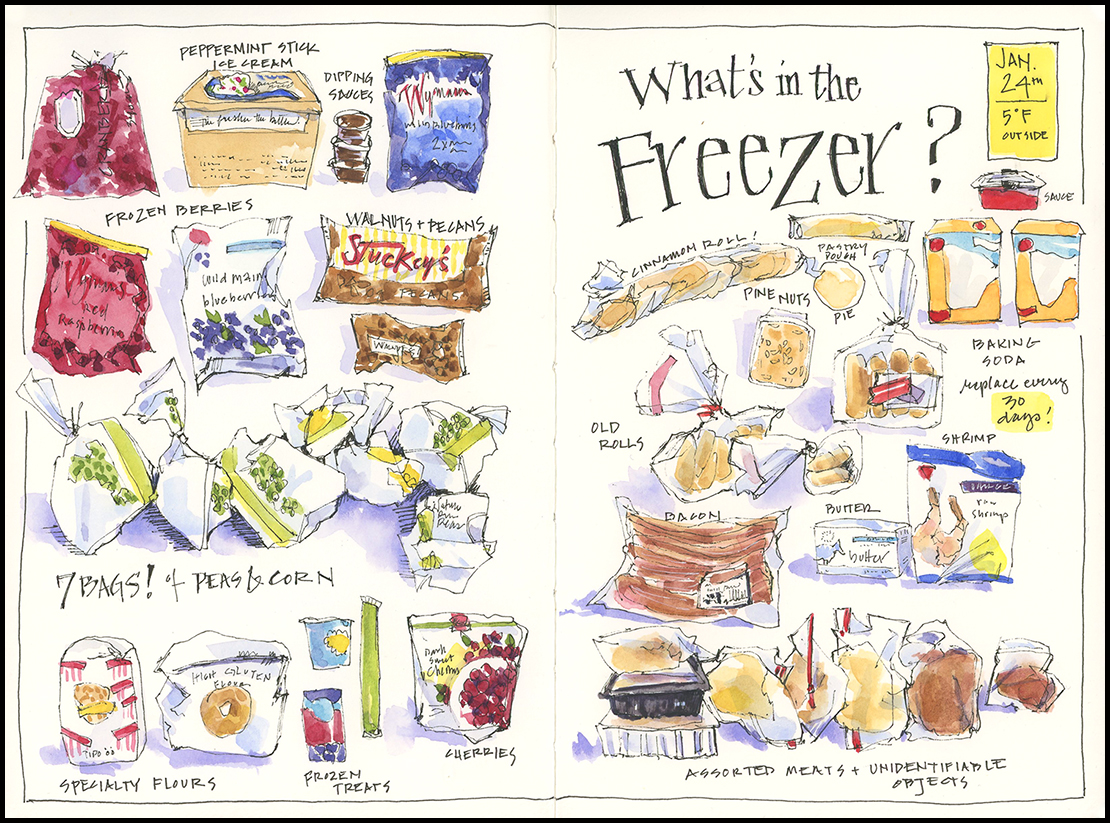
Tips & Techniques- If you live in a cold part of the world, you may find it challenging to keep up a nature‑sketching habit during the winter—I certainly do. Years ago, I decided to broaden my subjects at this time of year. Better to sketch frozen food than to sketch nothing at all. Along the way, I discovered that drawing different kinds of subjects has actually expanded my skills as a painter. Perhaps your refrigerator is calling.
Sketching Through the Winter, online at Winslow Arts Center, starts this Thursday, 1/29. Join me!
Snow Caps
It felt so great to get outside to sketch yesterday afternoon, even in snow. I’ve painted these flowers in summer, fall, and now winter. They look rather handsome in their snow caps, don’t you agree?
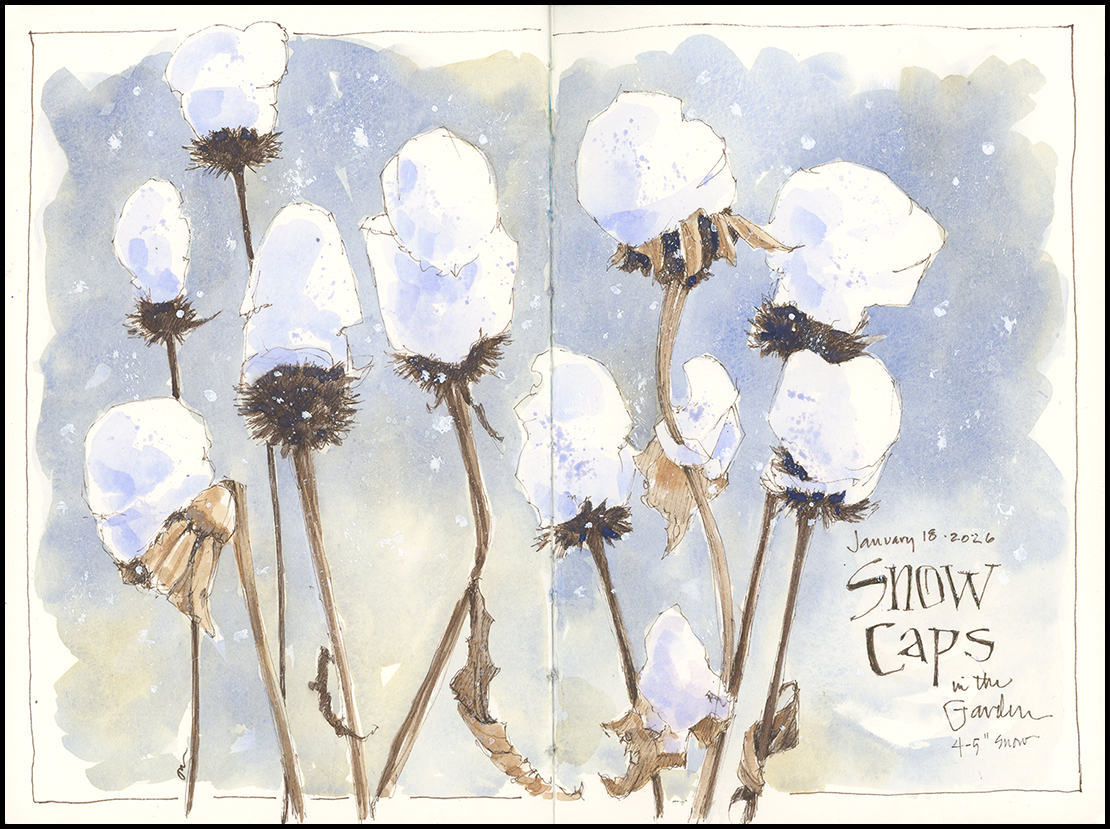
Tips & Techniques– Take the bare minimum of art supplies– pencil or pen and sketchbook– outside when it’s cold, and choose a subject that you can sketch quickly. I used a Micron 005 sepia pen in my Handbook Journal Co.140lb watercolor journal. Inside, I painted with QoR watercolors, using predominantly cobalt blue and raw sienna for the blue gray sky, and cobalt blue and dioxazine purple for the snow caps. Choosing two different gray mixes helps to set them apart. And although there was very little color to speak of, mixing a lively gray made all the difference.
NOTE: My previous post incorrectly listed dates for my Drawn to Nature workshop at Madeline Island Art School. The correct dates are JULY 20-24, 2026.
Zooming Out, Looking Ahead
The “research phase” has officially begun for my summer workshop, Drawn to Nature, at Madeline Island School of the Arts on Lake Superior, July 20–24, 2026. I’m starting with the wide view—looking at the Great Lakes as a whole—before narrowing in on Lake Superior and the many things that make Madeline Island so special.
Drawing a map always helps me focus. It gives me a sense of the land, water, and geography that shape a place. From there, I begin layering in plant communities, wildlife, and human history—the roots from which cultural traditions, foodways, and arts grow.
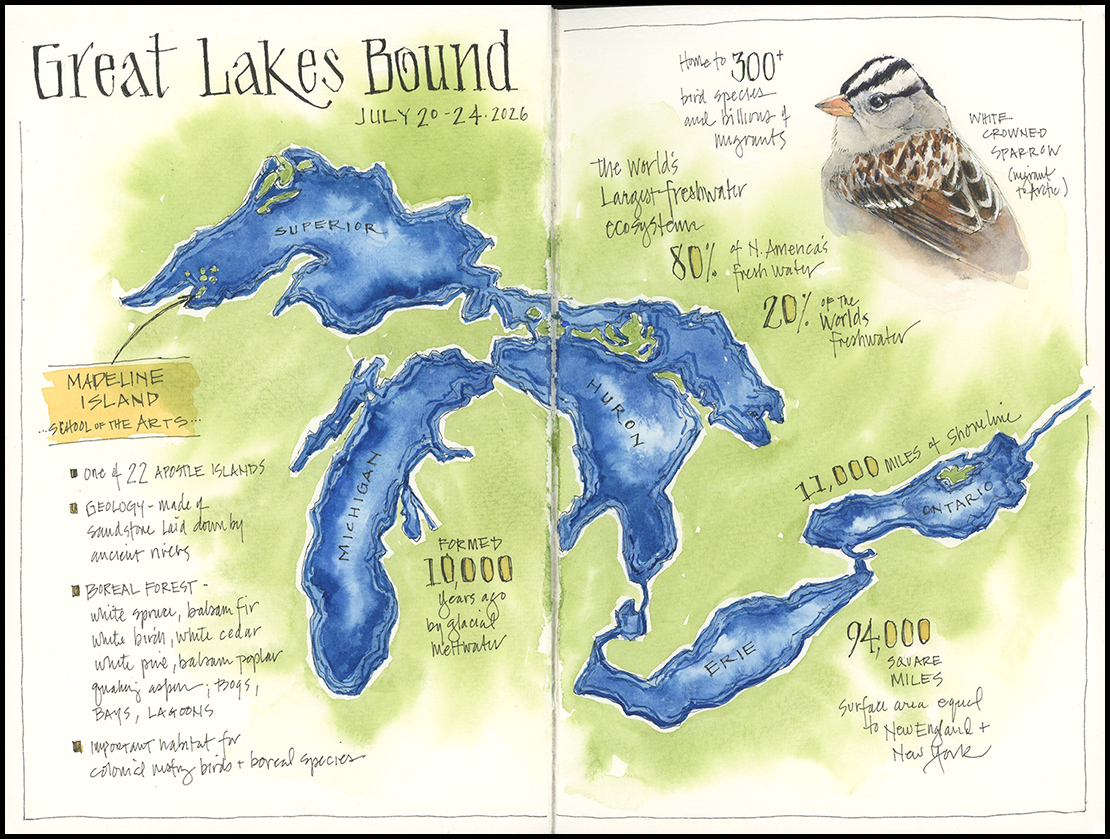
I love weaving all of this into a sketchbook, and I invite you to join me for the workshop as we explore different ways to capture the beauty, wonder, and diversity of the natural world in your own sketches. Learn more and register here.
Winter Birches
“It was one of those winter days that suddenly dream of spring.” – Shirley Jackson
You know those days—when the sun comes out and the wind drops, when you can see a bit of color in a shadow, and hints of grass show through melting snow. When geese are flying overhead in magnificent noisy flocks. We were lucky to have a few days like that recently. Not warm enough for a real thaw, but welcome just the same.

Tips and Techniques– Use the negative shapes between trunks and branches when drawing trees. Those spaces will help to guide you as much as drawing the limbs themselves.
If you are looking for some painting inspiration, join me online for Sketching Through the Winter, starting Thursday, January 29 at Winslow Art Center. We’ll paint birches, birds, and other fun things to keep you focused until March.
Nests Nine and Ten
I sketched 10 bird nests in the last year. Some with just ink, some with watercolor. Some from collections, some discovered in the wild. Does 10 seem like a lot—or like it hardly scratches the surface?
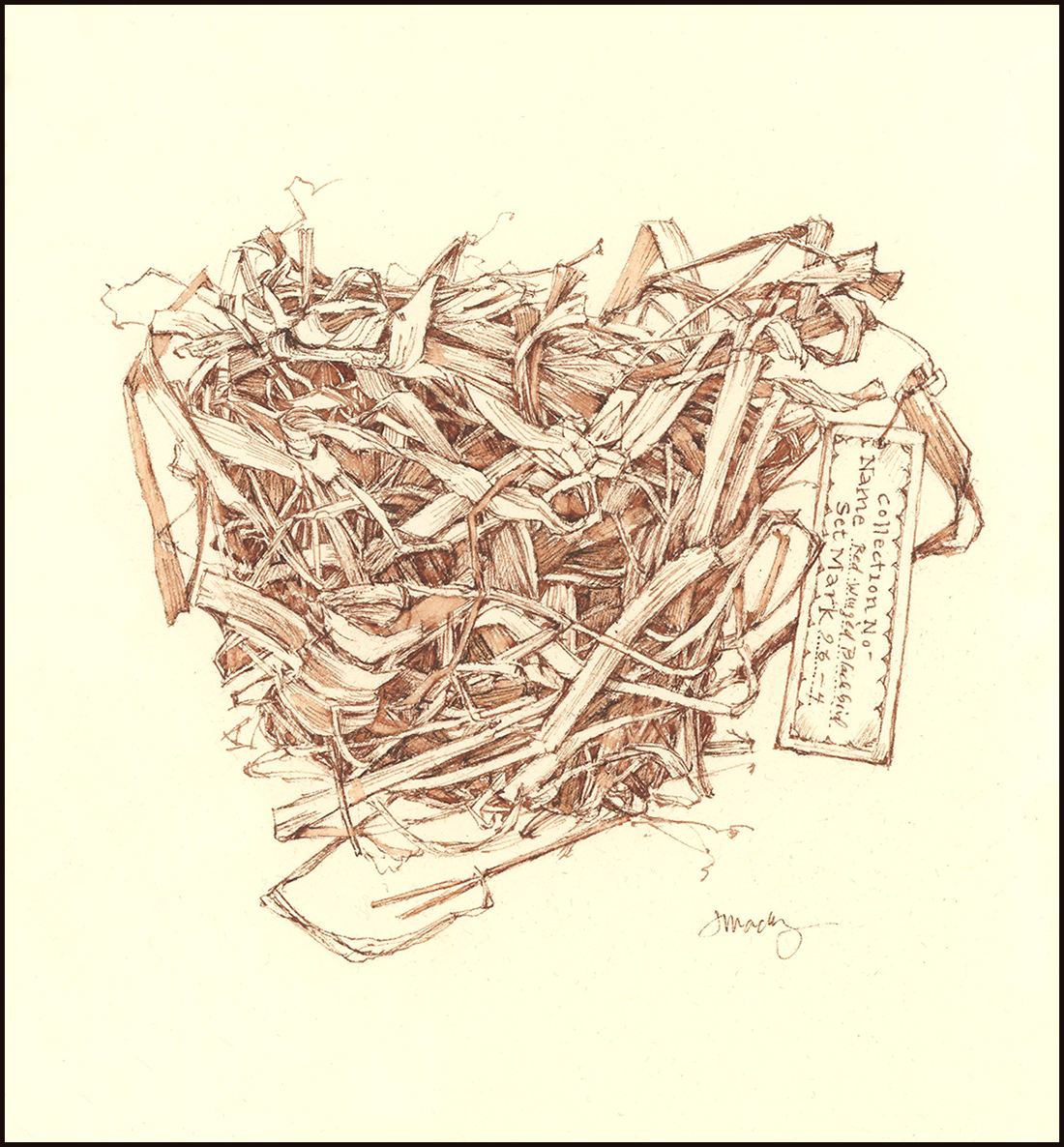
Nests nine and 10 are drawn from the same Red-winged Blackbird nest, collected in 1896 in Phelps, New York. I discovered it during a recent visit to the New York State Museum ornithology collection. I love these nests for their intricate weave of cattails and marsh grasses and for the way the larger strands illuminate the complexity of the structure.
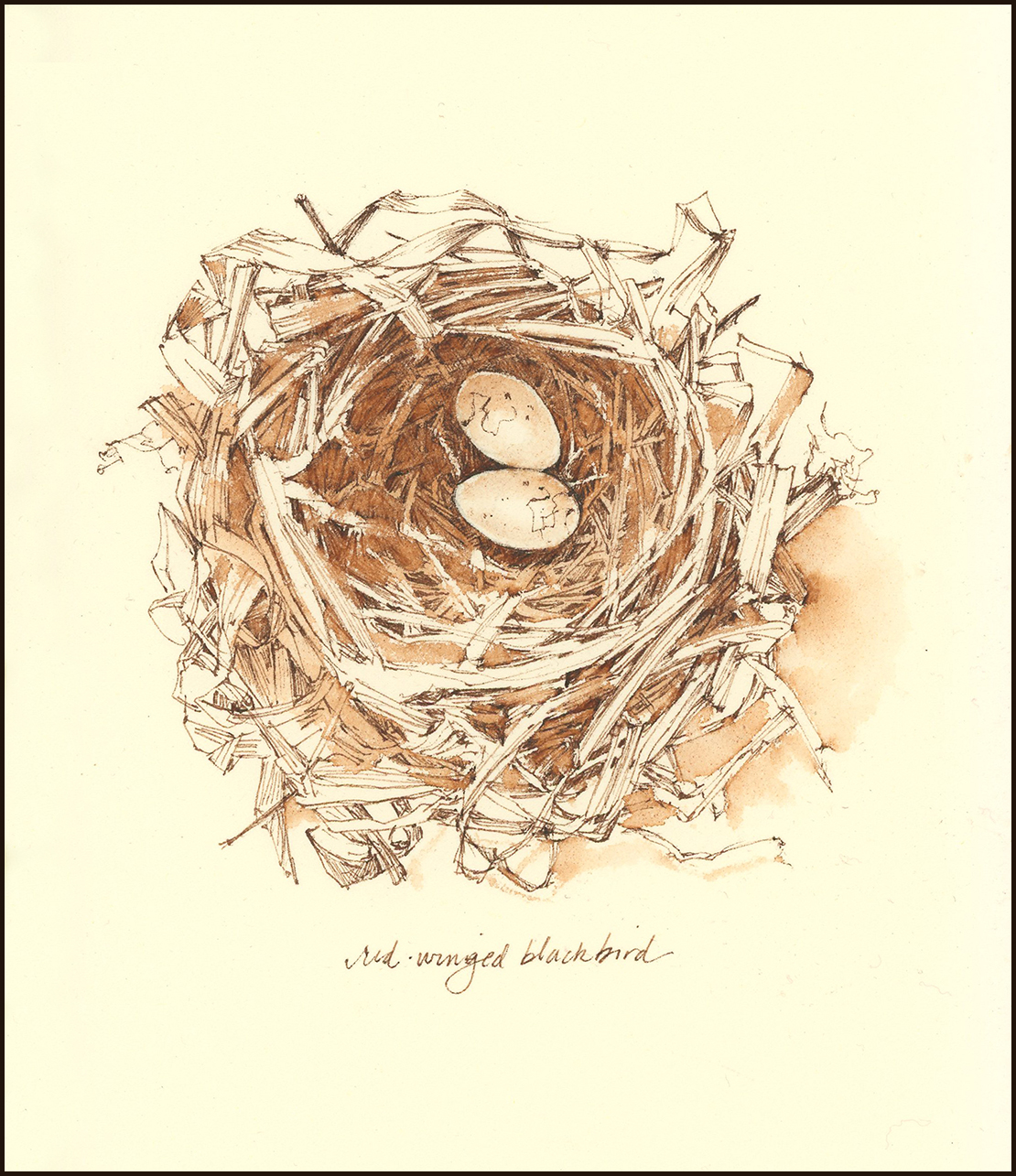
I sketched nest A with my Ellington fountain pen using Jacque Herbin writing ink. The ink didn’t always flow smoothly, so I read up on inks (Geesh- there’s a lot to know!) and then bought some Diamine fountain pen ink in ochre and chocolate brown. Nest B is with the ochre, and I’m happy to say that this ink flowed nicely. When wet, the ink became warm orange-brown. It’s a bit more orange than I expected, but I like the way wetting it added a more evocative feel to the nest. I look forward to more experiments with it…perhaps on nests 11 and 12?
The Gift of Time
I had a lot of fun drawing art supplies this week. During the busy holiday season, it’s been great to take time to sketch something every day. As I worked, I thought about my favorite tools, but also about how much more important time is to developing art skills. And so, while I hope that Santa slips a new paint brush or pen into your stocking, my greater wish is that you find time for regular creative practice in the New Year. Take a class, treat yourself to a weeklong workshop, or just make time for artwork every week. It will be one of the best presents you can receive.
Wishing you a holiday season filled with wonder! Thank you for following Drawn In—your support is truly a gift to me.

Tips and Techniques– Drawn with Ellington Pen’s Alpine Rose EF fountain pen with Jacque Herbin writing ink in an Italian-made journal with cream, laid paper. I find that the texture of this paper slows the drawing process, as the fountain pen doesn’t glide across the paper the way it would on smooth paper. I like the results, but I’m looking forward to doing another drawing like this in color in my watercolor journal.
Join me for my next online class, Sketching Through the Winter, to sketch your own art supplies…plus some other fun subjects. Also check out two in-person workshops next June and July on the Workshops page.
Winter’s Cache
Last week’s snowfall coated nearby fields and hedgerows and, lucky for me, left little clumps of snow atop of bird nests that were formerly hidden. I waded into the shrubby field adjacent to our house to have a look around. It didn’t take long before I found several nests amidst the waist-high goldenrod, thorny vines, shrubs, and pioneer white pines. This one had been repurposed by mice as a larder of bittersweet and rose hips. Though not an unusual practice, it was a rather colorful surprise and quite worth the cold feet and hands.
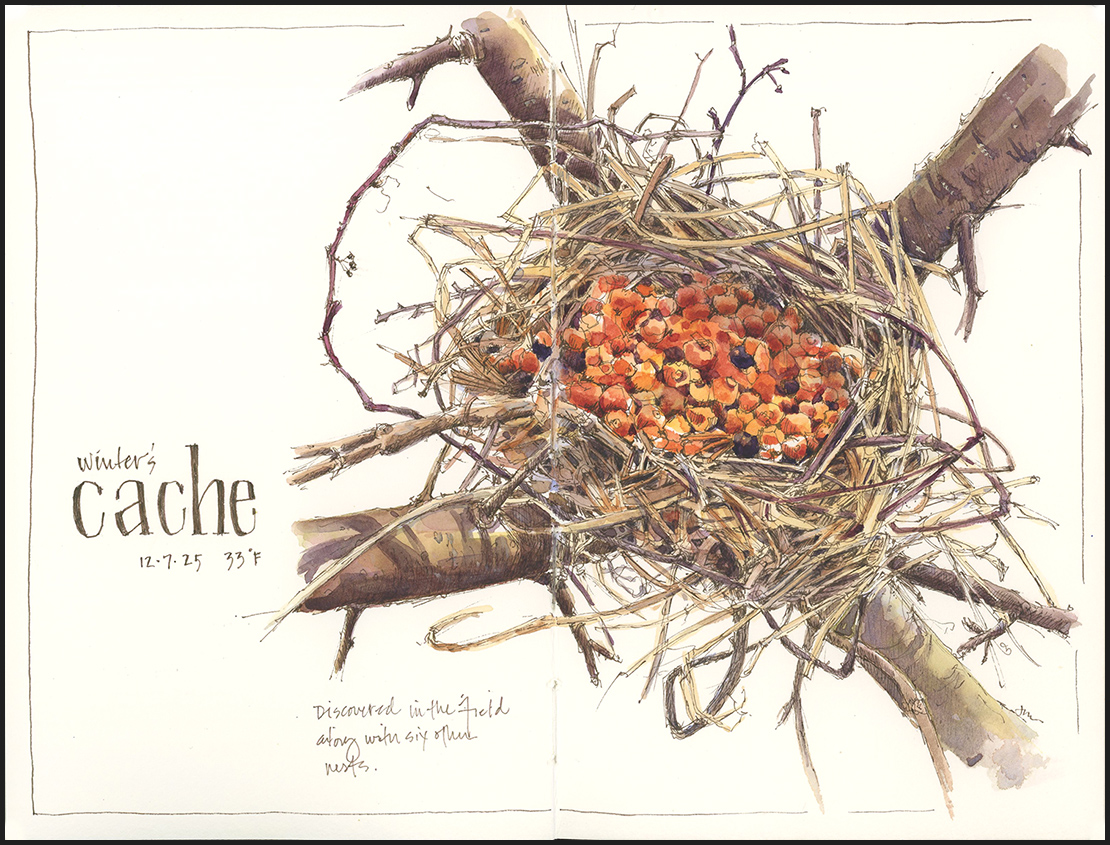
Tips and Techniques– Though it may sound cheeky, my advice this week is wear wool socks. I didn’t, and it meant that I couldn’t last outside for as long as I would have liked. Still, I always appreciate the spark of inspiration and discovery that come from getting out of the house, even in winter. (Materials: Handbook Journal Co. 300 GSM watercolor journal, sepia Micron 005 pen, watercolor)
Stay tuned! Don’t let the cold months ahead dampen your sketching habits. Next week I will officially announce a new online class Watercolor Sketching Through the Winter. I hope you’ll grab your sketchbook and join me in late January and February for inspiration and techniques for sketching both inside and out throughout the winter.
On My Desk
Feathery milkweed pods sit on my desk this week next to a stack of field guides, a large tome on the beginnings of modern natural history, and flyers for holiday strolls. Rounding out the desktop: pens, ink cartridges, notes with art class ideas, receipts, and the usual assortment of brushes, pens, and paints. Outside my window: gray, cold December. Tis the season for messy desks, indoor confinement, and more project ideas than time.
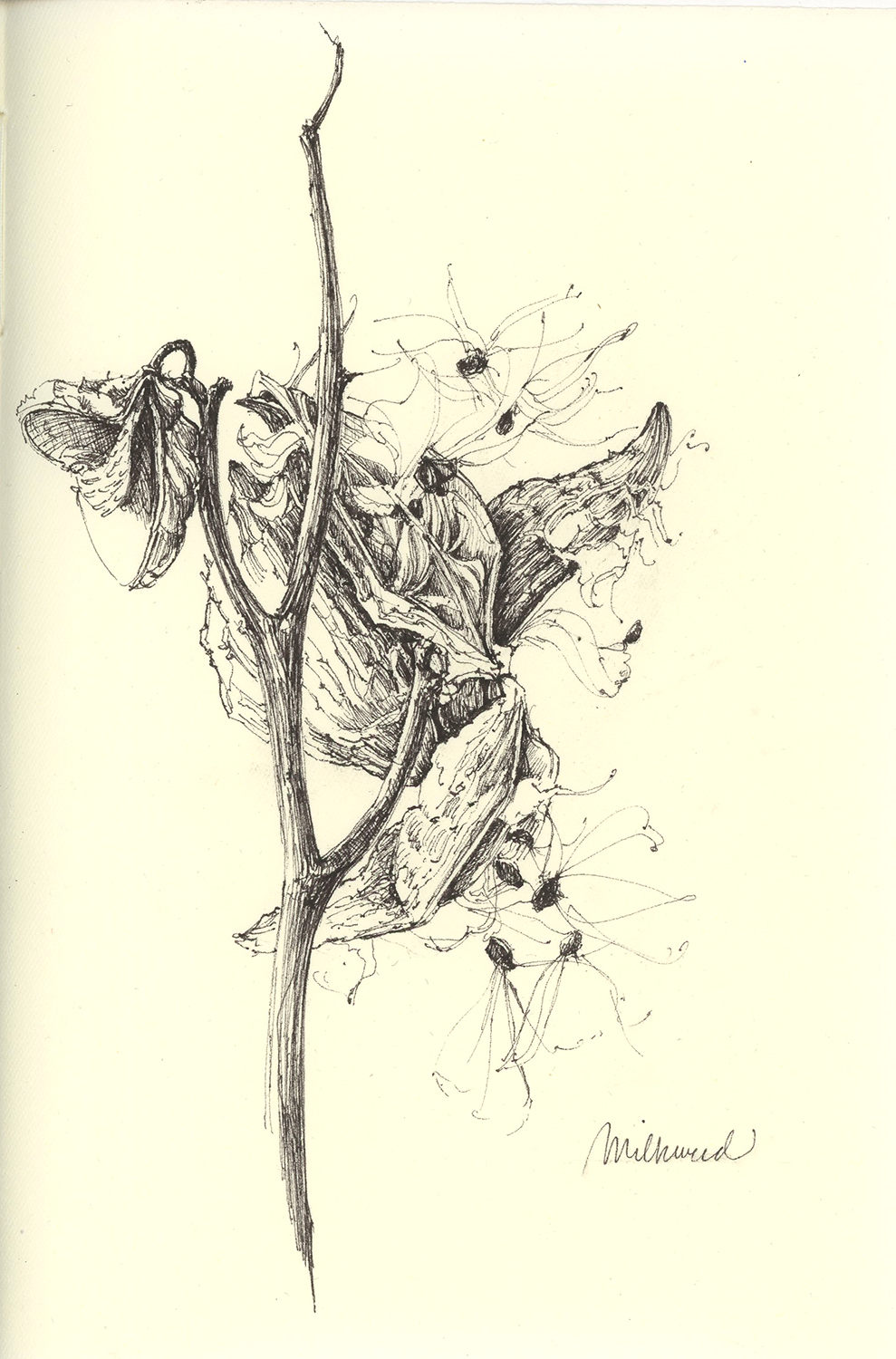
Amidst the clutter, I’ve been putting a new fountain pen with an extra fine nib through the paces to see how it performs for drawing, light washes, and handwriting. Ellington Pens asked if I would like to try their Alpine Rose fountain pen and I’m glad I agreed. The EF nib was not scratchy, and the ink flowed smoothly and dried quickly, which meant I didn’t smudge it. It also rewet beautifully when I added water to create a light wash. The pen has a nice weight to it and feels good in hand. I especially liked it for writing, which you don’t see here, but it will also be handy and versatile whenever I can carry only a pen and water brush.

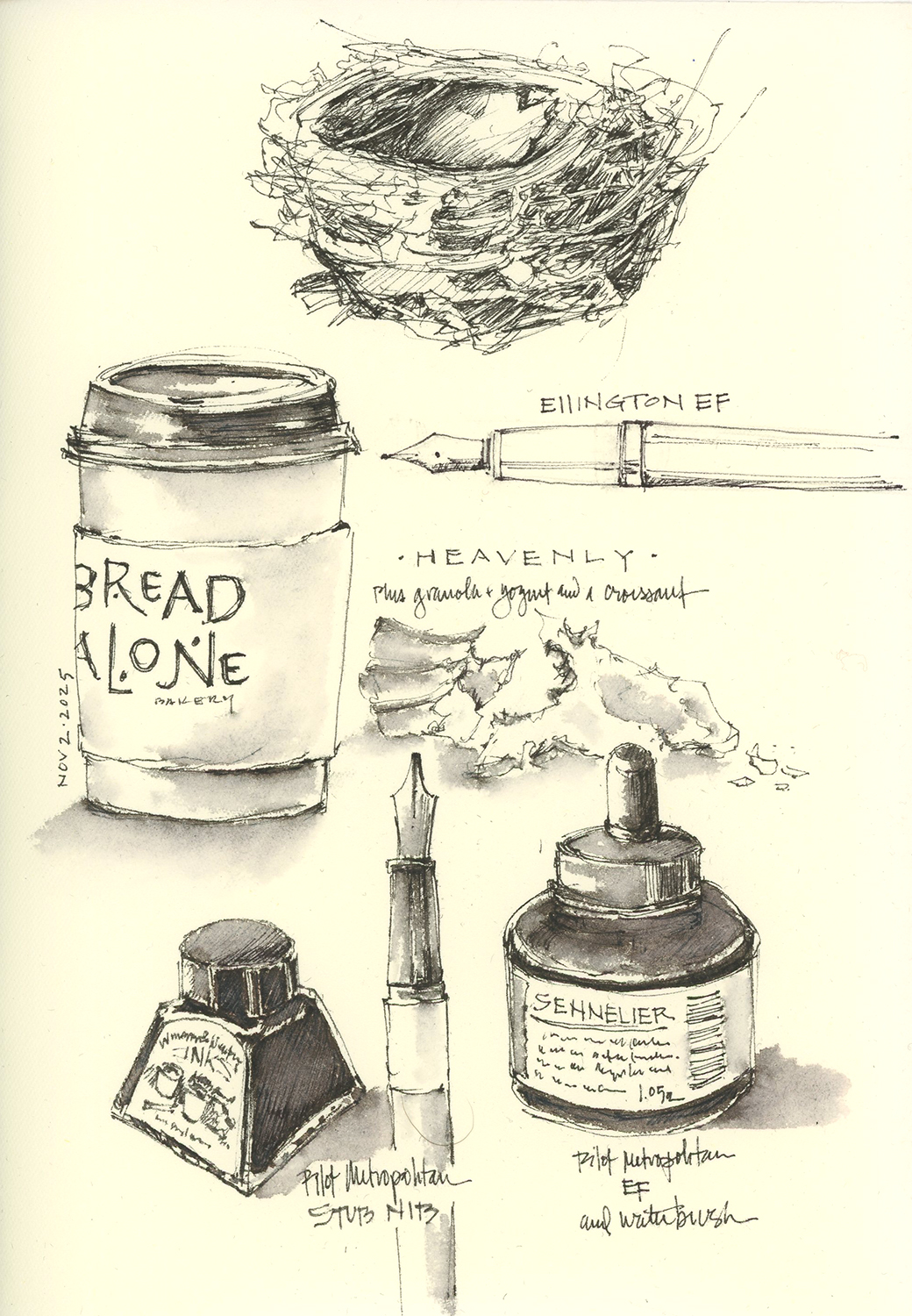
If you or someone you know enjoys fountain pens, or if you want to down the rabbit hole of inks, journals, pen care videos, and company history, you can find it all here: https://www.ellingtonpens.com/.
Artwork (done in my journal from Italy with cream paper):
1. Milkweed
2. Rosa sinensis foliosa copied from an engraving done by Cornelus Bloemaert in 1633, from the book The Eye of the Lynx: Galileo, his friends, and the beginnings of modern natural history by David Freedberg (2002). I could write an entire blog post just about doing this piece. It was fascinating to try to replicate the line work and figure out how the engraver did it.
3. Quick pen test sketches
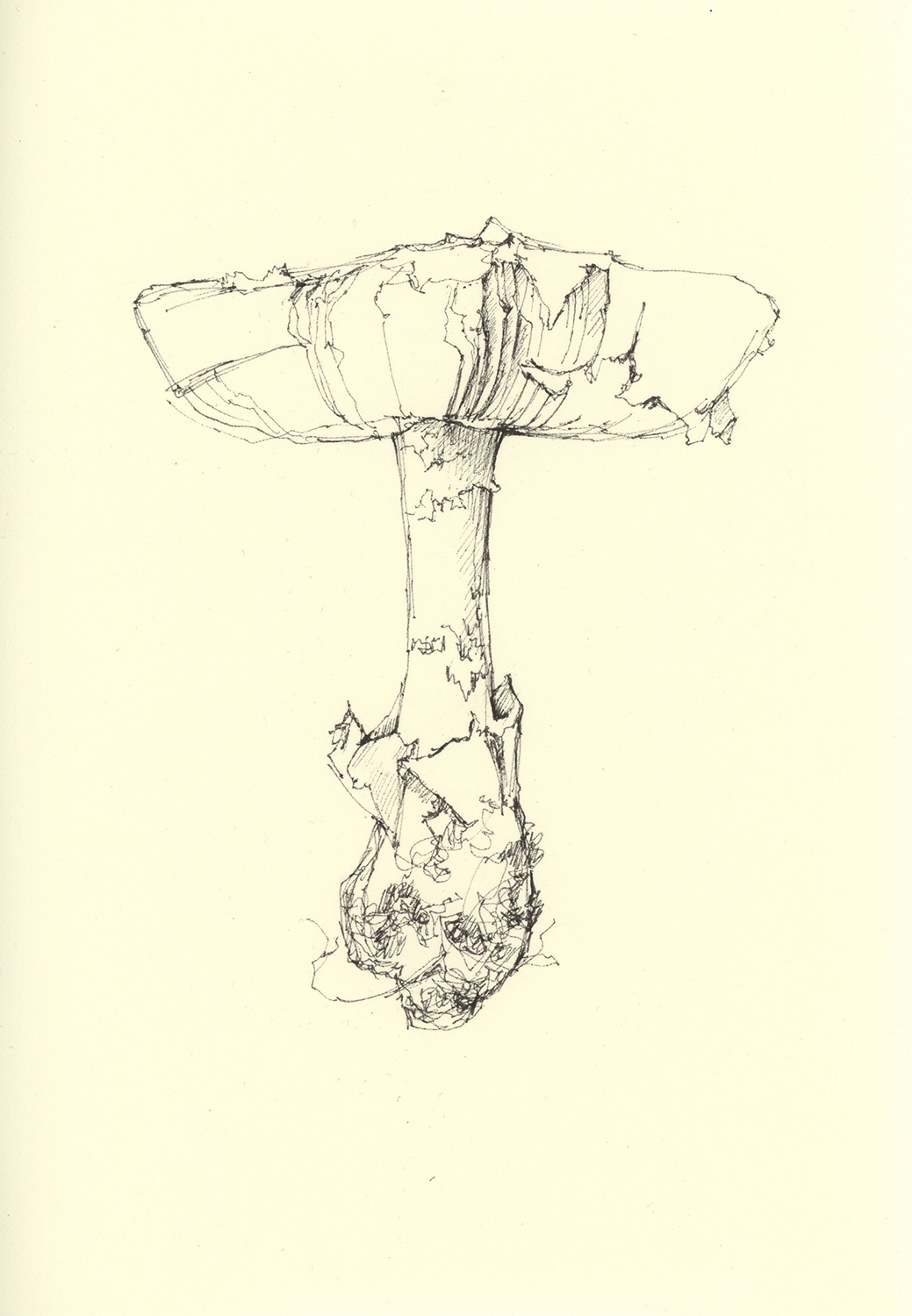
4. Amanita mushroom- It’s always good to practice sketching light subjects in ink.
Cold Day, Warm Light
Though no longer cloaked in their brilliant red of June, poppy seedheads have their own naked beauty in November. I was so pleased to sketch these, backlit by the afternoon sun, at the Botanical and Nature Sketching Retreat at the Ashokan Center a few weeks ago. I didn’t have time to paint them there, but thanks to Faye of Flowers by Faye I got to take them home. Now, the seedheads sit on my windowsill where, even as the weather turns cold, they continue to bring warmth to the room and remind me of that inspiring weekend.

Tips & Techniques– Do you ever have sketchbook pages that are left undone? This one took me several weeks to finish, but my general advice is not to leave them for so long. It’s too easy to lose inspiration, or to simply move on to the next thing. As a general practice, I try to finish every page I start within about a week. This keeps me engaged and interested, ensures that I get to the satisfying final stages of each painting, and keeps me sketching from week to week.
Grateful
Sending you good wishes, a bit of November beauty, and gratitude on this Thanksgiving holiday! I’m grateful to you for taking time in your life for art and for your kind “likes” and comments on my posts. It’s a strange thing to send my sketchbook pages out into the world each week and not really know where they go. I’m grateful to those of you who I’ve met in person or online who thank me for being on the receiving end. I’m also grateful for the wonderful artists who take my classes— I love teaching, seeing your artwork, and getting to know you. It’s truly a pleasure.
And now, I’m off to run a Turkey Trot, celebrate with a donut, and later join family for a fine meal together. Enjoy the day!


 Drawn In