Portugal, Part 3: Cultural Heritage
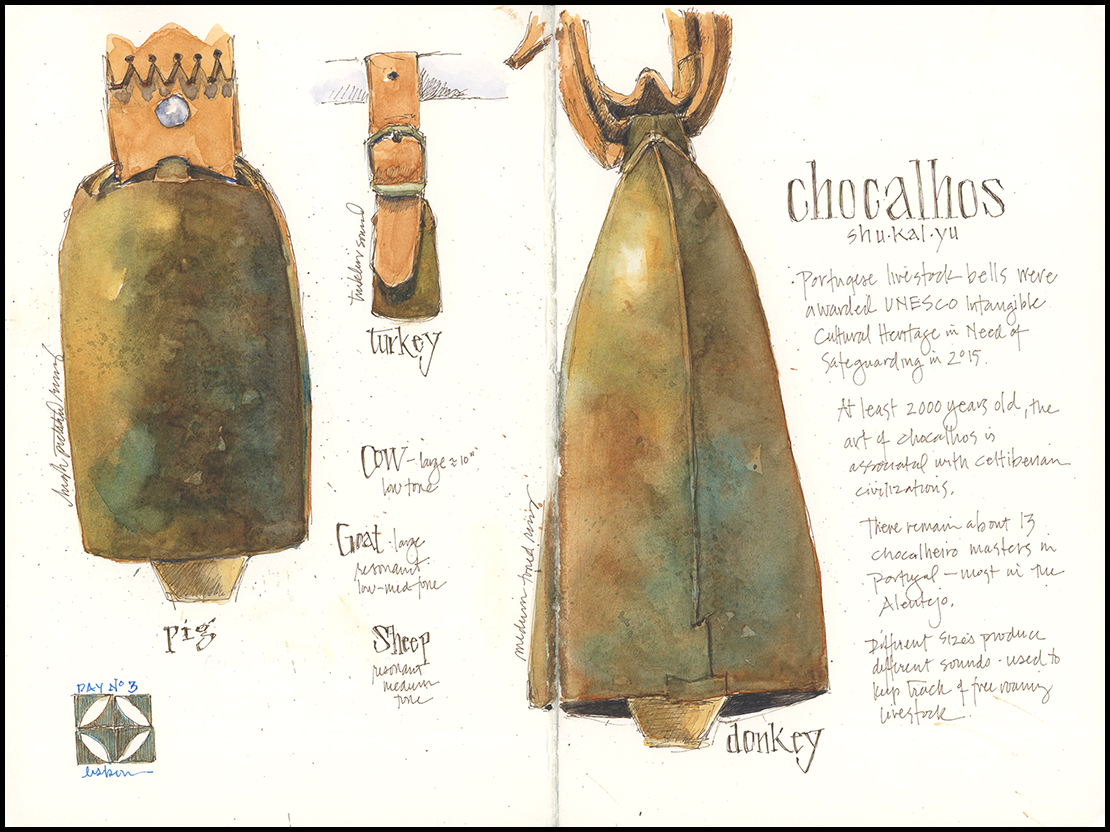
In the Alentejo region of Portugal, the sweet clanging of livestock bells became part of the soundscape of our workshop at Sofia in Monsaraz. Sheep grazed under the olive groves just beyond our hotel, and we passed them each day on the way to and from the workshop site. I had read about these bells before the trip, so I was thrilled to find an exhibit about them at the Museum of Natural History and Science in Lisbon. Chocalhos, the traditional livestock bells of Portugal, are UNESCO listed for their Intangible Cultural Heritage. This hand-crafted art has been passed from generation to generation for 2,000 years. Different sizes and tones are made for different animals, helping people track free-roaming livestock. Unfortunately, only 13 master chocalhos makers remain, and none are young.
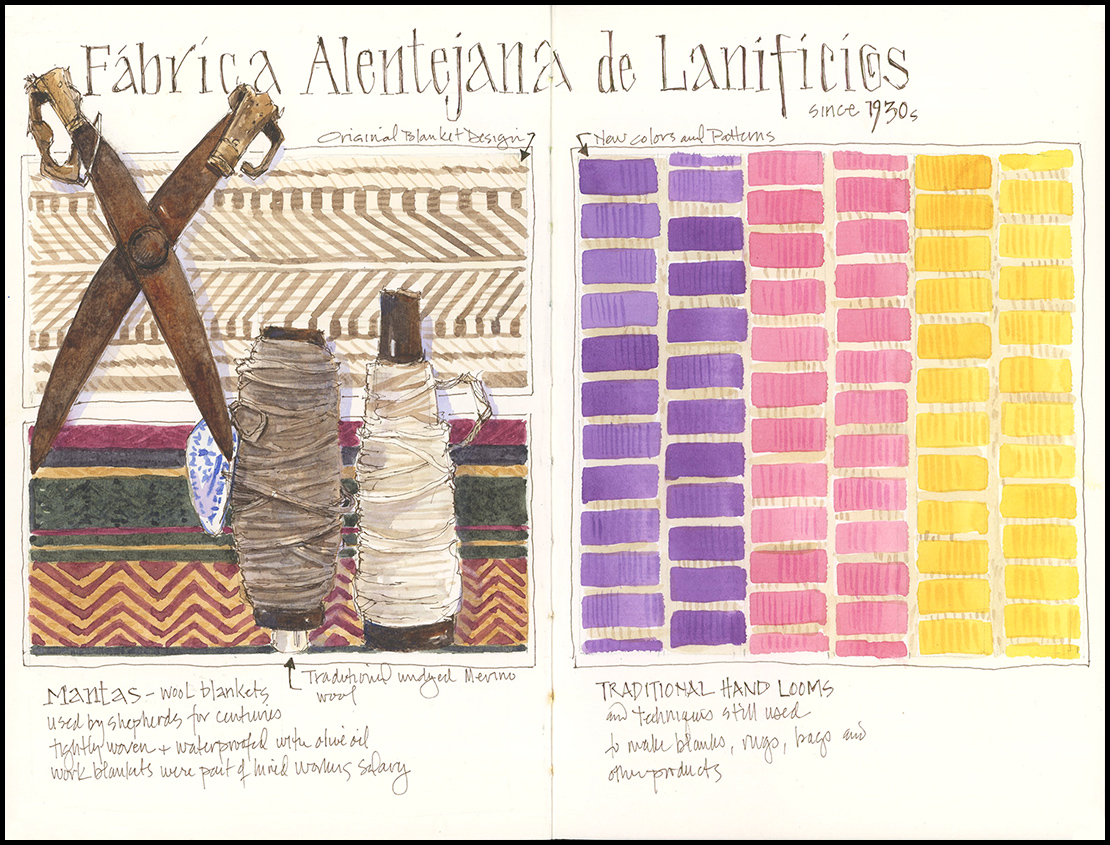
That same sense of heritage carried into the patterns we saw in Portugal’s textiles. At a 100-year-old factory that makes hand-woven blankets and rugs, I especially enjoyed seeing the original natural wool patterns and tools on display. We also watched weavers at work with far more complex combinations of color and pattern.
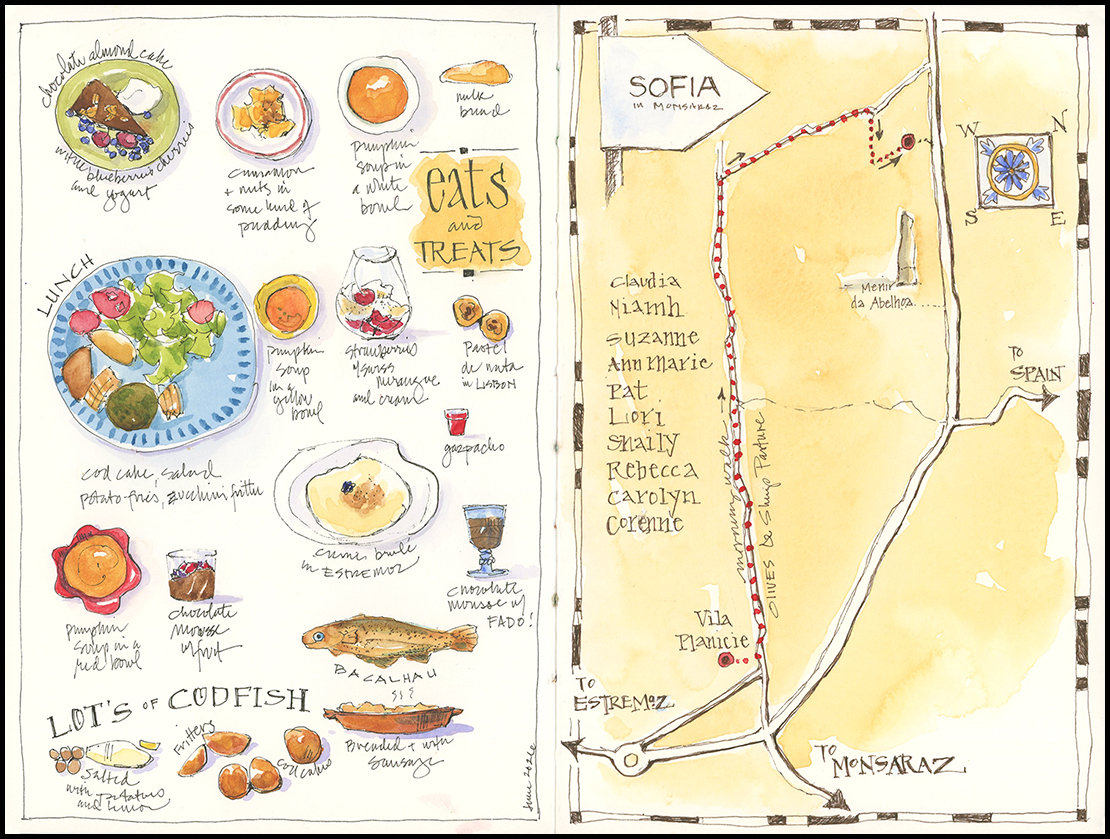
Food, of course, is another vital part of cultural heritage. I didn’t have much time for full food sketches, so I made tiny drawings to help me remember what we ate: lots of codfish, savory pumpkin soup, and many indulgent desserts.
Tips and Techniques: Don’t shy away from painting different textures and subjects, especially when traveling. It will force you to experiment with color mixes and painting techniques, and that kind of practice will strengthen your skills.


The textures/tones you have achieved on the bells are just wonderful – I could almost touch them!
I had fun with the bells! Thank you!
I just love the objects you choose to paint/sketch. I would have thought, Huh, brown and gray bell collars, ho-hum. But you have captured the hand-crafted textures, the interesting joinery, the blues and reds. My photographer’s eye is just too literal – you are teaching me to see COLOR. Yay!
I suppose that when you paint something, you really have to look at it carefully. And it takes a while. For photography, you see something that draws you in but then start to notice it even more when working with the photo. At any rate, both are good!
Love these pages Jean. I love Portuguese cuisine and your sketches brought back memories of when my mum used to cooked bacalhao (particularly during Lent) and also my favourite all time dessert … creme caramel!
The comment below is mine Jean. I’m new to WordPress and didn’t mean to post it with an avatar name.
Love these sketches, Jean… I can almost hear those bells!
Lovely!!