
Opportunity Knocks
Opportunity knocked this week in the form of a pileated woodpecker that died on the roof outside my office window. Cause unknown. The chance to study and paint it lay before me – literally. How could I pass it up? Would you? There was only one thing to do: climb out the window, retrieve it and get sketching.
It’s quite a privilege to hold a bird like this in your hands, and just a bit grim. Keeping it without a permit would be a violation of the Migratory Bird Treaty Act, so I worked on the page, took a few reference photos, and laid it to rest in some nearby woods.
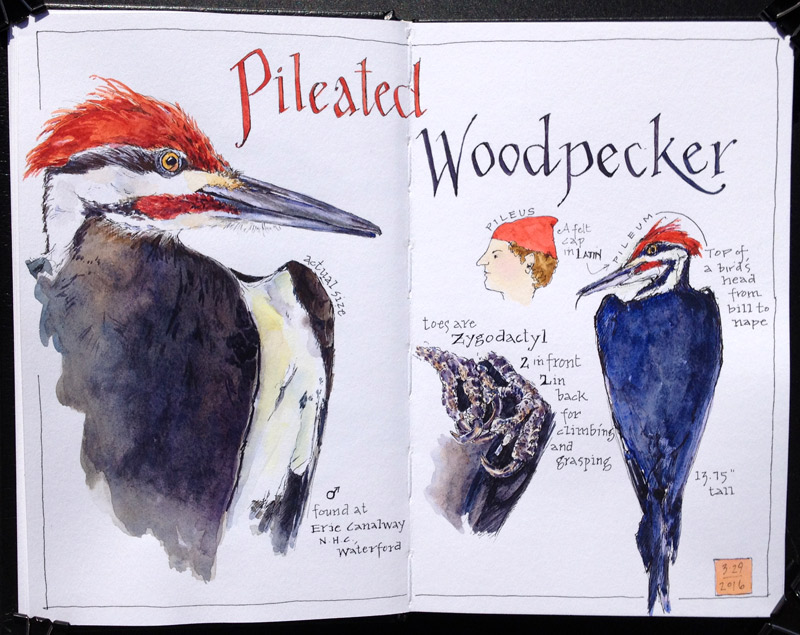
Click to view larger. Sketches and text done with Micron pen 02 and 005 pens and watercolor in Stillman & Birn Beta journal.
What’s in a name? I was curious about the name “pileated,” so I did a little research and learned that it means having a crest covering the pileum, which is the top of a bird’s head from bill to nape. The word comes from the Latin word pileus, which was a brimless felt cap worn in ancient Greece.
Welcome and thanks to all the new followers of Drawn In who found me through Turning the Pages: A Look at the Sketchbooks of Artists. Sorry to start you out with a dead bird—I promise to mix it up in the coming weeks!
Orchids
Let’s just say, it’s going to be hard to go back to beets after painting orchids. My recent trip to Washington included a visit to the US Botanic Garden—a lush and beautiful oasis amidst a busy city. More than 5,000 specimens of orchids are included in its collection and a special exhibit featured many of them—to the awe and delight of a steady stream of visitors. I found a few quieter corners in which to paint, using just a simple set of watercolors and a waterbrush (Pental large size, with a surprisingly pointed tip for finer lines). What a delight to spend a few hours with such exotic and beautiful plants!
Orchids in Focus is on display through April 17, 2016. If you’re in the neighborhood, don’t miss it.
100!
This is my 100th post. Thanks for being along for the ride! If you enjoy getting my art in your inbox, consider helping me reach farther by sharing my blog with your network. And please leave a comment if you have feedback or questions!
Hand Lettering Workshop
I’m excited to share that I have a workshop coming up in April:
Hand Lettering for Sketchers
Sunday, April 10, 2016 • 1-3pm
Clinton Art Gallery, 20 East Main St., Clinton, Connecticut
Visit the Workshops page for details!
Old Birds
The lifespan of most small birds is short—just a few years and then they’re gone to predation, disease, or hazards. These birds were given a second life, of sorts, after being “collected” in the 1800s and placed on display at the National Museum of Natural History at the Smithsonian in Washington, D.C. During a recent visit I got to see about 500 birds on display—a minute fraction of the 640,000 specimens housed and maintained by the museum, which has the third largest bird collection in the world. How I would love to look behind the scenes! But I was happy enough to sketch these old favorites.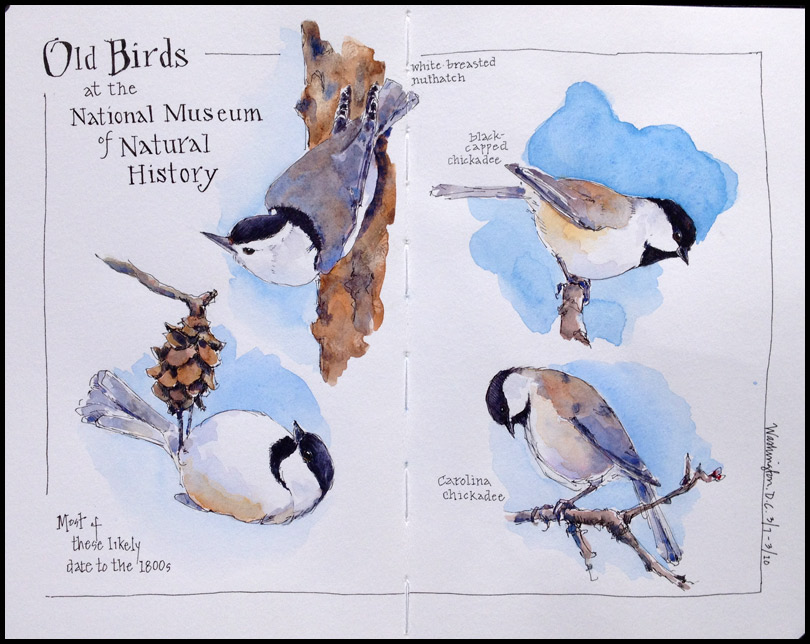

Beautiful Ending
There is a point when I am midway through a painting that I have to hold my breath and hope I don’t wreck it. That’s especially true when I’ve invested in a careful drawing as a base for the watercolor. So I’m especially pleased to come out the other side of this piece with a beautiful ending. (See last week’s post for the beginning.)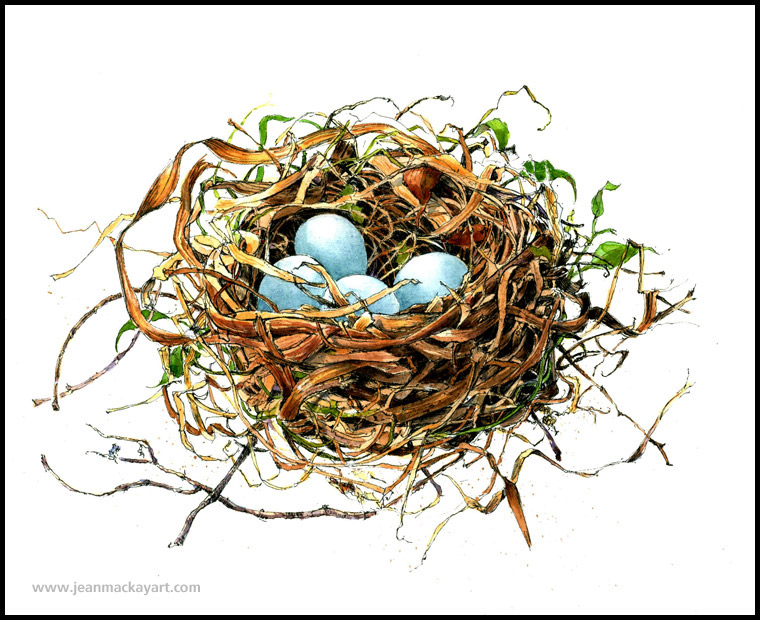
Beautiful Beginning
When I am drawing a bird’s nest, I am always mindful that the birds who built it have given me a beautiful beginning. The woven strips of bark, grass, pine needles, twigs and finer nesting materials lend themselves to lovely lines. I love rebuilding the nest on paper, strand by strand, picking out patterns and adding darks until the bird’s creation takes shape again in ink. I plan to add watercolor to this, but I thought I’d share it now to give you a sense of this beginning stage.

Gray Catbird Nest
Rooted
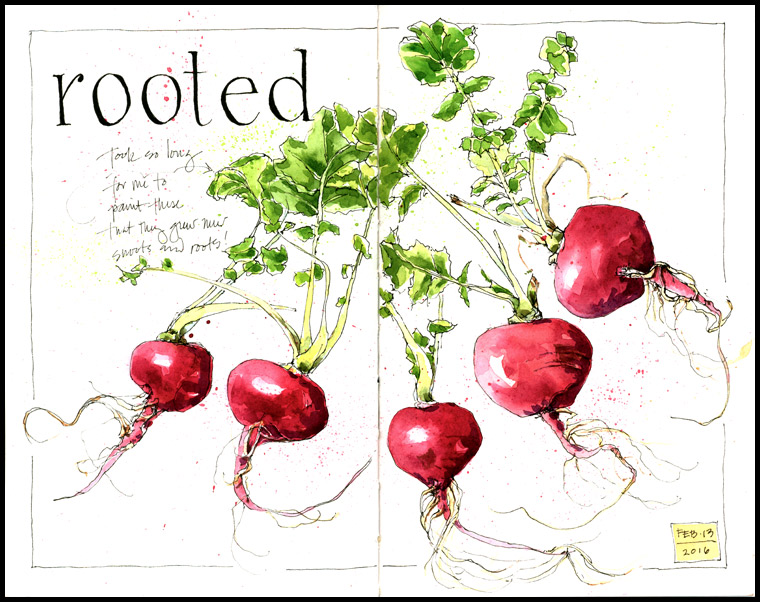
When I first decided to do a series of root vegetable paintings, I had no idea that it would take me so long to finish that the greens would have a chance to wilt, die, and then regrow. After choosing the beets and radishes I liked best, I stuck several rejected vegetables in water and set them aside on the back porch. Then the greens died on my working specimens and I couldn’t finish them. Two weeks later, I discovered new green shoots growing on my reserved vegetables and beautiful, delicate rootlets threading into the water. Re-inspired, I have been rooted to my desk ever since, painting beets and radishes and watching lovely greens unfurl.
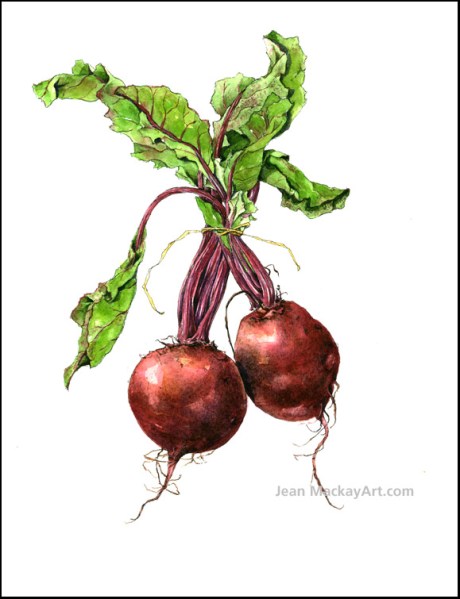

The stems got a little blown out in the scanner.
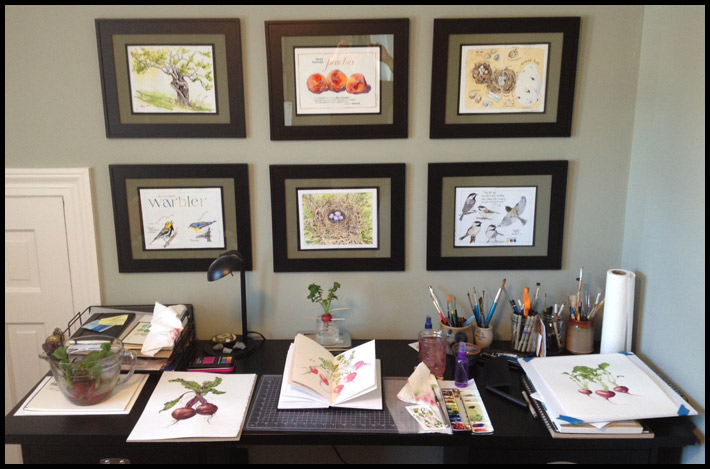
Surrounded by beets and radishes.

And one more- quick and loose in the journal (and a little blown out in the scanner).
Sweet Sorrow
Ripe red strawberries, delicately patterned china cups, and a spread of sweets and small sandwiches fit for a queen. The table could not have been better set for a meeting of sketchers eager for camaraderie and a few hours of painting.
Out of the winter…out of my life…these hours spent in focused creativity stand starkly against the backdrop of my mother’s move this week to a nursing home. She—no longer able to hang on in her home in New York; me—sketching tea in Connecticut. Inexcusably incongruous…but there it is: a daughter’s respite and sadness contained in a few strokes of paint and bitter lemon. Sweet sorrow.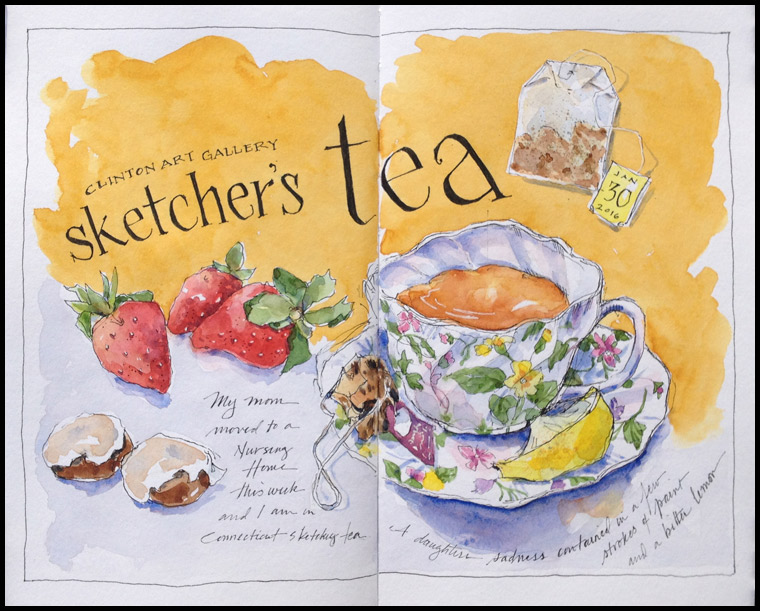
Ancient Seas
Sketching at a museum is a pretty fun thing to do—especially when the collection is as rich as the Yale Peabody Museum of Natural History. The place is a treasure trove: birds, gems, butterflies, objects from native cultures, and fossils of all kinds—from giant dinosaurs to tiny ancient plants. I decided to try two very different approaches to painting on a recent visit. See what you think…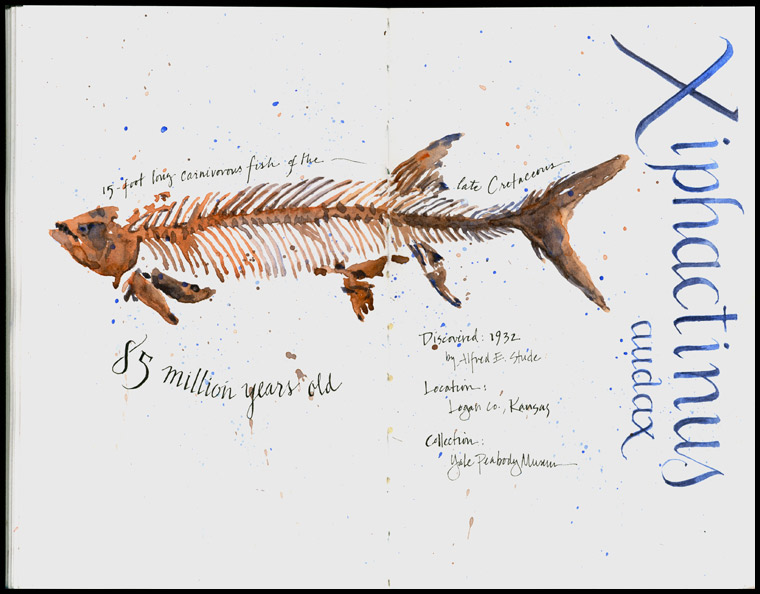 Inspired by museum sketches of Canadian artists Marc Taro Holmes and Shari Blaukopf, I jumped in with watercolor to sketch the ancient fish Xiphactinus audax. I used burnt sienna and ultramarine blue to float color from head to tail. It was important to keep the paint wet to facilitate the flow and enable the colors to bleed into each other. I added the text back at home to complete the page.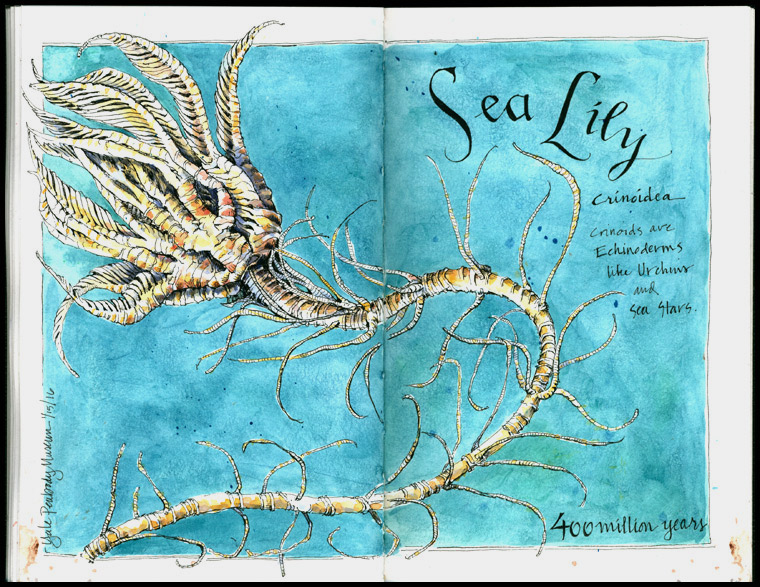
For the Sea Lily, I made a very detailed sketch directly in ink before painting. The arms and cirri are made of many small plates of calcium carbonate so I had to decide whether the draw them all or just suggest them. The museum specimen was bleached white, but living crinoids are quite varied, so I took some liberty with color. In the end, I wish I had kept it simpler, using only earth tones, to give it a more ancient look, though the blue is fitting for a creature of the sea.
Making Chili, Making Art
There’s not much to say about this one, except that sometimes drawing ordinary, everyday things ends up being very good to do.

Click to view larger.


 Drawn In