
The Art of Walking
I achieved a big milestone this week: I’ve walked and run 300 miles since January 1st. Being outside for a few miles each day has great benefits. Witnessing subtle changes of seasons and the comings and goings of plants and wildlife, combined with a chance to think inspires my artwork and grounds me in this place. Like the roadside weeds in bloom this week, few of my miles are standouts alone, but together they add up to something worth celebrating.

Tips and Techniques– Forming a regular habit — like walking or sketching regularly– takes some doing. The two most helpful things I have found for both are making a commitment and planning your time to fit them in. For me, the two activities support each other, as inspiration while walking turns to artwork and artwork completed leads to a desire to see what’s happening next. One mile leads to two leads to 20 and before you know it, your sketchbook is full.
Morning with Poppies
A fine June morning. The last of the poppies in bloom. House wrens warble insistently near their nest, while red-eyed vireos and veeries sing in the surrounding woods. Petals drop from the poppies as I sketch—their moment is so extravagant, so lovely, so fleeting.
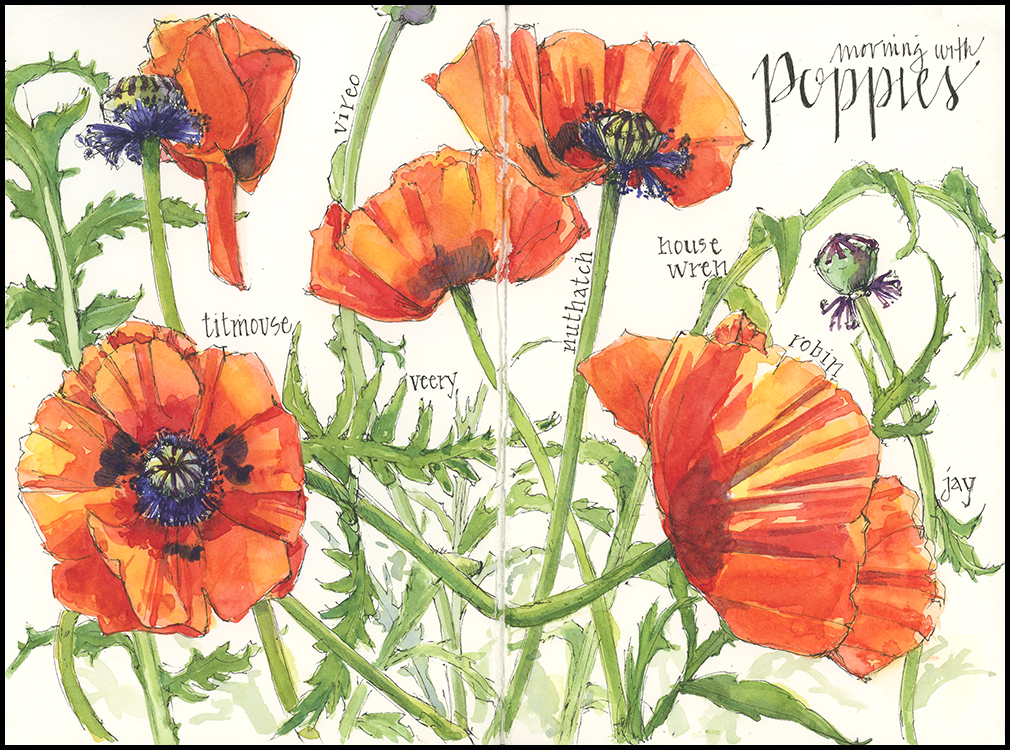
No tips or techniques today—got to get back to the garden. But feel free to ask questions if you have them.
Four Tips for Sketching Outside
Just as the lovely irises bloom each year, the deer flies and black flies hatch. It makes misery of sketching among the graceful petals. I’m pretty sure this page was not worth the bug bites, but it’s all I have to share until I brave heading out again.

Tips & Techniques– As much as I love sketching outside, I have my limits. Sometimes it’s just too hot, cold, windy, buggy, — (fill in the blank). But I have developed a few simple workarounds for sketching in challenging conditions. Hopefully, they’ll work for you, too.
- Skip the pencil and eraser. If you typically work in pencil first and then trace your lines in ink, try working directly in pen. This saves time and fuss but means that you must accept some wonky imperfection. It’s a sketchbook after all.
- Sketch out, paint in. When it’s very hot or very cold, this is an excellent option. You still get the direct experience with your subject, which will translate to the page far better than working from a photo. Snap a photo for a color reference or make color notes on your page.
- Prepare as best you can. Take note of potential challenges so you can avoid getting stymied by them. In summer: add a hat, sunscreen, water, and bug spray (as needed) to your sketch kit.
- Abort the mission when necessary. I sometimes head out with the best intentions and come home empty handed. It’s disappointing but sometimes it’s better than a frustrating sketch.
High in the Treetops
A flash of orange streaks across the yard. A fleeting glimpse, combined with a clear whistled song from high in the cottonwoods means only one thing: an oriole is here. The males sing to establish and defend their breeding territory and I can only hope that this will be it. Maybe his mate is already weaving a pendulous nest up there, hidden by foliage. Wouldn’t that be a treat?

Tips and Techniques– Sometimes drawings come effortlessly. Many times they don’t. And sometimes it’s best to start over. Such was the case with this piece. I struggled for more than an hour to get the proportions and posture right on my first go at an oriole this week. I was in deep, but it just wasn’t working. Frustrated, I decided to walk away. The next evening, I started on a fresh drawing, and this time the bird took shape quickly. As hard as it is to abandon a drawing or painting, sometimes it’s the best thing you can do. If at first you don’t succeed….
Registration is open for “Bird, Nest, Eggs” through Winslow Art Center; Thursdays, June 8 & 22 focused on Baltimore Orioles; and Thursdays July 20 & 27 focused on the Eastern Phoebe. Details on the workshop page and at WAC.
Bluebird Days
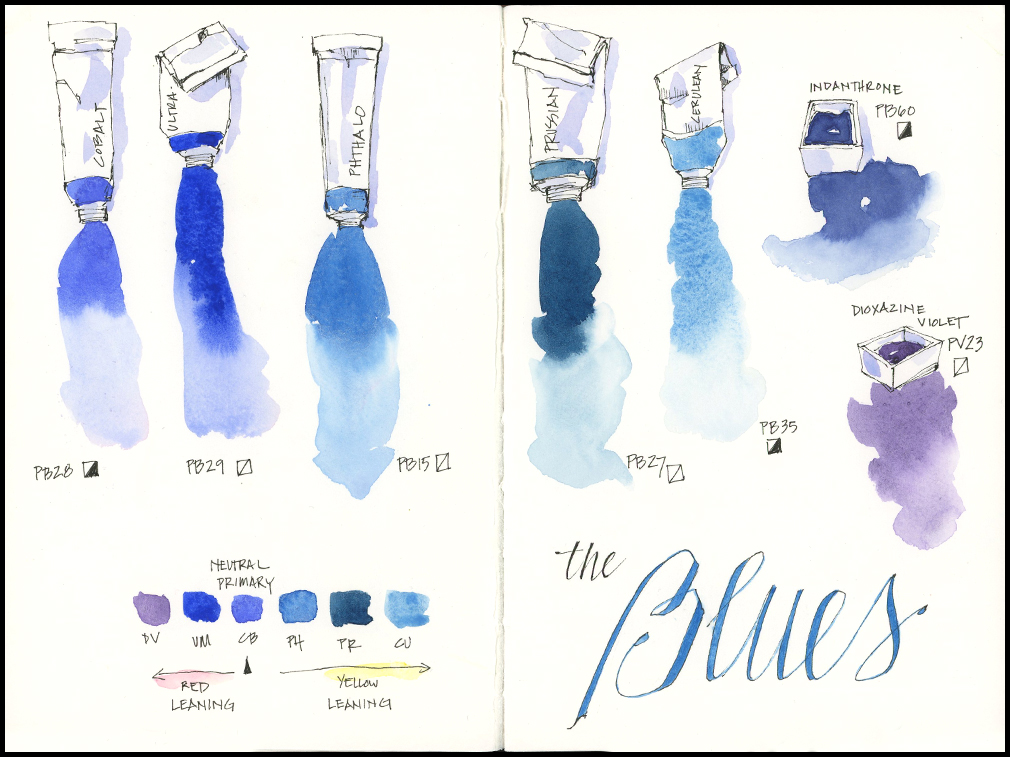
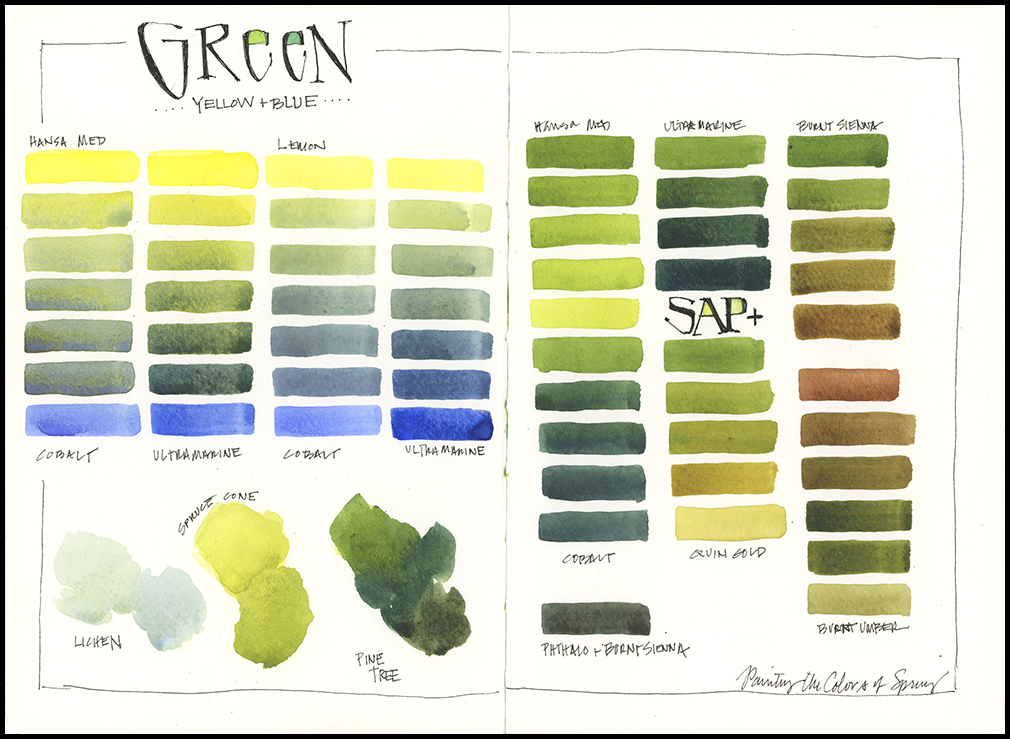
I’ve been teaching “Painting the Colors of Spring” for the last few months, which has made me even more aware of the subtleties of color at this time of year. We started with earth colors back in March, took a deep dive into yellows and greens in April, and ended this week with an in-depth look at blues and violets. Right on cue, the bluebirds in our yard finished laying five pale blue eggs, the lilacs and violets are in bloom, and the sky was clear and bright all week. I treasure these Bluebird Days and hope you have too.

Tips and Techniques- Get to know your paints. My students and I have had fun painting out and comparing various pigments and learning more about color mixing and great color combinations. If you are new to watercolor or haven’t done this, I highly recommend it.
Save the Date: “Bird, Nest, Egg” through Winslow Art Center; Thursdays, June 8 & 22 focused on Baltimore Orioles; and Thursdays July 20 & 27 focused on the Eastern Phoebe. Registration open.
Appreciating Old Apples
I just happened to be sketching this old apple tree at the edge of a large grassland field along the roadside, when a big Ford pickup slowed to a stop. A man got out and strode toward me. I knew at once he was the owner. Curious about what I was doing, and seeing my interest in his trees, he was eager to talk. He shared a 30-year knowledge of this particular piece of land, the struggles of farmers today, his commitment to raising grass-fed cattle, and quite a bit of personal philosophy on freedom, taxes, America, and good stewardship. He recounted the birds that inhabit his fields (Horned Lark in winter!) and the ones that rarely come anymore (Yellow-billed Cuckoos, Northern Harriers). Twenty minutes later, he headed out and I packed up, satisfied with a shared appreciation of old apple trees in the warm glow of a late afternoon.

Return
Spring bird migration is in full swing! There are new birds singing in the woods and fields around our house nearly every morning. I note the first sightings of songbirds as they return and what’s surprising is how consistent most birds are year to year, coming back on nearly the exact same date. The wood thrush is among my favorites, and it returns consistently on May 4th or 5th. Sure enough, it was singing out in the back woods last Friday morning. Today brought several species of warblers; I’m hoping that an oriole and a pair of rose-breasted grosbeaks show up tomorrow, right on schedule.
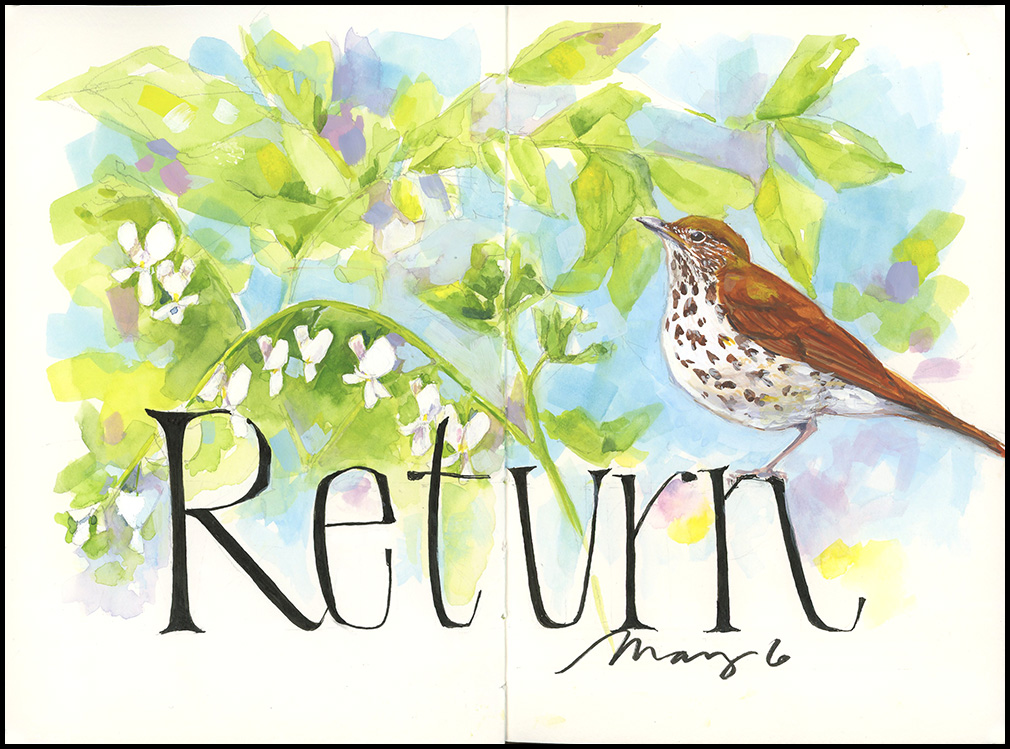
Tips and Techniques– I knew I wanted to commemorate the wood thrush’s return, but I couldn’t decide whether to do it in watercolor or try gouache. As you see, gouache won. To be honest, I’m not entirely sure what I’m doing, and I haven’t quite figured out how to work dark to light, as is recommended. So, I can’t offer any tips other than to experiment from time to time, learn from new ways of seeing and painting, and hope for the best.
Stopping Time
There are times when I wish I could make time stand still. Like now. Now, when the buds of apple blossoms are tinged with ruby and pink. When tiny magenta flowering redbuds stand out against bright new green leaves. When passing bluebirds or goldfinches flash so brightly that their brilliance catches you by surprise. If I could stop time right now, I could paint it all instead of just these few lovely buds unfolding.
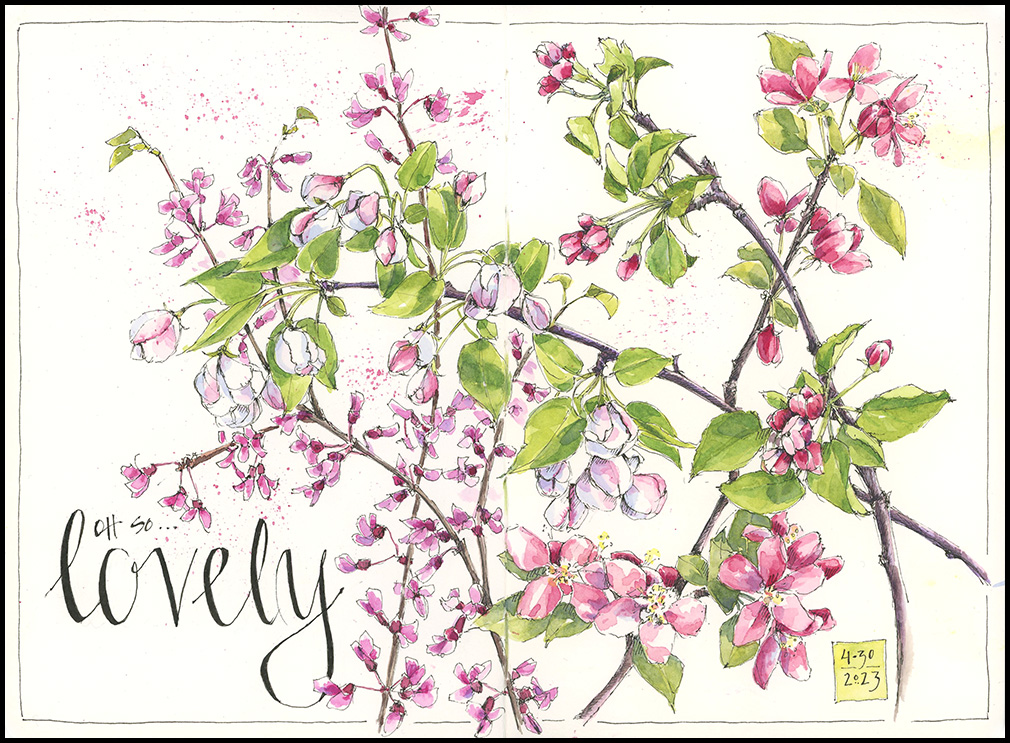
Tips and Techniques– I’ve been struggling lately with whether to sketch fast and loose or slowly and carefully. It’s a dance between accuracy and imperfection, patience, and frustration. I started this page with a single stem of apple blossoms, which I wanted to observe and draw carefully. But as I added a second stem and a third, my patience began to give way. By the time I got to the redbud blossoms, I was eager to get them down and finish. Time is fleeting; there’s so much to do—how do you resolve the dance?
Showstoppers
Spring ephemeral wildflowers are putting on a show right now. It won’t last long. These woodland flowers bloom for a week or two in April and early May when the sun reaches the forest floor. Once the trees fully leaf out, the show will be over until next year. Bottom line: see it if you can. Many of these flowers are tiny, delicate beauties; others are stop-you-in-your-tracks gorgeous. I count white and red trillium in the latter category and was thrilled to see both on a wildflower walk yesterday.

Tips and Techniques– Because many spring ephemerals are white – including bloodroot, Dutchman’s breeches, trillium, cut-leaf toothwort, and mayapples – you’ll need to decide how to highlight them on white paper. A simple shaded drawing may be sufficient. But you could also consider using white gouache on toned paper or painting greenery behind the white flowers. I wanted to take my time with the white trillium, so I sketched the flowers in pencil in the field and then painted them at home using negative painting techniques to build up the layers of leaves surrounding the flowers. It takes time for the each layer of paint to dry, so this is not a good technique to do in the field.
A Moment in Spring
The changes come slowly at first: light in the morning, bird song, blossoming trees, ephemeral wildflowers in the woods. The Eastern phoebe wags its tail and sings its name outside my window, waking the world to the new season. Spring is the perfect time of year to note the incremental changes unfolding in the world. Like the phoebe, my sketchbook celebrates this moment in time, calling out the beauty and greening of the day.

Tips and Techniques– You can make this type of page all in one go or over the course of days or weeks. I typically go outside and look around until something strikes me and I put it down on the page. Then I move to the next thing and the next until the page is full. If you have time, you can paint as you go. If not, paint later using a photo reference or a cutting. Add text, or not, depending on what you want to convey and whether a theme emerges that you want to highlight.


 Drawn In