
At last!
Finally, it’s warm enough for me to make my way through the woods to the muddy edge of a creek where the skunk cabbage thrives and sketch. For weeks, I’ve gone out scouting good locations, watching the maroon spears push up through frozen earth, watching the ground give up its ice as the spathes open. I’ve been waiting for a day when work, wind or fading daylight wouldn’t keep me indoors with an empty sketchbook…and here it is.
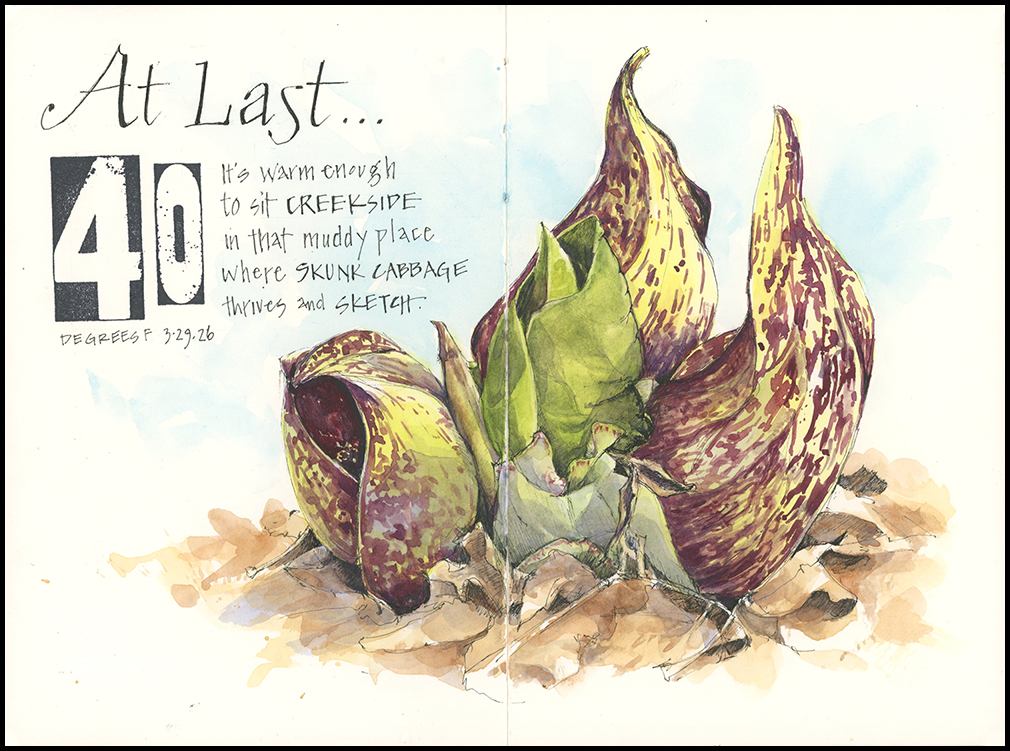
You might think forty degrees is awfully cold for sketching outdoors, but with a wool hat, down jacket, a bit of sunshine, and a genuine affection for your subject, it’s entirely doable. (Materials: Handbook Journal Co. 140lb watercolor sketchbook, Micron 005 black pen, watercolor)
Coming up! Winslow Art Center’s free annual Spring Fling Festival takes place April 9-12. Take advantage of four inspiring days of live demos, interactive work-alongs, and engaging artist talks. I’ll be doing a presentation, Sketching Through the Year, on Friday 4/10.
Warblers in my Sketchbook
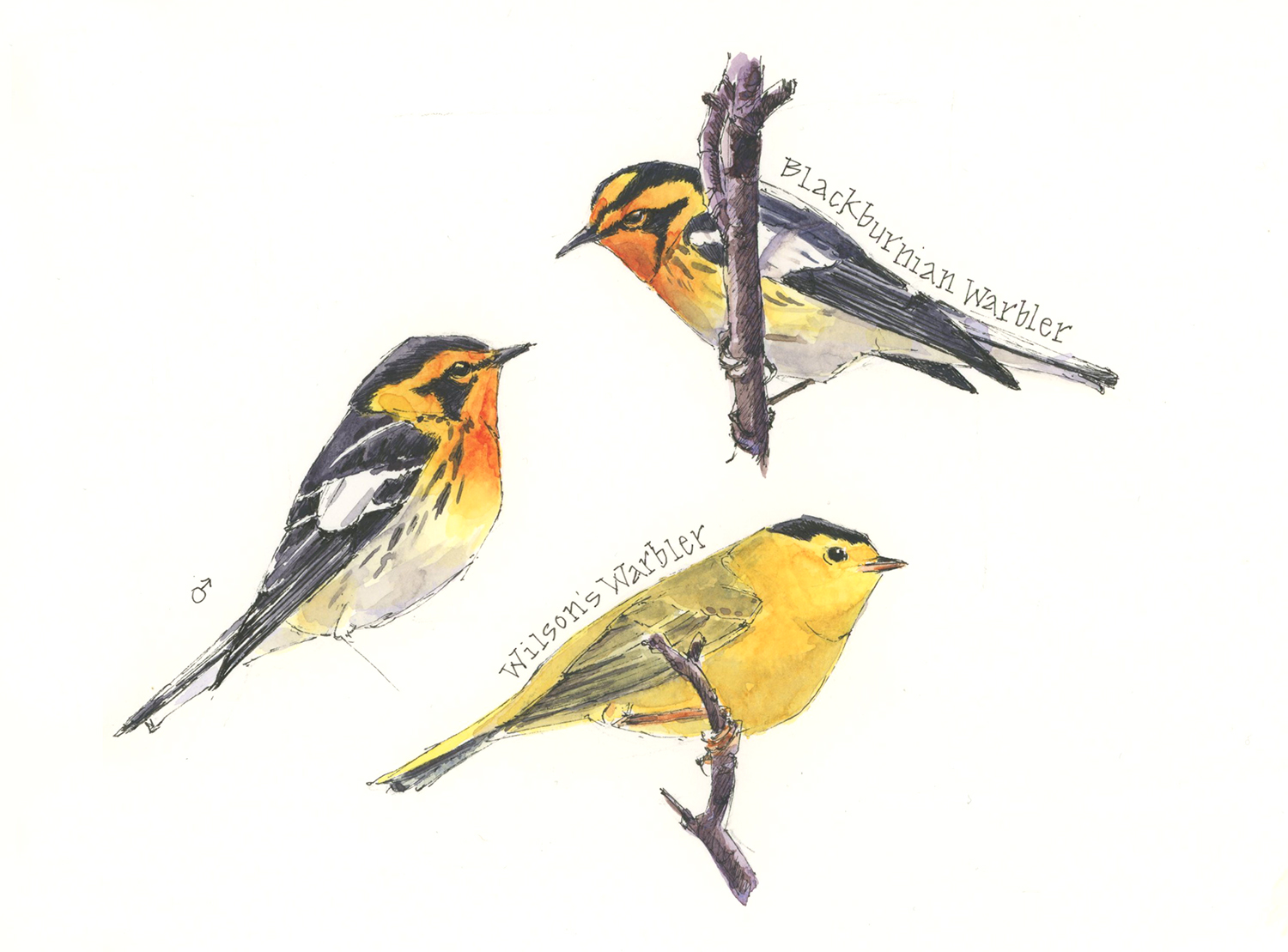
Spring is here! Well, not really. It will be a few weeks before things start to green up and another six or seven weeks before the warblers show up in New York. In the meantime, it’s 40°F, raining, and gray, and the only warblers I’ll be seeing for a while are the ones in my sketchbook.
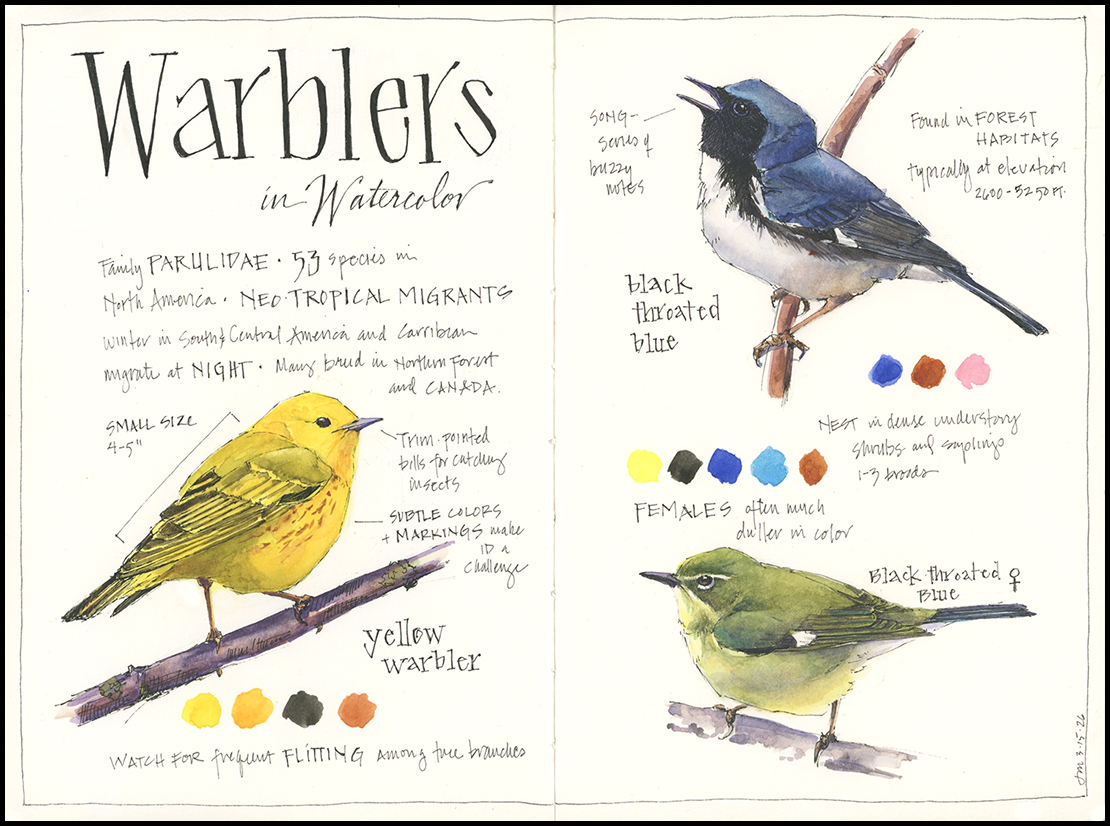
Tips and Techniques– You can see from my color notes that I used very few pigments to paint each of these birds. When choosing colors for a subject, experiment with a few mixes and see if you can narrow them down to three or four main pigments. This helps to keep your painting unified and reduces the risk of getting muddy colors from mixing too many paints. (Materials: Handbook Journal Co. 140lb watercolor sketchbook, Micron 005 black pen, watercolor)
Ink: Dry and Wet
I recently bought two bottles of Diamine ink—one ochre and one chocolate brown—to use in my fountain pen. I was hoping to find a warm, sepia-toned color reminiscent of the inks used by Renaissance drawing masters. Both inks flow beautifully, and when wetted they can be pulled into light washes.
Unfortunately, neither color was quite right. The chocolate brown was too cold and dark, while the ochre shifted toward an orange rust when wet. That led me to start mixing the two, carefully noting and testing different ratios in search of something closer to what I had in mind. Below are the results of my most recent experiments, shown dry and wet. Isn’t it fascinating to see how dramatically the color changes with the addition of water?
Tips and Techniques– Share yours! If you use fountain pen inks and have suggestions for a brand or sepia color that doesn’t shift when wet, I’d love to hear about it.
Not Quite Yet
Eventually, our desire for spring will match the reality outside. But not quite yet. I welcome the incremental increase in daylight and the occasional temperature over 40F, but I don’t let a warm day or two fool me. While I await spears of skunk cabbage to emerge from the snowpack, I’m also gearing up for my upcoming online class, Warblers in Watercolor. The class is intended to be a pre‑season warmup for the arrival of these delightful and elusive songbirds come May.
Like spring itself, warblers arrive on their own terms. They drop from the sky during migration and sing their hearts out, constantly flitting among the trees. Watching them feels like a game of hide and seek—they call to you and then disappear as soon as you think you know where to look. But when you do get a glimpse, you’re rewarded with a tiny colorful prize.
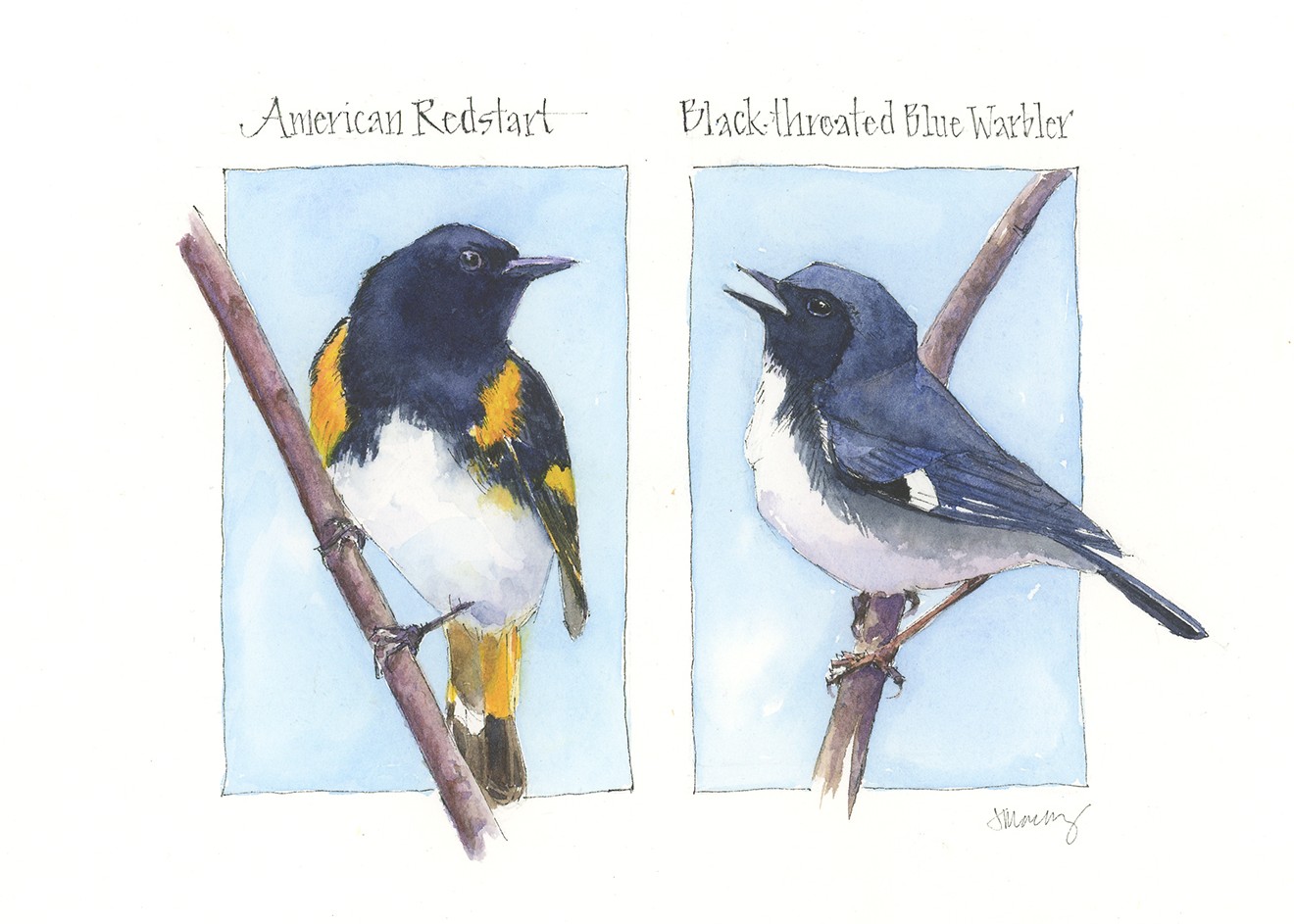
Tips and Techniques– The detailed markings on many warbler species make identifying them difficult and painting them challenging. During my class, I’ll share tips on what to look for and how to use layers of watercolor to paint them. Find out more at Winslow Art Center; the class begins on Thursday 3/12.
Collecting on Paper 2026
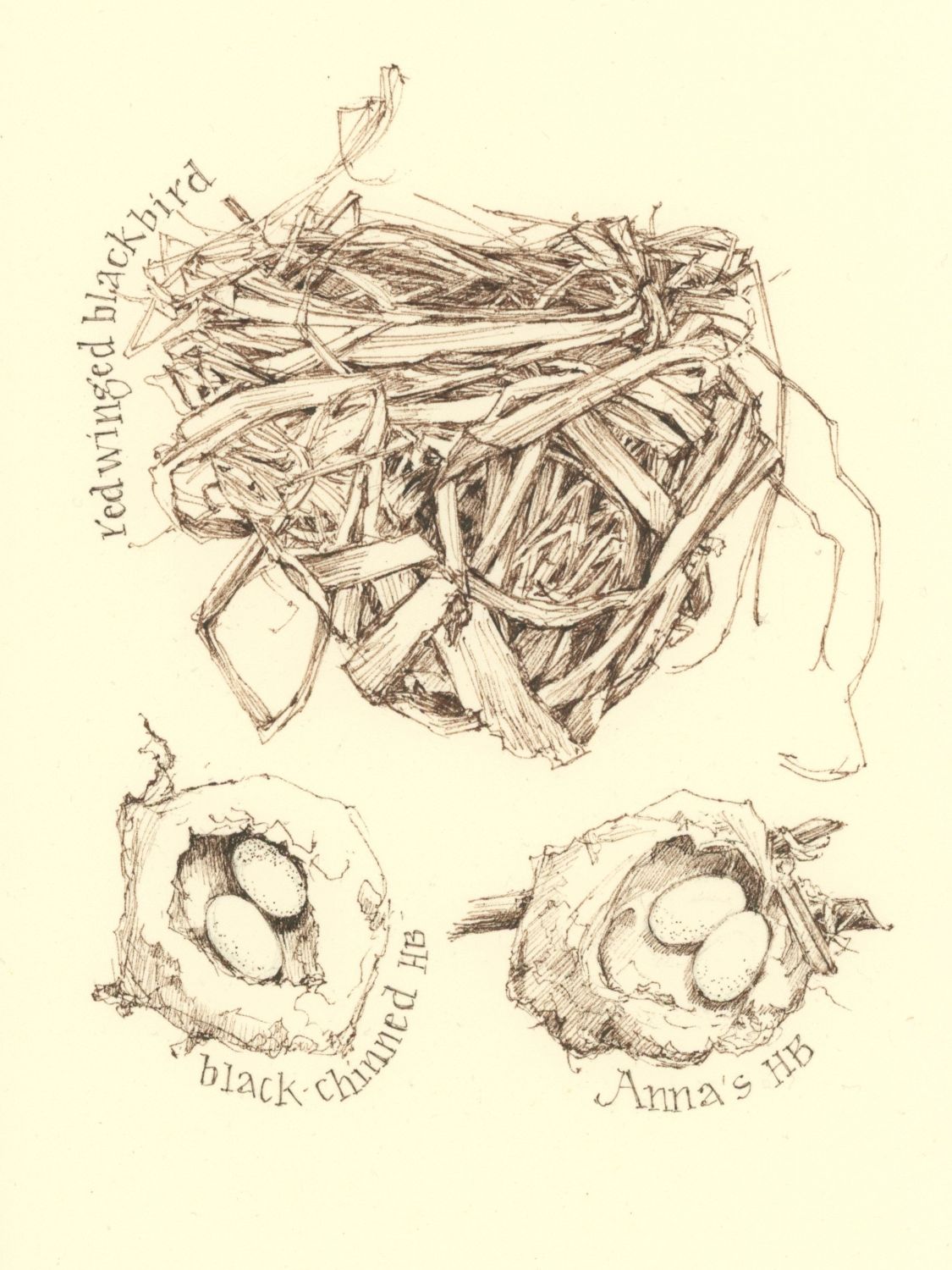
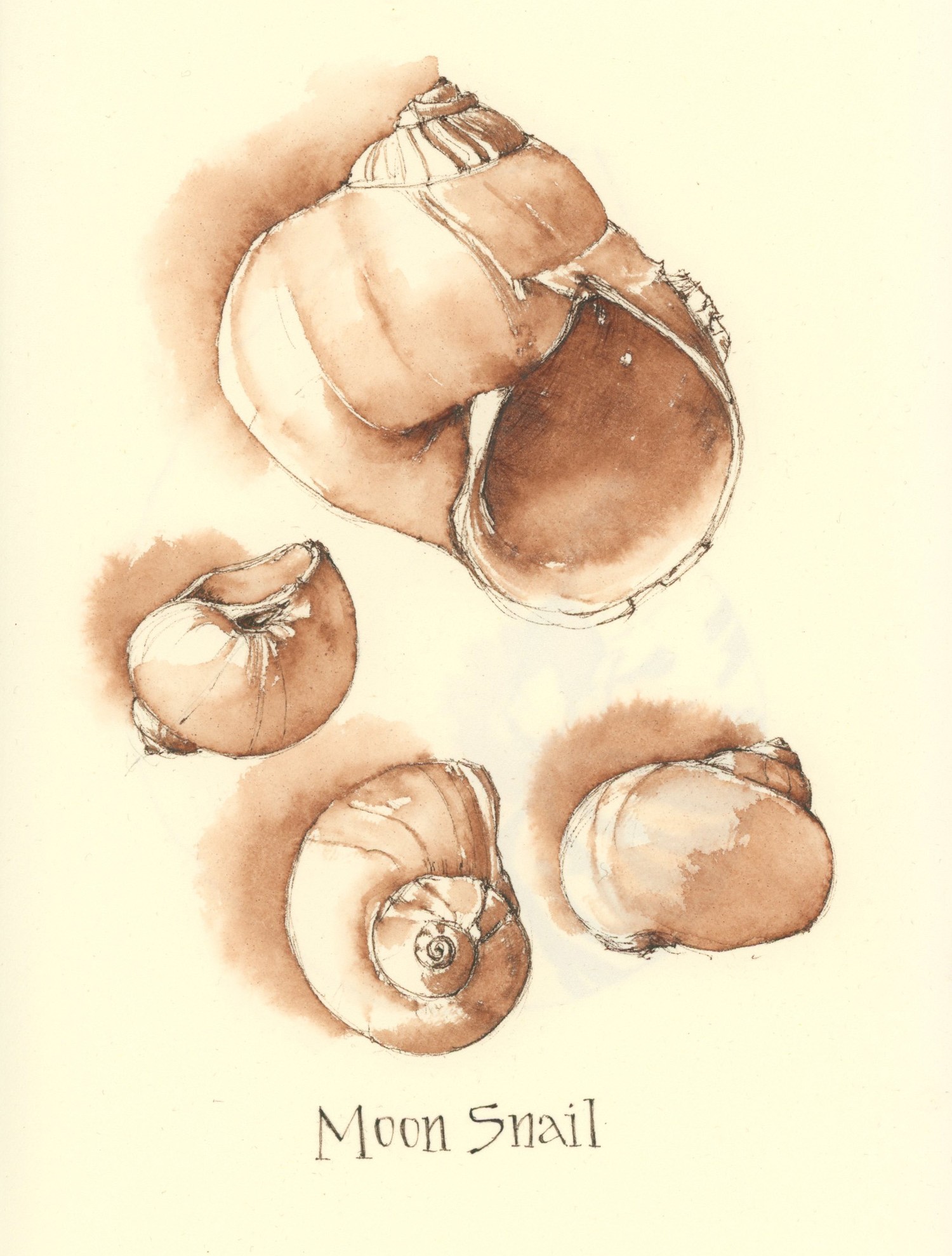
One of my favorite things to do at this time of year is to fill my sketchbook with specimens from a nature center or museum. There are always so many fascinating things to discover, and I enjoy the challenge of arranging them together on a single page. If you’ve followed me for a while, you’ve seen similar pages before. Here’s this year’s collection, plus a few selections from prior years.
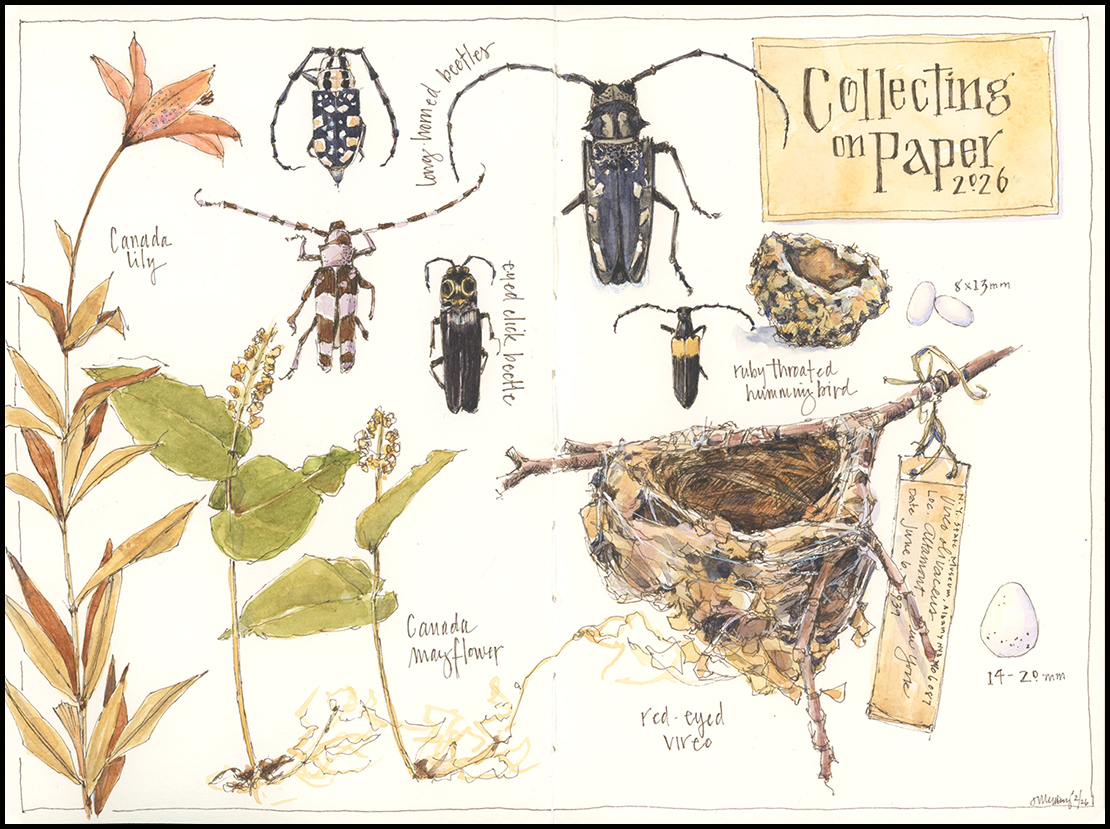
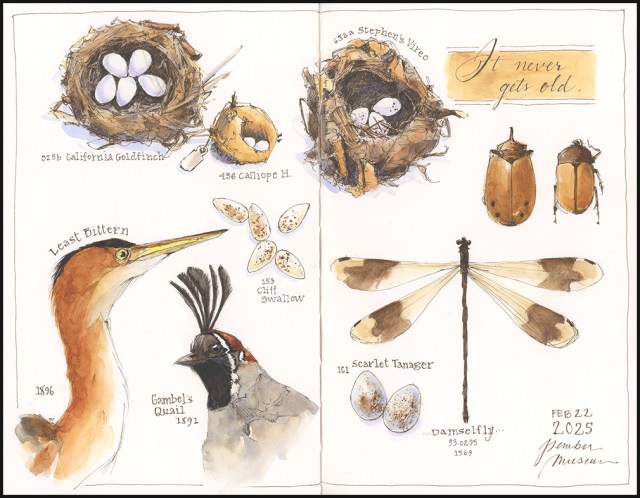
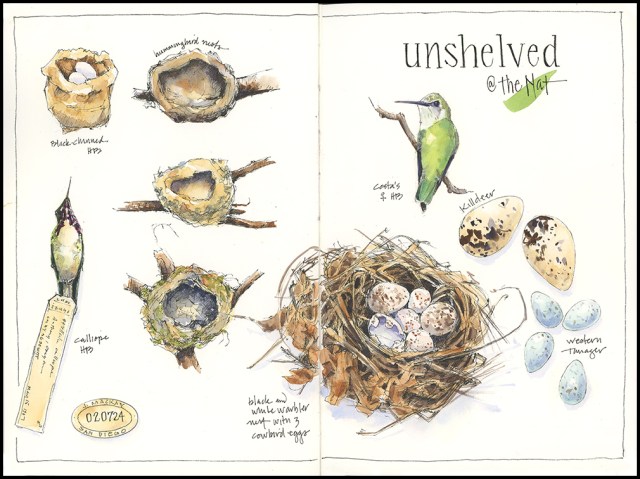
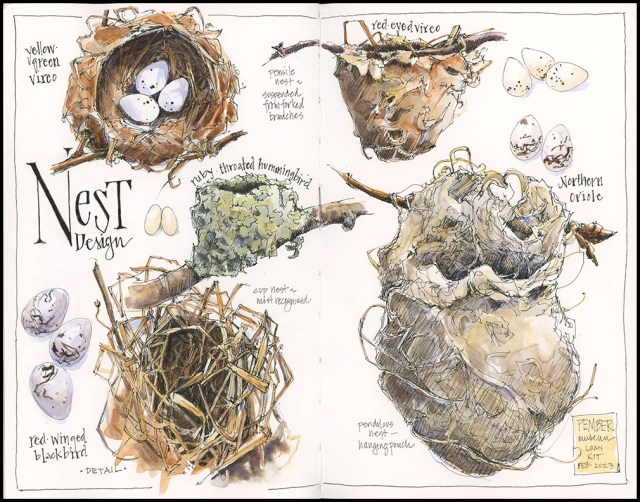
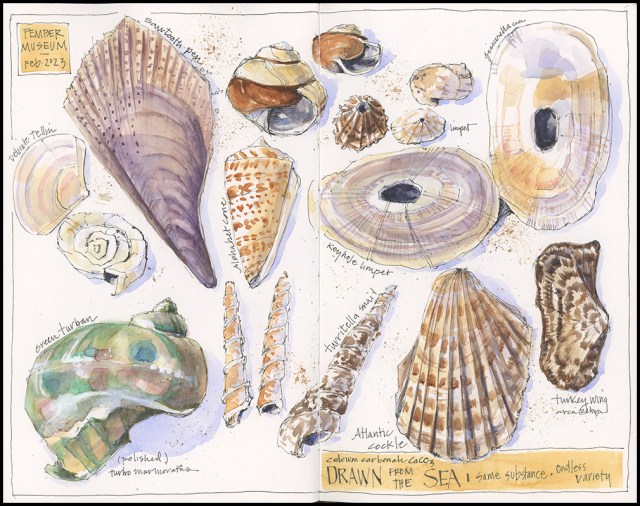
Tips and Techniques– Sketching in museums and nature centers is a defining part of my work and I can’t recommend it highly enough. It allows me to closely observe and study natural history subjects I might not otherwise encounter. It’s also a welcome excuse to sketch someplace warm during the colder winter months. Plan an outing and go! (Materials: Sepia Micron 005 pen and watercolor in a Handbook Journal Co. 140lb sketchbook)
Pre-Flight Checklist
Sketches. Maps. Curiosity. These travel essentials are just as important to me as airline tickets and a passport.
These pages are part of my preparation for a workshop I’ll be teaching at Sofia in Monsaraz, Portugal, June 3–8, 2026. This region of Portugal is a landscape of wide skies, ancient olive trees, cork oaks, vineyards, white-walled towns, and birds I hope to see.
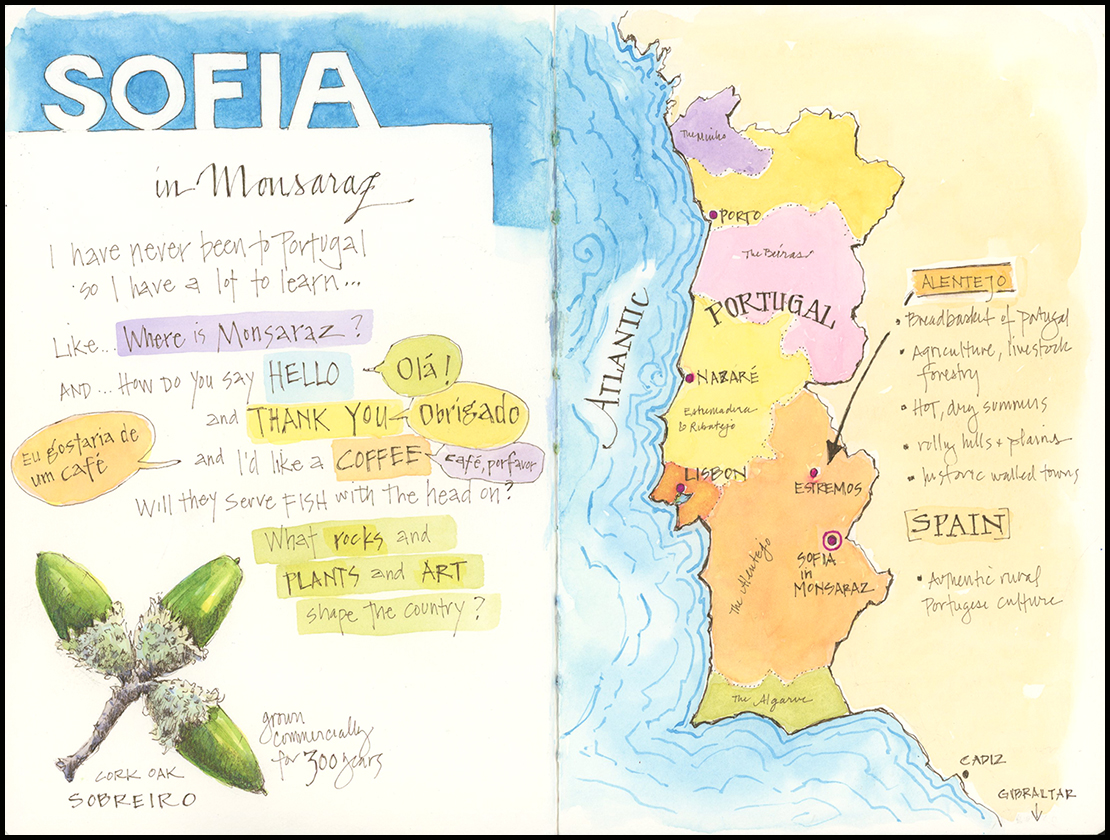
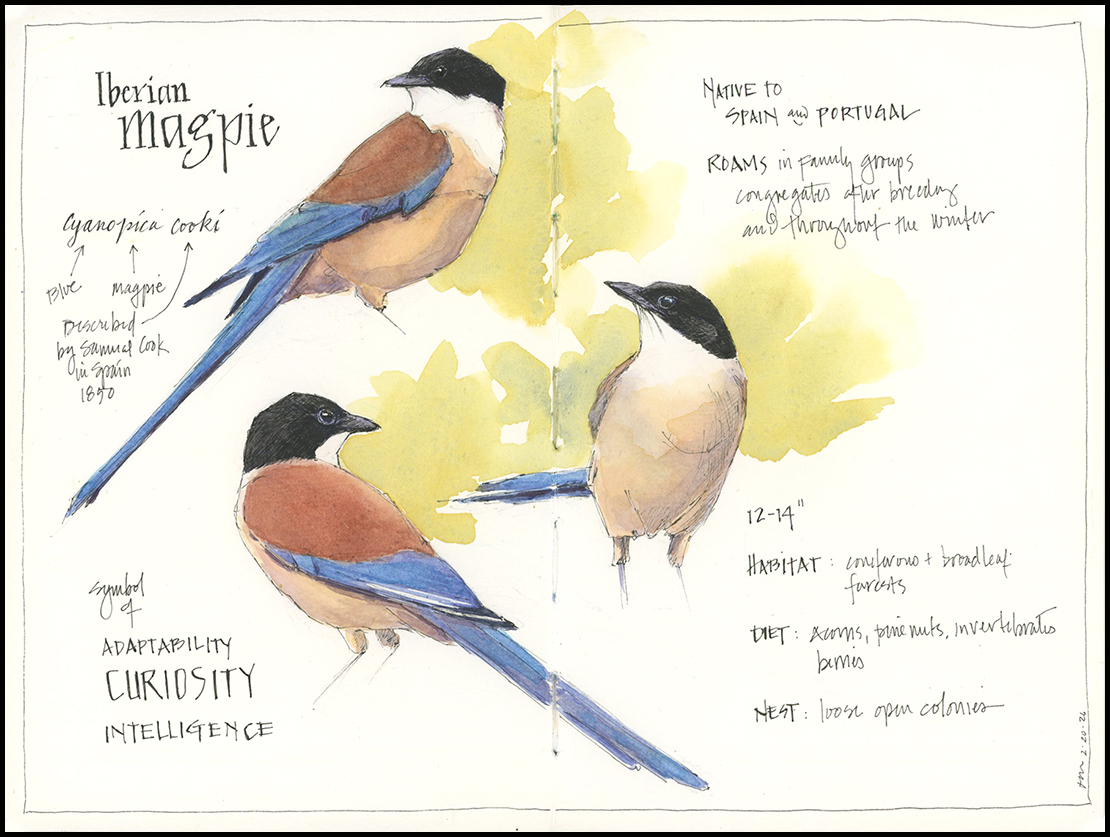
I’ve never been to Portugal, so my preparation also includes brushing up on Portuguese history, reading a few poets; studying the work of Portuguese artists; and learning about the landscape. At times, this feels futile. While research provides a foundation, I know that gaining a sense of place comes from being there. And in just a few months, that magic can begin.
Tips and Techniques– If you’re longing to deepen your artistic practice and soak in a true sense of place, there are a still few spots available for this workshop. There’s nothing quite like the immersion and joy that come from an art retreat. Find details here.
And if your travels take you elsewhere, pick something that intrigues you about that location and draw it. Do a little homework and see where the threads take you.
Tools of the Trade
Wishing you a good weekend filled with art, art supplies, or both.
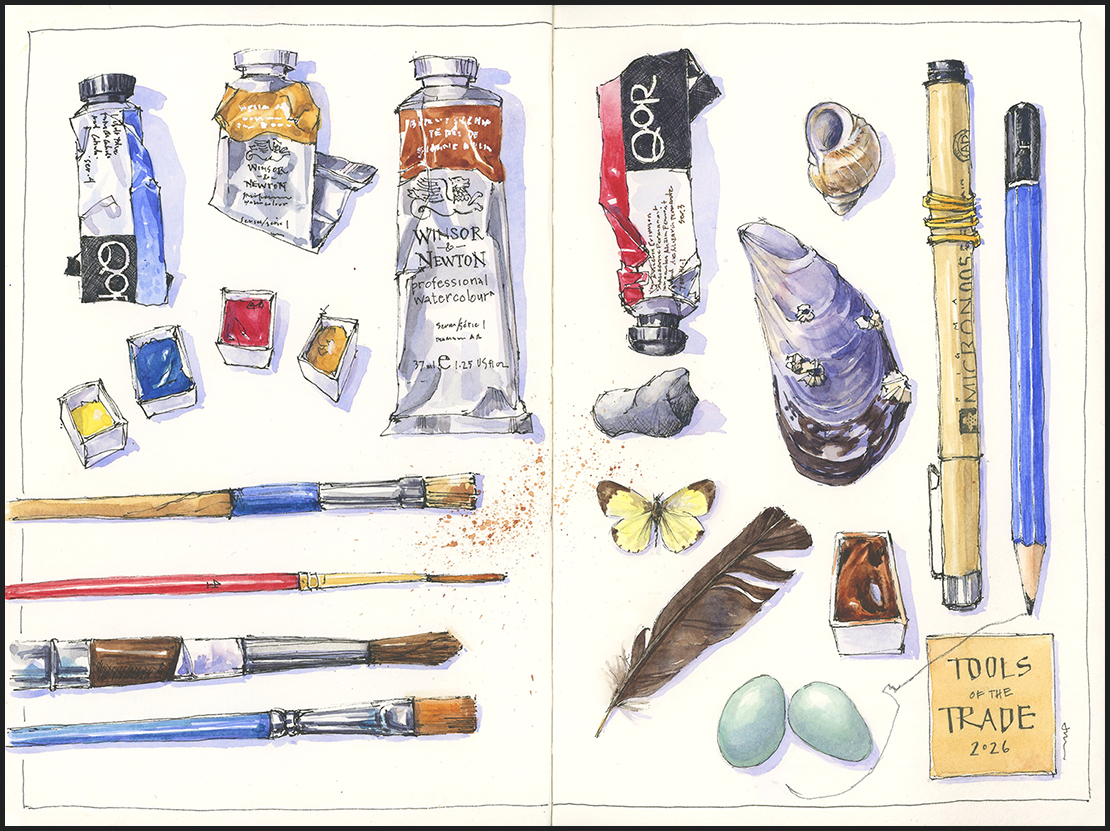
Tips & Techniques– I recently made a sketch of my art supplies using sepia ink. I was happy with the way it came out, but also eager to do it again in color. I always learn a lot from painting ordinary objects. They force me to figure out how to approach different textures or consider new layouts. Doing a page like this is sort of like putting together a puzzle– figuring out what the picture will look like as you go. Always a fun challenge! (Materials: Handbook Journal Co 140lb Watercolor Sketchbook, Micron 02 and 005 pens, and the paints you see here…plus a few more.)
Coming up! I’ve just posted a new online workshop for spring, Warblers in Watercolor. There are still openings in my in person workshops this summer at Sofia at Monsaraz in Portugal in June and Madeline Island School of the Arts in Wisconsin in July. Find descriptions and links on the WORKSHOPS page.
Unexpected Connections
A sudden flash of white-and-black wings lifts from the roadside and then vanishes just as quickly into the field. Only one bird shows so much white in winter: the snow bunting. In good years, I spot them at the edges of nearby agricultural fields where they forage for seeds. Snow buntings are birds of the high Arctic that come south to the northern U.S. and Canada in winter.
After painting these birds, I went looking for images of their eggs to add to the page. I was delighted to discover a nest on the iDigBio website from the collection at the Natural History Museum of Norway. I could read the collection date, 1904, on its label, but the handwritten location data proved tougher to decipher. So I went back to the collection record to search for more details. That search, unexpectedly, placed me aboard the 1903–1906 Gjoa Expedition of polar explorer Roald Amundsen. He and his six‑man crew collected the nest in Nunavut, Canada, while searching for the Northwest Passage.
So here’s to snow buntings, a 122-year old nest (and the birds it was taken from), a crew of intrepid explorers—and the unexpected discovery that connected me to them through my sketchbook.
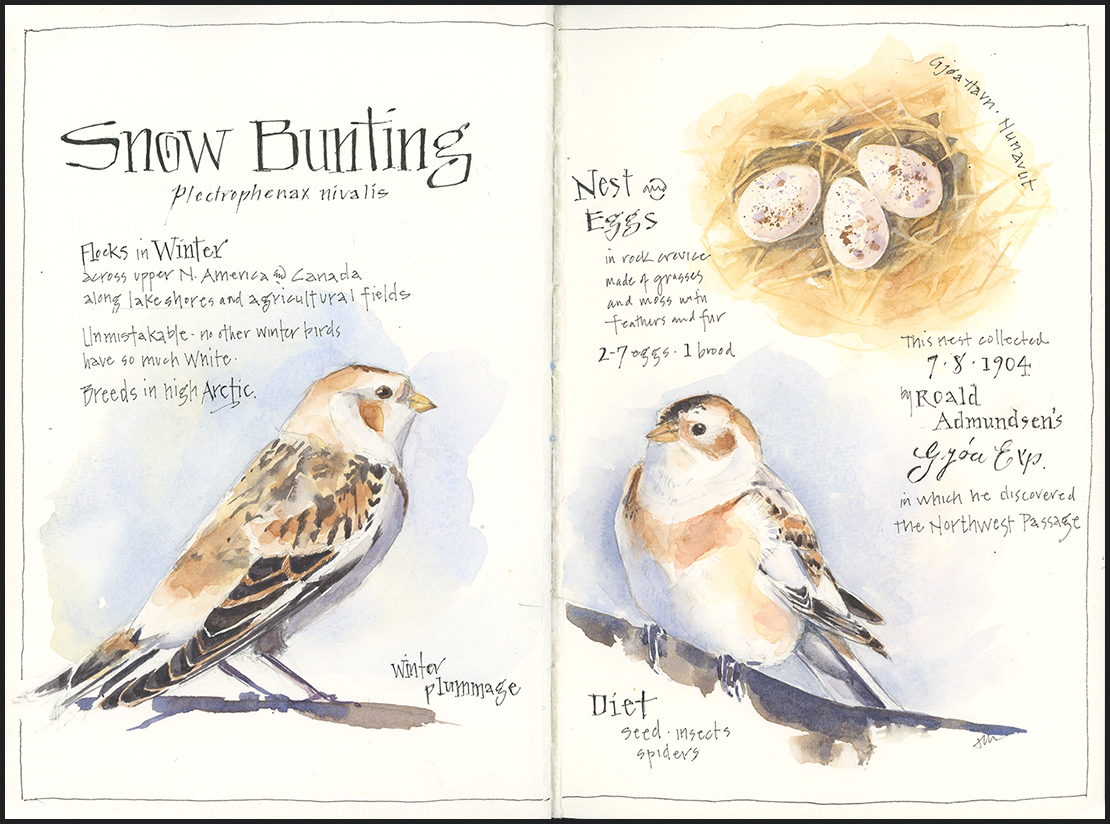
Tips and Techniques– What do you do when you spell something wrong? Sometimes, you can fix it, and other times, you just have to live with it, which is what I decided to do here. My error stands out plain as day, but it would be more noticeable if I tried to fix it.
Silver Lining
The silver lining of the past week’s snow and cold is the flock of juncos that are hanging out on our back porch every day. We put up an extra bird feeder there to help them through the freezing weather and heavy snow. Unfortunately, my perch for sketching by our back porch door has proven rather drafty— the birds are surviving the chill far better than I am.
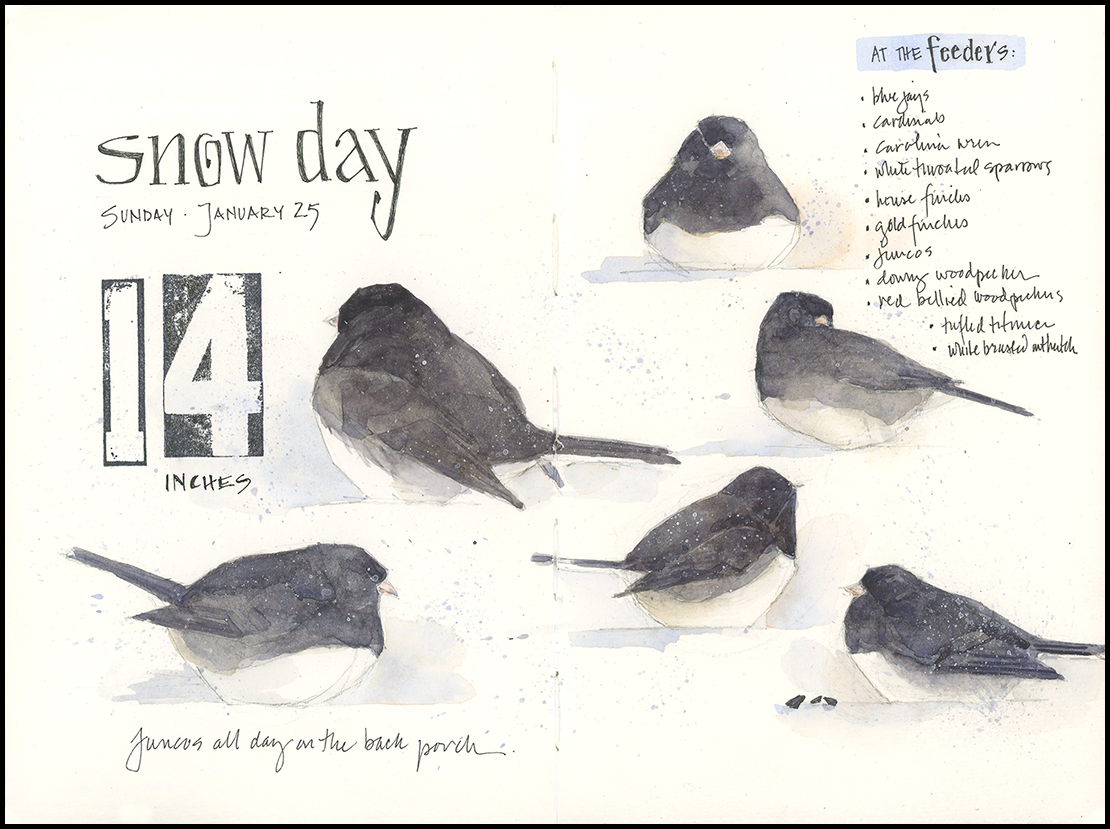
Sketched in pencil in a Handbook Journal Co. sketchbook with 140lb cold press watercolor paper, Micron 005 black pen for the text, and watercolors- ultramarine blue, burnt sienna, cobalt blue, and yellow ochre.
Frozen
With much of the U.S. locked in single‑digit temperatures and snowstorms, it felt like the perfect moment to embrace the cold and venture into the depths of our freezer— which had evolved into a gigantic, cluttered heap of unidentifiable objects. I decided to make the most of this otherwise uninspiring chore by sketching my findings, partly for posterity and partly to prove I survived the expedition. When I unearthed seven bags of peas and corn, I knew I’d made the right call. And so, at the risk of oversharing, here’s the inventory. Not bad for a frigid afternoon’s work.
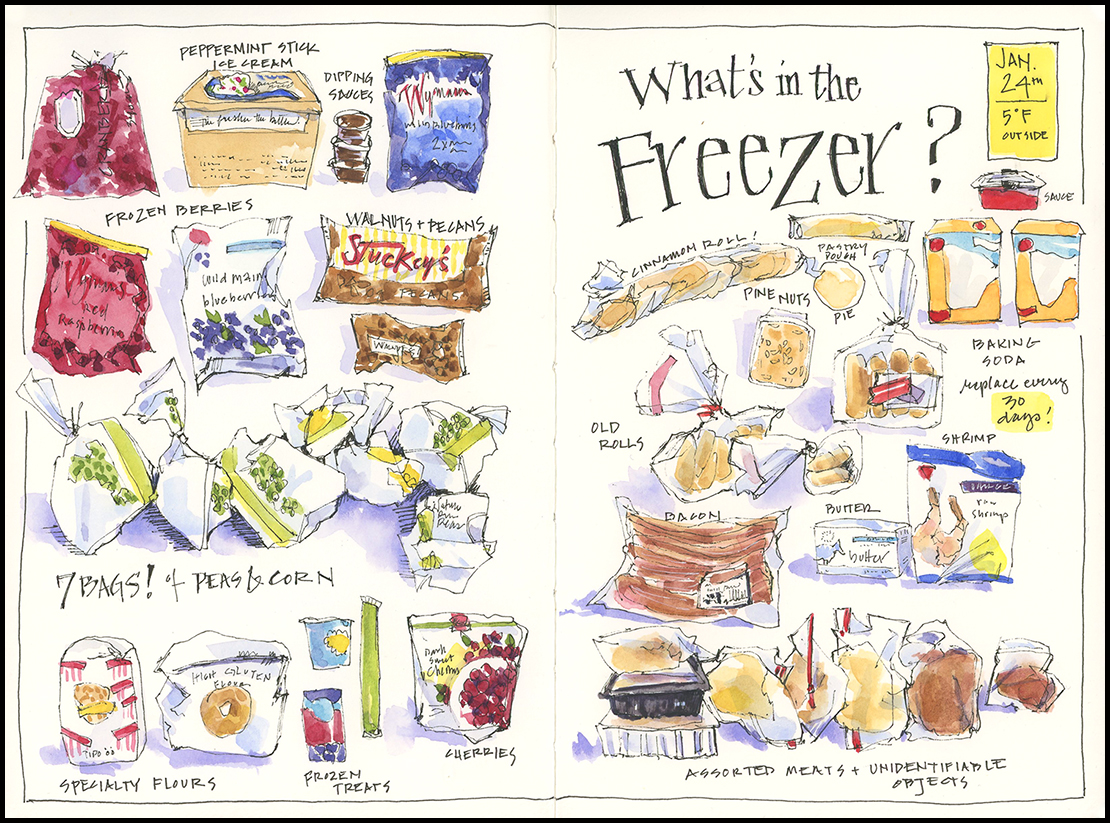
Tips & Techniques- If you live in a cold part of the world, you may find it challenging to keep up a nature‑sketching habit during the winter—I certainly do. Years ago, I decided to broaden my subjects at this time of year. Better to sketch frozen food than to sketch nothing at all. Along the way, I discovered that drawing different kinds of subjects has actually expanded my skills as a painter. Perhaps your refrigerator is calling.
Sketching Through the Winter, online at Winslow Arts Center, starts this Thursday, 1/29. Join me!


