
The Ultimate Grid
A window seat over the American mid-west provides an astonishing view: a landscape of squares spreading in all directions. Striped in shades of tan and green with occasional non-conforming blue snaking its way between the squares, the American heartland is the ultimate grid. 
The pattern owes its existence to Thomas Jefferson and the Land Ordinance of 1785, which served as the basis of the Public Land Survey System used to divide property for sale and settling.
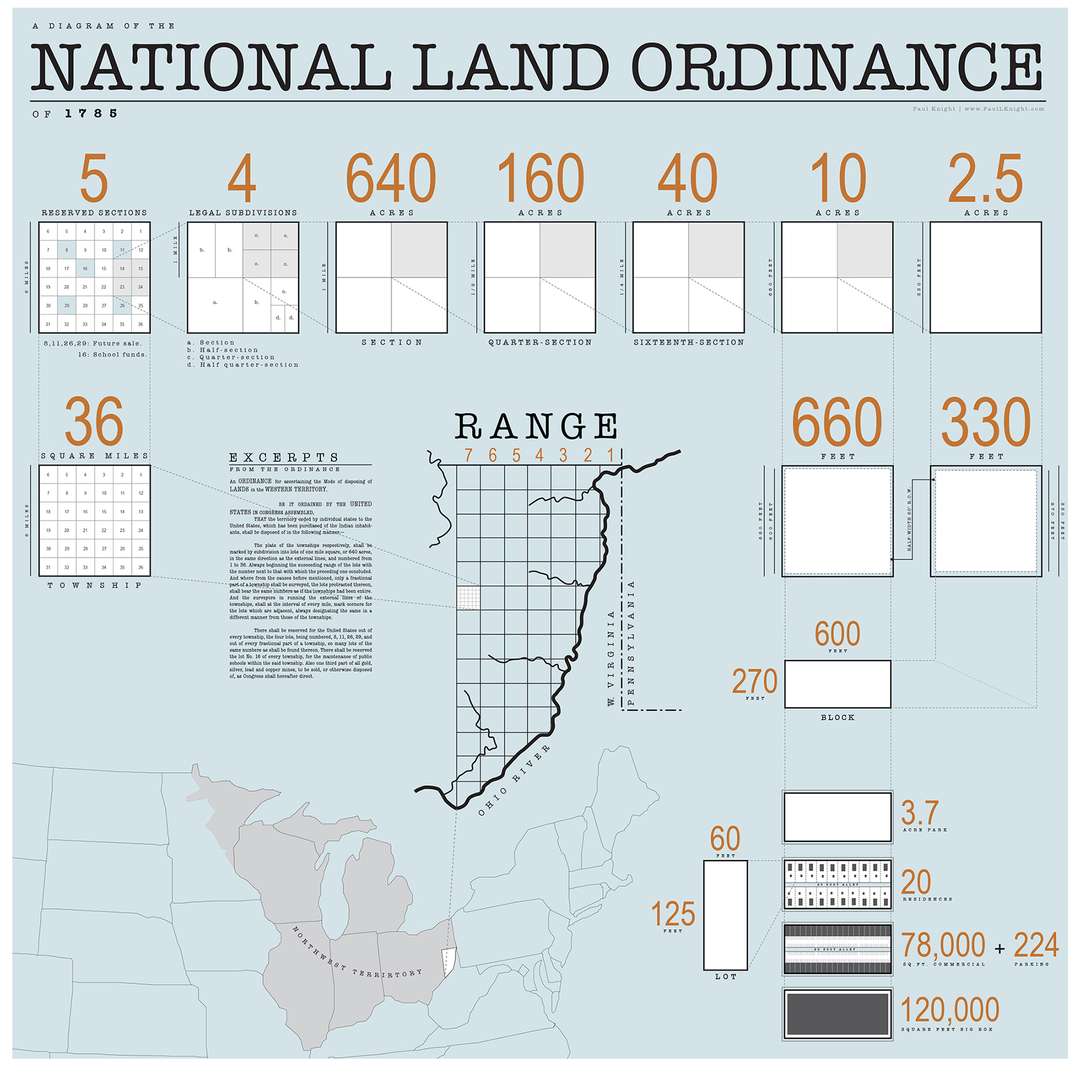
The Largest Landscape: The Grid of American Agriculture, from Architizer
I had been working with grids in my sketching workshop in Anacortes, and had already marked out a journal page for future use. When the view from the airplane on my way home presented itself, it was a perfect fit. I quickly sketched the patterns and later used Google Earth for additional reference.
Grids are frequently used for design because they provide a flexible framework that breaks the space of a page into related parts. I devised a 12 square 2-page grid in my 5” x 8” Stillman & Birn journal, with about ¼ in of space between the squares. The beauty of it is that the squares can be combined in numerous ways—long or tall rectangles, a larger box, and smaller squares. No matter the combination, the grid holds the design together.

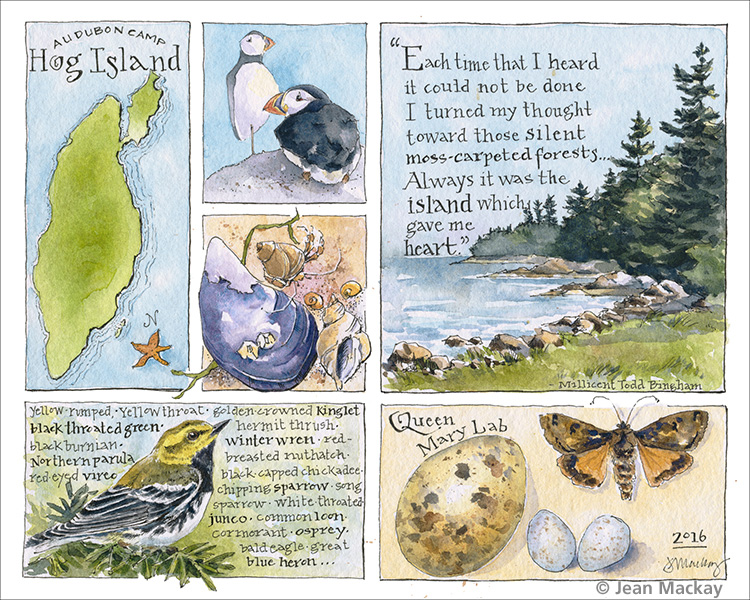
 I find grids to be especially useful when I’m hiking or traveling and want to capture a number of experiences or scenes on a single page. You can fill a square quickly with a sketch and paint later if needed, so it works well when with non-sketching companions.
Lessons from a Carrot
At the recent workshop I led in Anacortes, Washington, we started off with some back-to-basics drawing and painting techniques. Participants practiced blind contour and gesture drawings; did short, timed sketches; worked in ink to keep a drawing flow going without erasures; and put a number of concepts together while painting vegetables. Here’s my demo painting, which I went back to later to add tips from the lesson. Isn’t it great that we can learn so much from a carrot?

click to view larger
Gone West
I’ve just returned from a week in the Pacific Northwest—land of big trees, mountains, skies, water, and wilderness. I had the privilege of teaching a four day watercolor sketching workshop with an enthusiastic and talented group of artists from Anacortes, Washington. I’ll share a few lessons from the workshop here soon…but first, let’s start where so many of my travels begin: with a map. It has been 30 years since my last trip to the Northwest, so this painting helped me to get a good sense of the lay of the land.

click to view larger
I had hoped to see some western bird species and was delighted that Anna’s hummingbirds were near daily visitors to the backyard where I stayed. I mainly saw the female, which is less colorful than the male, but no less interesting.
click to view larger
click to view larger
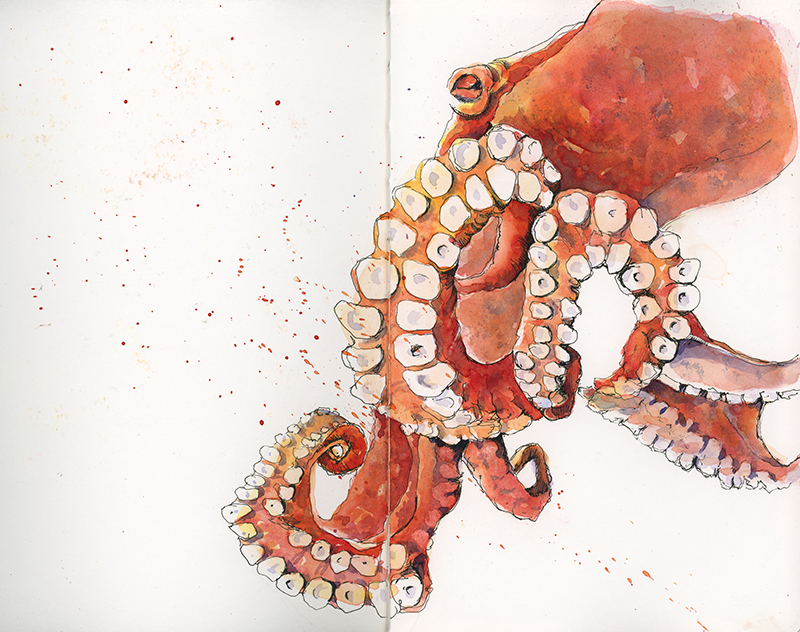
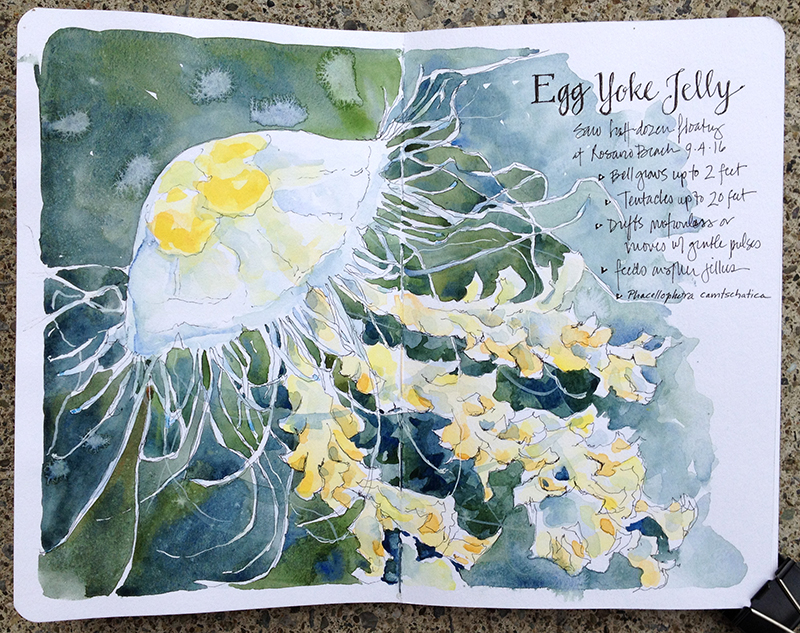
Before the workshop began, I took two days to explore and hike. I painted this octopus from a video in anticipation (i.e. wishful thinking) of seeing one in a west coast tide pool. No luck; but I did see nearly a dozen egg yolk jellyfish, a fairly common west coast species, as well as other fascinating denizens of rocky tide pools in the Puget Sound.
Tomato Deluge
Tomatoes are the new zucchini! One neighbor dropped off a dozen; another went away and left a garden full, ripe for picking. That leaves me eating and painting and looking up new recipes.

click to view larger

click to view larger
I did the first sketch in my Stillman & Birn journal with Zeta paper, which is a smooth, heavyweight 270 gsm paper. The recipe page is in a homemade journal with Fabriano soft press watercolor paper, which is a dream to work on. I wrote the main text in watercolor using a dip pen with a drawing nib. If you want to try it, simply load the nib using a watercolor brush. You’ll have to reload frequently, but that will give you a chance to alter the color and get varied tones in the letters.
Cool Green
90-degrees – 50% humidity. Needless to say, it’s hot.
It’s the kind of day you’d like to have air conditioning in your car for the four-hour drive from New Haven to Philadelphia. The kind of day that’s too hot for six rounds of unloading my son’s college gear up two flights of stairs into an apartment with no fan. The kind of day when an air conditioned coffee shop with a 12-foot-square living wall packed with ferns is the perfect respite before saying goodbye and taking a train back home.

click to view larger
Sea and Sky
“There is magic in the distance where the sea-line meets the sky.” Alfred Noyes
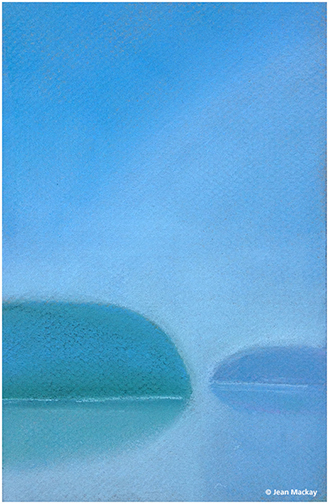
While in Maine recently, I had several opportunities to observe that magical place described by Noyes. When the light is just right, sea and sky merge. I’ve been playing with how to capture that on paper ever since.
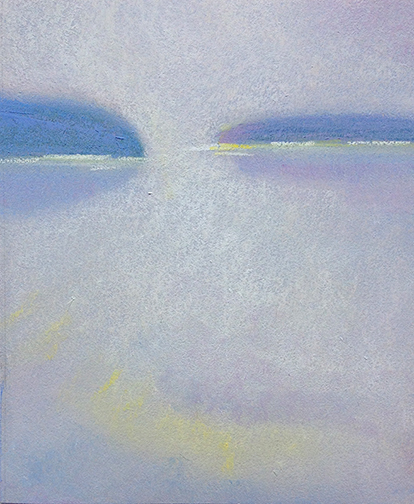
Though I typically work in watercolor, I swapped my paints for pastels to try to get a more ethereal effect.
Gone Coastal

A week on an island in Maine means only one thing: I’ve gone coastal. I shut off e-mail and social media, tune out news, turn off work, and I cram as much hiking, cycling, exploring, and, of course, painting as I can into seven highly cherished days. I live by the tides, stay up too late painting, wake up early to see the first light on the water, poke in tide pools, scour mudflats and rocky ledges for shorebirds, seek out new trails and vistas, dodge mosquitoes, and manage to come away both rejuvenated and exhausted. Here’s a peek inside my sketchbook…I’ll share a few more pieces in the coming days.
Click on any image to view larger in a slideshow.


Poetry of Onions
“…Let me keep my mind on what matters, which is my work, which is mostly standing still and learning to be astonished…” – Mary Oliver, Messenger
I spent a recent rainy morning with two artist friends at Walker Farm in Brattleboro, Vermont. The sunflowers and peaches, carrots and tomatoes, and a riot of bright-colored petunias in the greenhouse were a painter’s dream. But somehow I found myself drawn to an old shed, where several bushels of onions caught the dim light. If you haven’t read Mary Oliver’s poem, Messenger, I recommend it in its entirety. This part about “mostly standing still and learning to be astonished” struck me as especially fitting for this particular moment — where something as ordinary as an onion becomes strikingly beautiful when we really look at it. What better work is there for an artist?

click to view larger
Season of Abundance
It is the season of abundance. Farm stands and farmer’s markets overflow with luscious color and variety. Gardens are ripening toward their fullest beauty. I am utterly drawn in.

click to view larger
Forgive me if you are a lover of cabbage. Aside from when it is disguised in coleslaw or egg rolls, I find cabbage hard to enjoy…except when painting it. Then the lovely blending of purples and greens and blues, of leaf shapes and of the spaces between them reveal the cabbage’s true beauty.
click to view larger
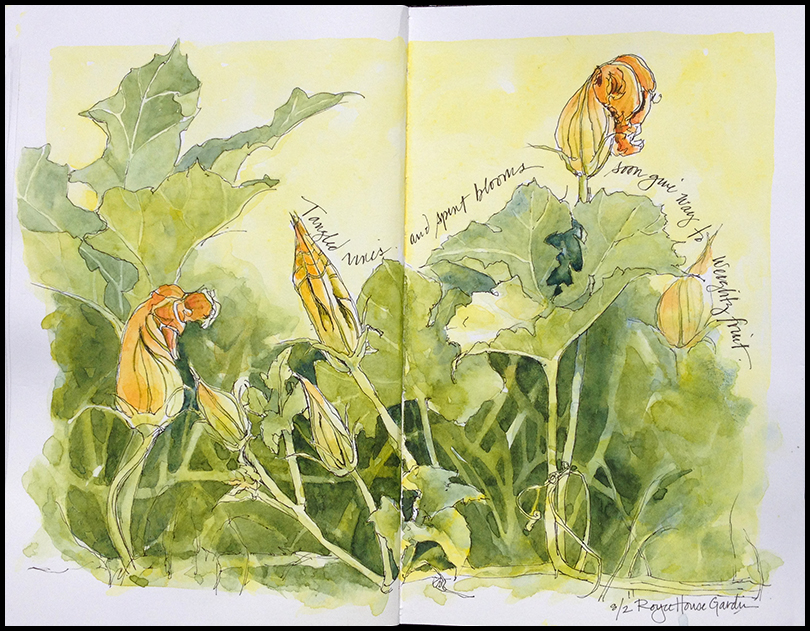
I got down on the ground for this perspective of pumpkin vines. So much happening at that level!
I painted these in my Stillman & Birn “Zeta” sketchbook and I really put it put the paper to the test. Zeta has 270 gsm smooth, white paper that is great for ink but sometimes tricky for very wet watercolor. The paint doesn’t merge in the paper, as it does with most cold press papers, but rather on the paper. I find that there is very little reworking that you can do while the paper is wet, but the paper holds up to lot’s of layers of washes. These were worked very wet to increasingly dry, light to dark.
Color Tests
How well do you know your watercolors? The response to that question at a recent workshop for sketchers led me to work with participants on a number of color tests. These experiments are really useful for seeing the full range of values that a single color offers. They also help you figure out simple color combinations (two or three colors) that work well together. Instead of doing a color chart with carefully controlled squares, I like to test colors more fluidly, doing graded one-color and two color washes. You can do this right in your sketchbook so that you have the reference with you, or use separate sheets of watercolor paper. Here are a couple pages to give you a sense of the great range of possibilities from just a few colors.

Sample 1; click to view larger
Sample 1:
Test (Top left): raw sienna test with alizarin crimson, ultramarine blue, and cobalt blue
Result: I rarely use raw sienna
Test (Bottom left): burnt sienna with phthalo blue and ultramarine blue
Result: great range of possibilities with ultramarine; I use this combination frequently
Test (Top Right): Burnt umber with ultramarine
Result: another winning combination
Test (Middle Right): Alizarin crimson, ultramarine blue, yellow ochre
Result: I love the blue leaning combinations, especially for shadows

Sample 2; click to view larger
Sample 2:
Test: I just bought two new blues—Indathrone and Indigo (Daniel Smith)—and wanted to try them with colors that I use frequently.
Result (Indigo, left): I was looking for ways to get some rich darks and this seems to do the trick. I suspect I’ll use it sparingly, but it’s nice.
Result (Indathrone, right): I especially like some of the greens and grays—a keeper!


 Drawn In