
Something Old and New
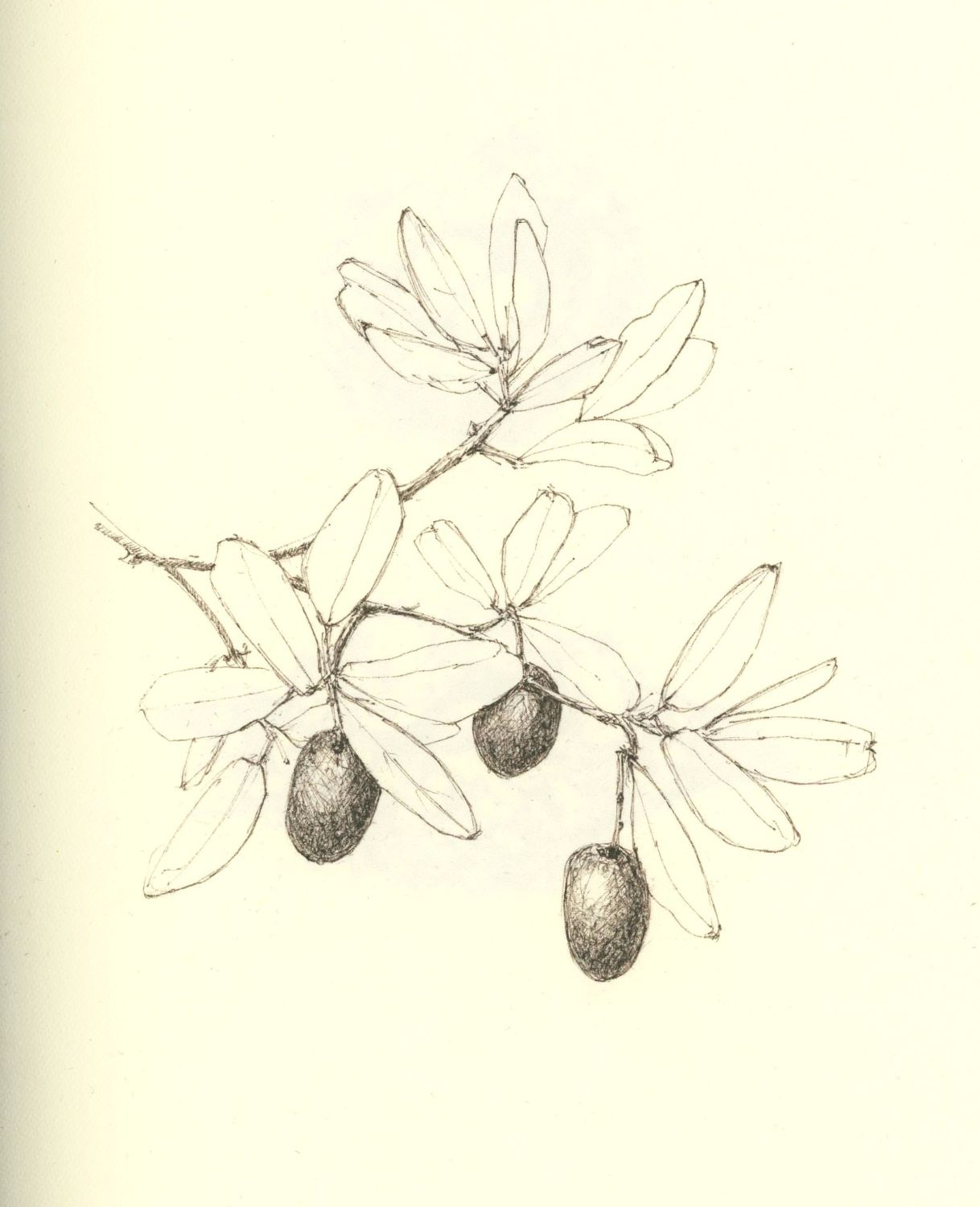
I bought a leather-bound journal with lovely cream-colored laid paper with deckled edges while in Italy. It’s not suited to watercolors, but it’s good for ink sketches, which I’ve been eager to do more of using sepia ink. Brown inks, including sepia (originally derived from cuttlefish), bistre (made from the residue found in chimney stacks), and iron gall (made from the tannins in oak galls and iron), were frequently used for drawing and light washes during the Renaissance (think Leonardo Da Vinci or Rembrandt drawings). I love the way that brown inks can give a drawing a softer effect and historical tone compared with using black.
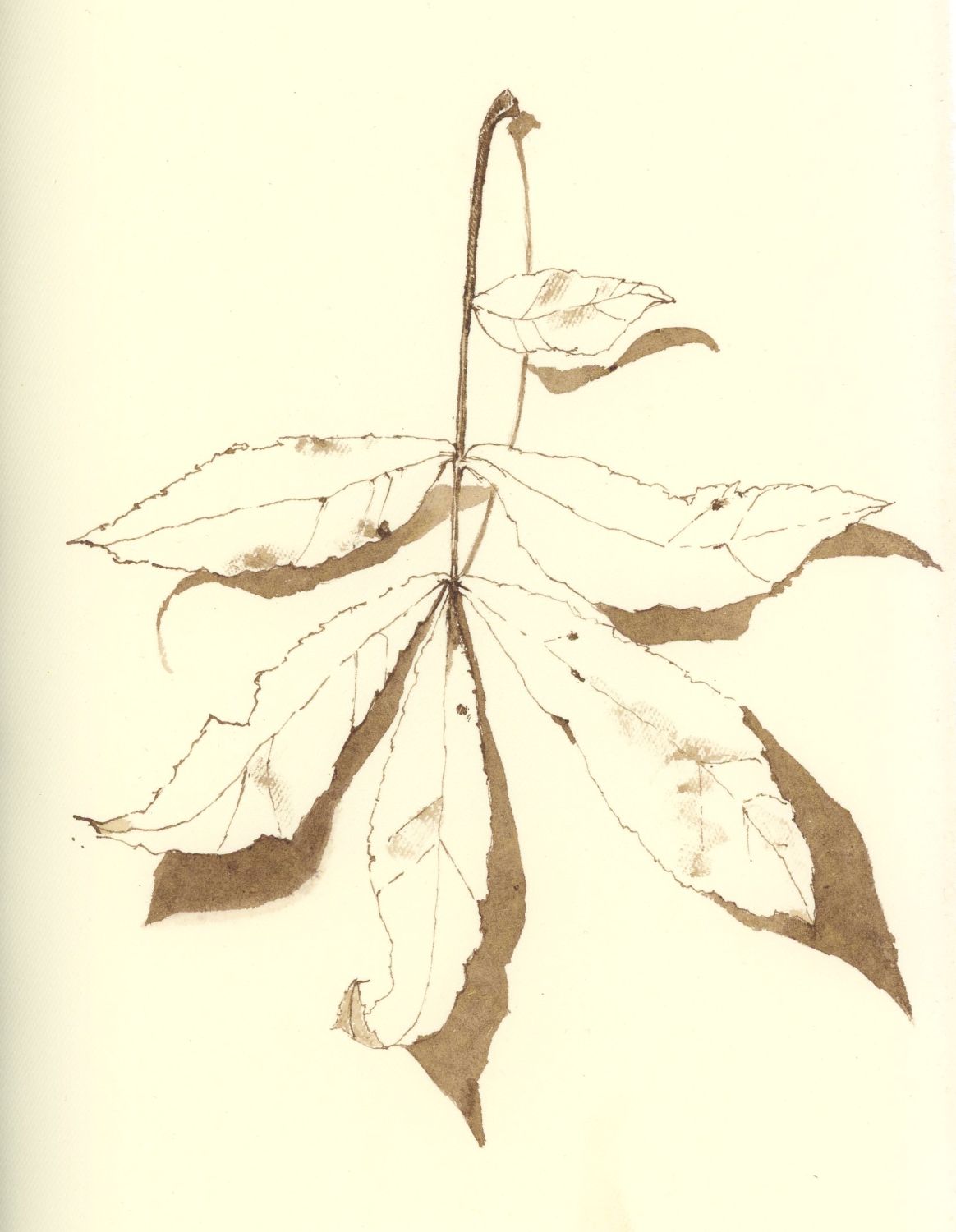
I sketched the bitternut leaves and hummingbird nests with a dip pen and Winsor & Newton drawing ink and did the olive leaves with a Micron 005 sepia pen. As you can see, I’ve also tested the ink using a brush and was pleased that the paper didn’t buckle at all. I’m eager to keep going and try some lighter washes and more complex subjects.

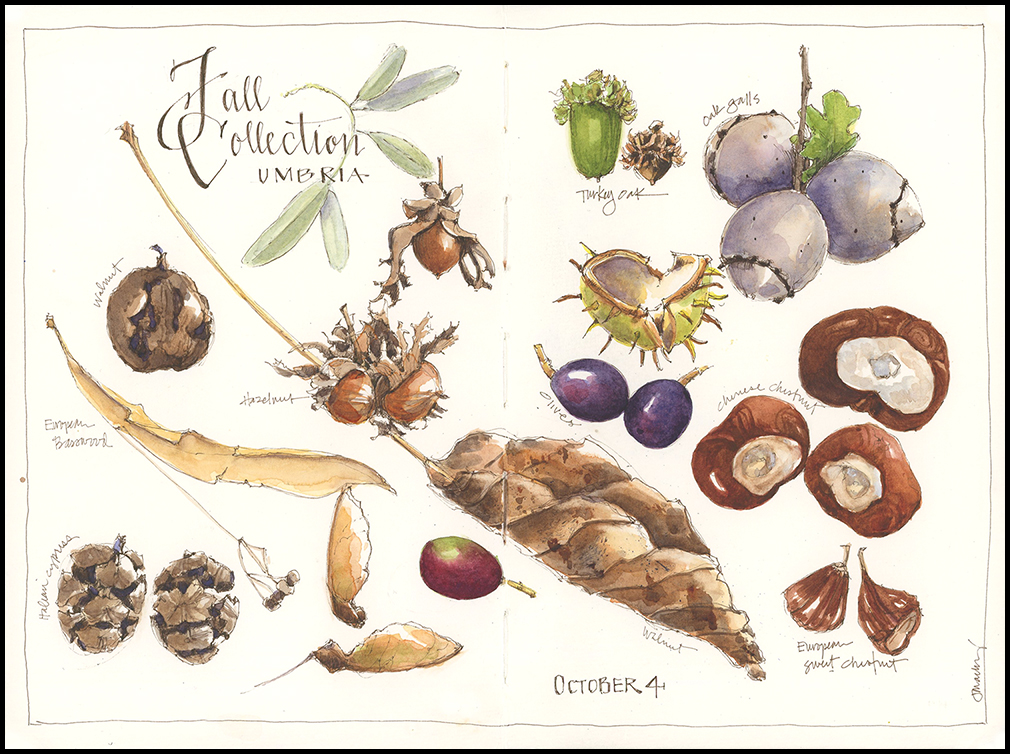
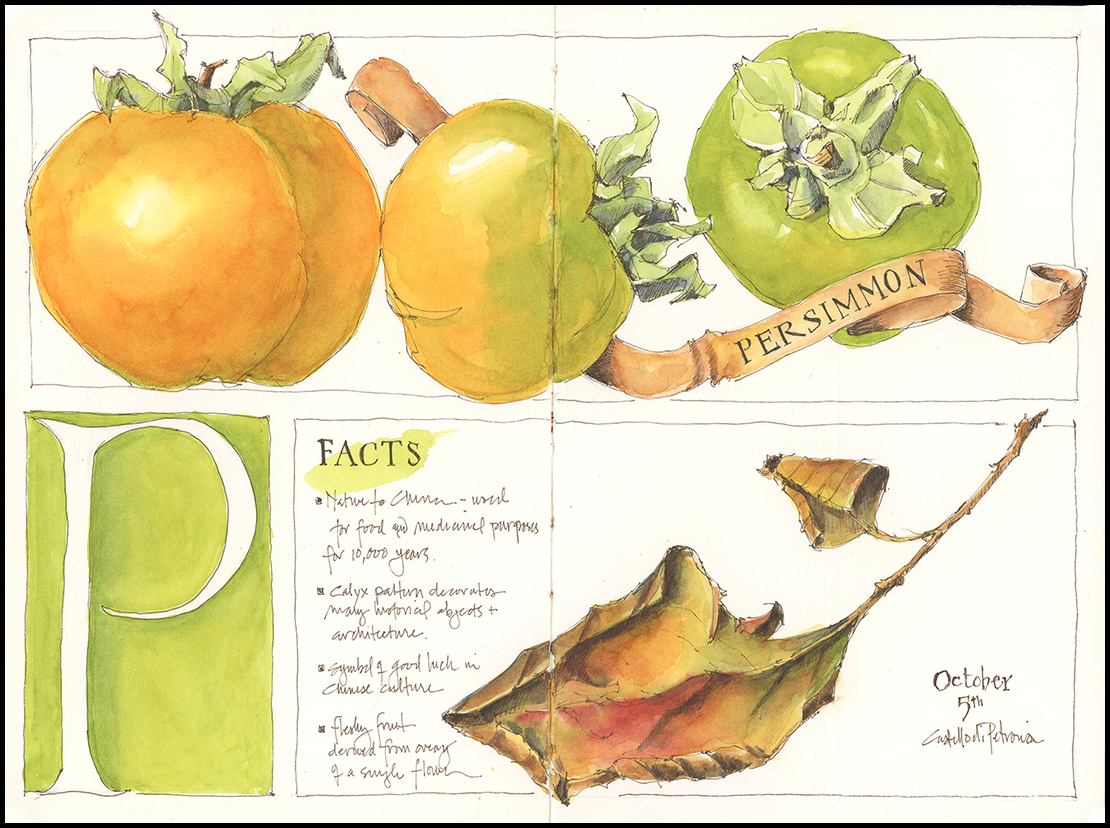
Sketching the Nature of Umbria
I had an exceptional week teaching in the Italian countryside in Umbria with Winslow Art Center, and I couldn’t have asked for a more enthusiastic group of participants. There is a quote that I shared with them from Italian painter Cennino Cennini (c.1360 to 1427), “Now then, you of noble mind, who love this profession, come at once to art and accept these precepts: enthusiasm, reverence, obedience, and perseverance.” Obedience aside, it exemplified the way in which they approached the lessons and techniques I shared throughout the week. As you can see, we tackled a number of subjects and came away with sketchbooks filled with an extraordinary experience.


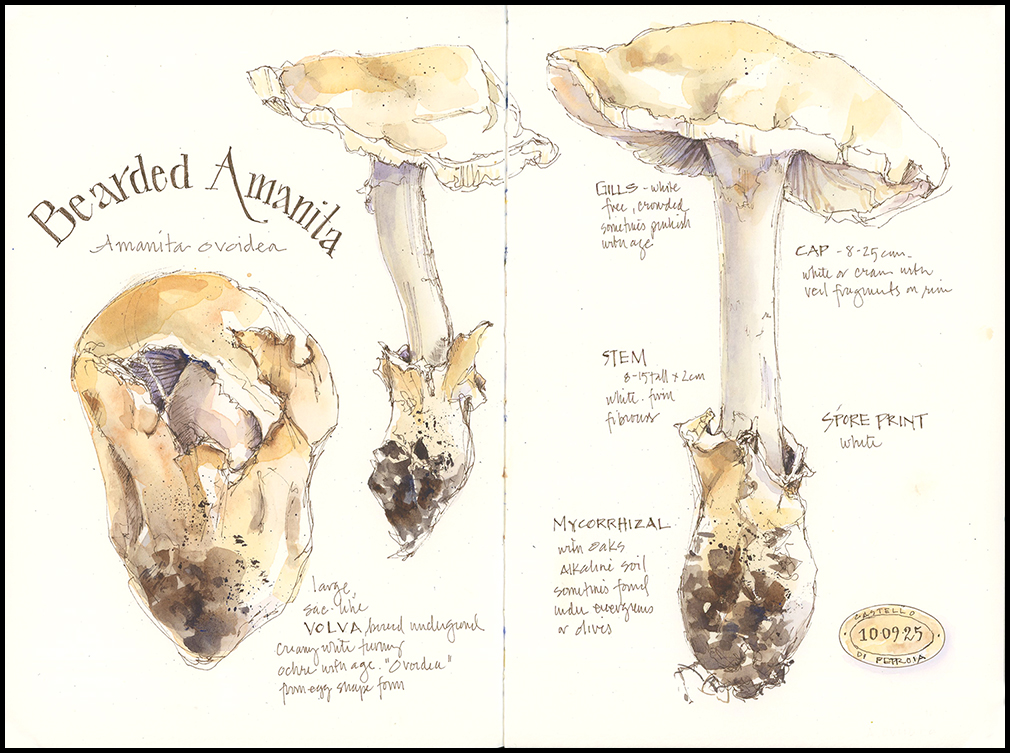
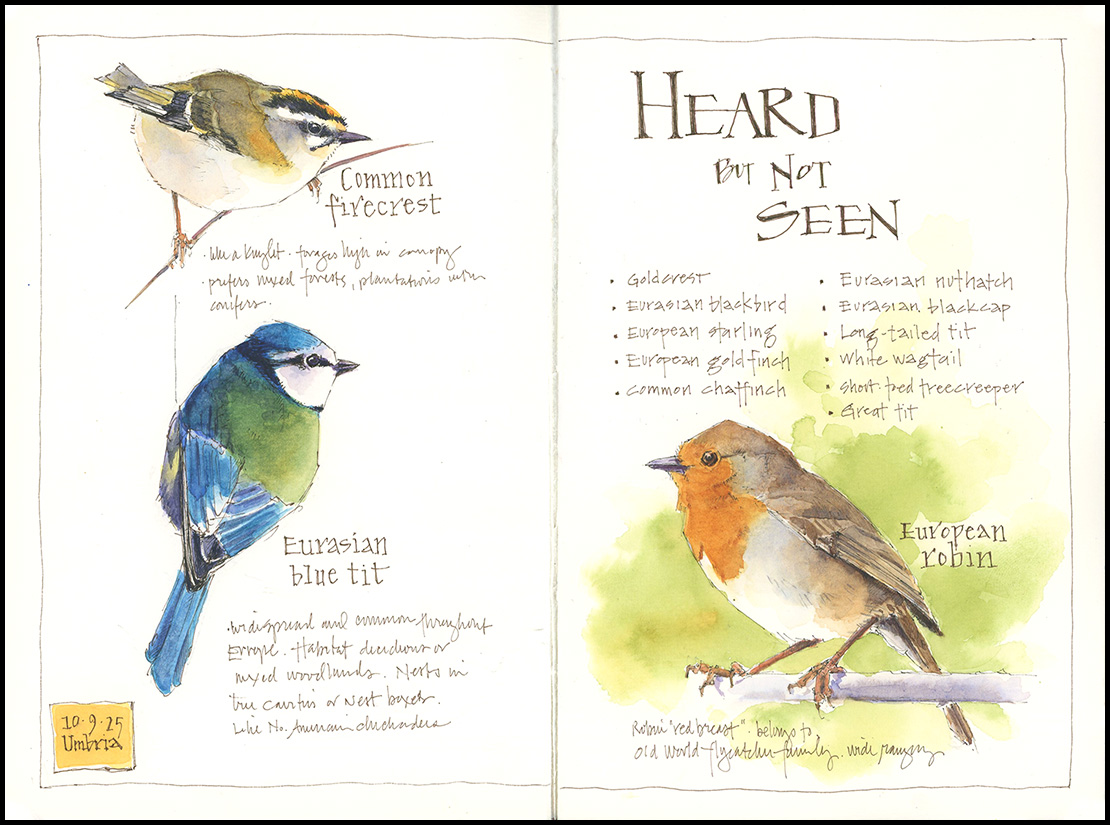


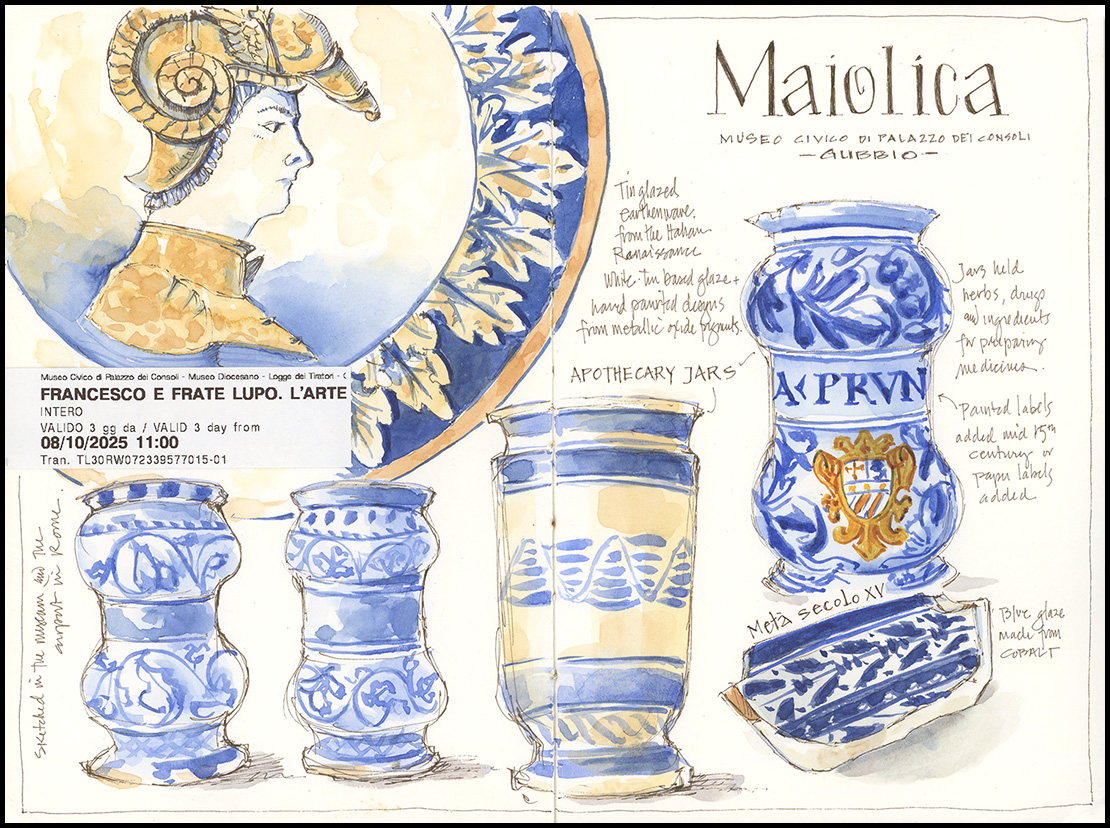
Join me next time! If this type of sketching looks enticing to you, consider joining me for Sketching the Nature of Place at Sofia in Monseraz in Portugal next June or Drawn to Nature at Madeline Island School of the Arts in Wisconsin in July 2026. Both venues offer an exceptional setting to immerse yourself in a week of learning and sketching.
An Auspicious Beginning
I’m heading to the foothills of the Italy’s Apennine mountains this week to teach a watercolor workshop with Winslow Art Center. It’s a privilege and a pleasure to have this opportunity and I can’t wait to be back at Castello di Petroia. This authentic medieval fortress turned boutique hotel is perched on a hilltop between the towns of Perugia and Gubbio, with inspiring views of the surrounding landscape. The castle, birthplace of Federico da Montefeltro, Duke of Urbino (b.1422), is surrounded by a 600-acre traditional Umbrian farm with beautiful olive groves, hiking and horse-riding trails, meadows, woods and abundant wildlife. Because I’ll be staying in a place that was most prominent in the 1400s, I wanted to try my hand at Renaissance White Vine illuminated letters, which mark many texts of this period. It makes for an auspicious beginning, don’t you think?

Tips and Techniques– When setting out for new places, take some time to get oriented beforehand. I like to read up on the history, culture, plants and wildlife of where I’m headed. This type of research not only prepares me for the trip, but also informs what I want to sketch beforehand or when I arrive. This illuminated text is in my sketchbook and marks the start of the sketches I’ll do while in Italy.
The Bible of Illuminated Letters by Margaret Morgan was my go-to source for learning about this lettering style. The elaborate vine scrolling is not easy to do and it took me a few tries to get the hang of it. Traditionally, the capital letter would be gilded, but I used Winsor & Newton gold ink, paired with gouache to achieve the flat opaque color that is characteristic of this style. See you in a few weeks– Ciao!
Past Perfect
Had the zinnias looked any more enticing before they began to fade?
I think not. The tufts of petals and ragged edges add so much character. And while there’s plenty of praise for summer blooms, even these hangers-on continue to add cheer and attract a hummingbird or two to the garden.
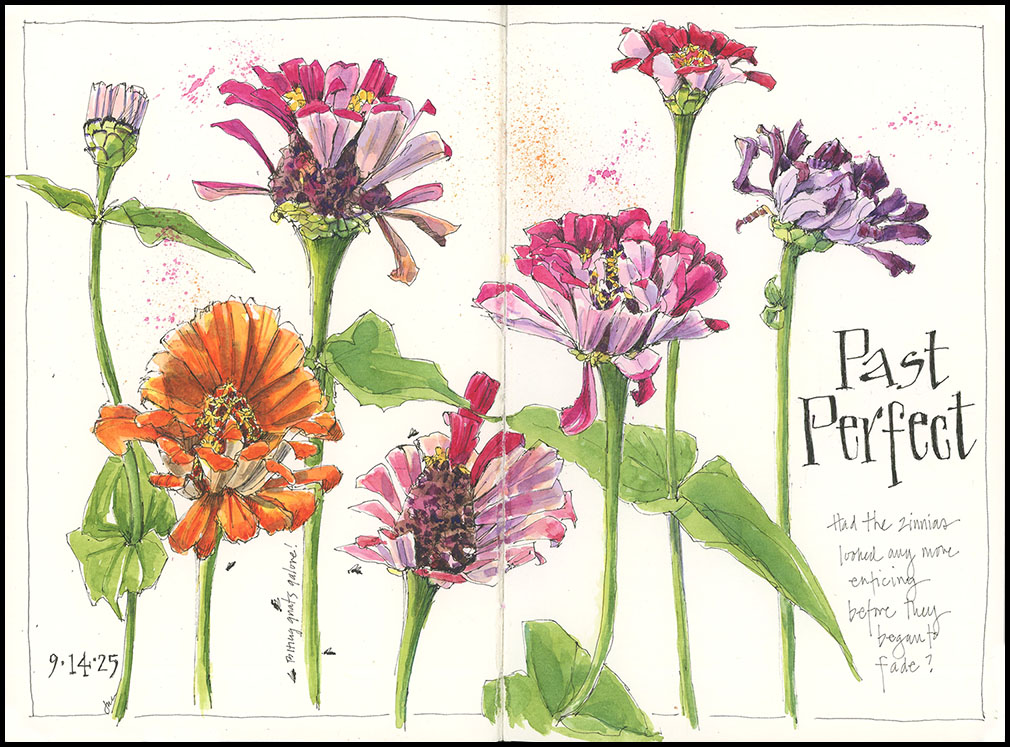
Tips & Techniques– This sketch was tricky because I was working outside and biting gnats were keeping me company the entire time. It was a warm afternoon and the sun was lovely so I didn’t want to give up. I made it through sketching all but the purple bloom on the right and then painted the entire page inside. When I was thinking of “Past Perfect” for my title, I looked up the grammatical rule for using this tense and had a bit of fun coming up with a sentence to illustrate it. (Materials: watercolor and Micron 005 pen in Handbook Journal with 140lb watercolor paper)
Heads up! Check out the WORKSHOPS page– I’ve just added a new online class, Drawing the Nature of November, starting 11/6. Bigger still is an incredible opportunity to immerse yourself in the beauty of Portugal during Sketching the Nature of Place next June 3-8 at Sofia in Monsaraz.
Once in a Lifetime Sighting
Have you ever had a wildlife sighting that is likely to be the only one you’ll ever have of that species? For me, these have typically been extraordinary moments: a California condor soaring below me while hiking the steep cliffs to Angels Landing at Arches National Park; walking past a field of Tule elk in the dark at a campground in the Redwoods in California; coming upon bobcat kittens playing in the road by our house. And last week, I discovered a wood turtle larger than my hand eating a mushroom in our yard. That may not seem extraordinary, but I’ve never seen one—and for good reason. They are declining across their range—by as much as 50 percent over the last 100 years– and are listed as endangered by the International Union for Conservation of Nature (ICUN). These encounters are always memorable, whether or not you sketch them, but I’m so glad I did.
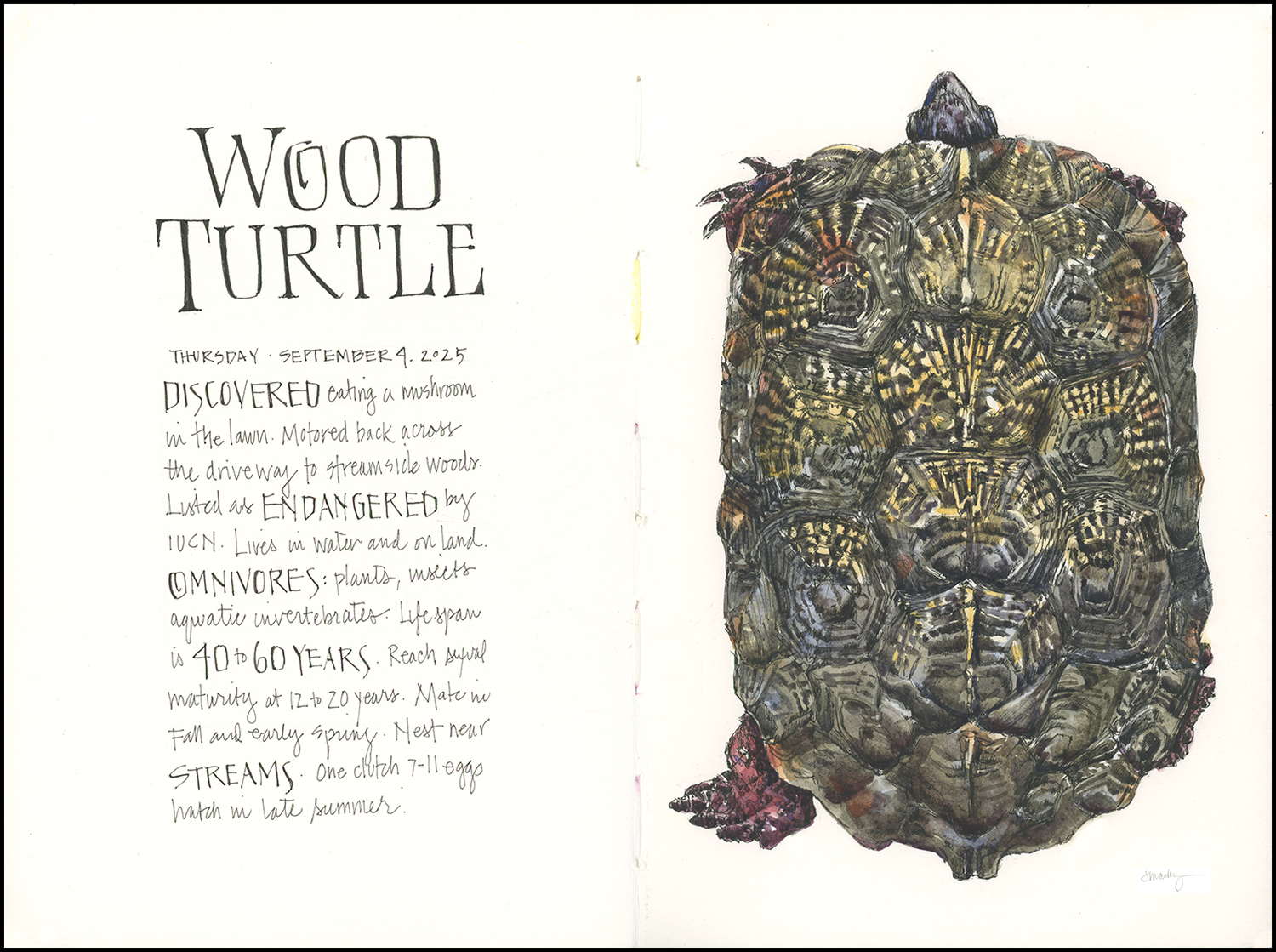
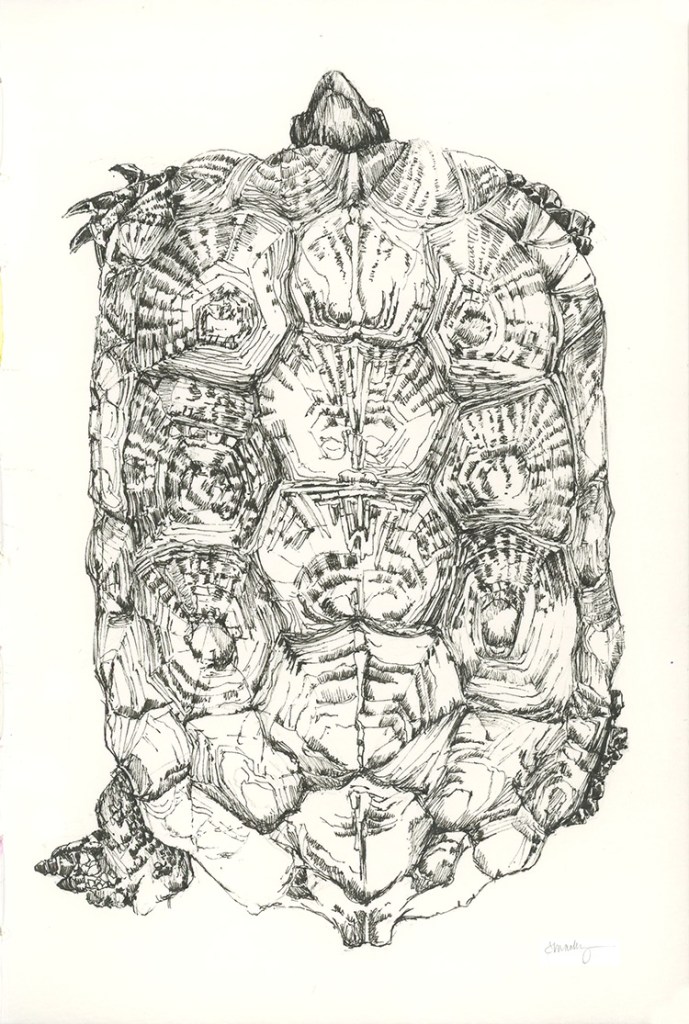
Tips and Techniques– Keep your eyes open! I spied this turtle while in the car heading out our driveway for the store. I wasn’t sure I’d have time to get my sketchbook, so I snapped a few photos. Good thing: it soon made its way back across the driveway for the wooded stream that borders our property. Painting this took lots of patience and was one of the most complicated things I’ve ever drawn. While the drawing is largely covered in the end, it served as a valuable roadmap. Click on the image below to see my process from drawing to adding layers of paint. (Materials: Micron 005 pen and watercolor in Handbook Co. 140lb Watercolor Journal)

Farmers Market Bouquets
A few weeks ago, I wrote about my Farmers Market quest, and these two bouquets are some of my more recent discoveries. I used them as subjects for the final session of my Fun Farmers Market class, which wrapped up last week. There are many ways to paint a bouquet, but because I wanted to convey a bit of fun, we worked loosely for the ink sketch and then tried to keep the watercolor flowing, especially in the early stages of painting. The white on black label added a casual farmers market element to finish the piece.

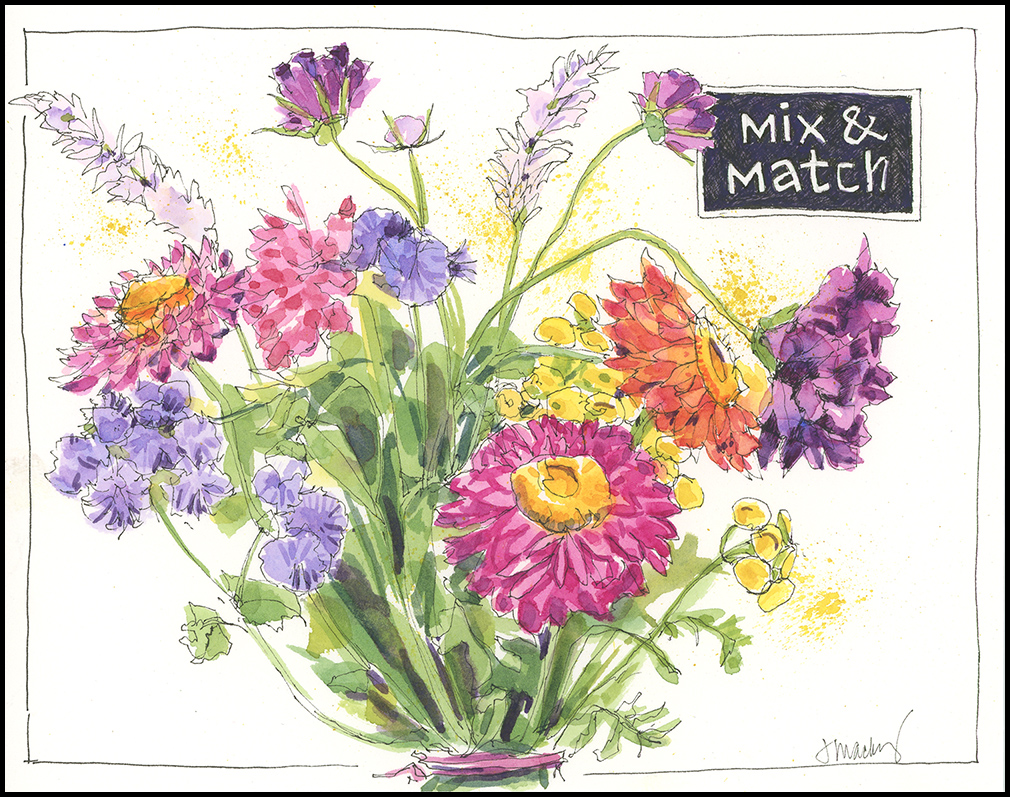
(Materials: Top: Micron 005 pen and watercolor in Handbook Co. 140lb Watercolor Journal; bottom done on New York Central Art Supply 100% cotton, 140lb HP watercolor paper)
Vinalhaven Sketchbook 2025
Ah…the rocky coast of Maine…and the island of Vinalhaven, specifically! Visiting once a year for a week hardly feels like enough. But I’ll take it, and I’m happy to share some of the magic with you through my vacation sketches.

Beloved by many, the Lane’s Island Preserve is simply one of the most beautiful places on the island. A large meadow and bayberry thickets ring a tidal cove and lead to an extensive rocky shoreline. With a bit of scrambling over granite boulders and rockweed, you can reach numerous tidepools, which I love to sketch. Unfortunately, the tide was coming in, so I didn’t have time to draw them. Instead, I kept my feet on dry ground and admired a thicket of bull thistles (Cirsium vulgare) that attracted numerous bees and a common yellowthroat.

Spruce forest gives way to panoramic views of islands and ocean, and fascinating bedrock geology at the Tip Toe Mountain Preserve, managed by the Vinalhaven Land Trust. While poking along the shore, the remains of a gull’s breakfast caught my eye (and nose), which led to a closer inspection and sketch of what amounts to a gull’s dirty dishes.
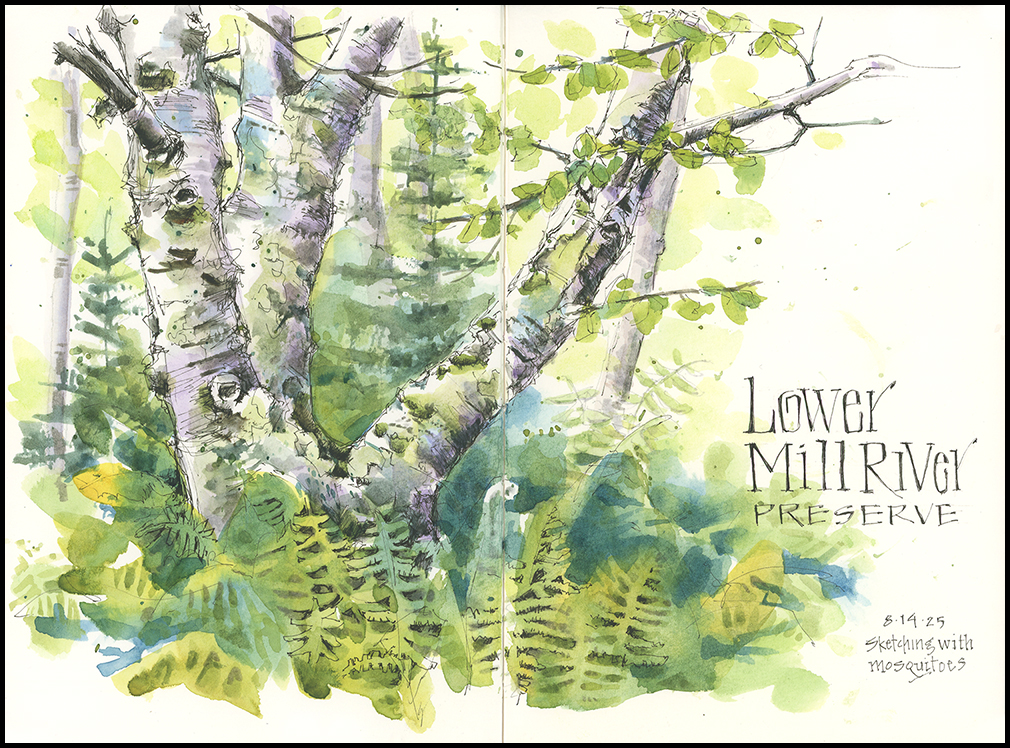
Vinalhaven’s Lower Mill River Preserve is a hidden gem of spruce woods with granite boulders and fern meadows that lead to shallow bays and quiet saltwater coves. There are some beautiful old spruce and birch trees here, which I was determined to sketch, despite the mosquitoes, which greeted me quickly and kept me company the entire time.

Hummingbirds frequented the feeder outside our windows all day long! How could I not include them with our bird list from the week?
From the Garden
Sending you zinnias this week: bold, colorful, and deserving of a page all their own. I painted them as a demo for my Fun Farmers Market class at Winslow Art Center and it’s been great fun to see the artwork that class participants have created in response. What I especially love about art is that even when working on the same subject no two people create quite the same piece. The marks made are as unique as fingerprints or voice, as personal and expressive as touch or song.
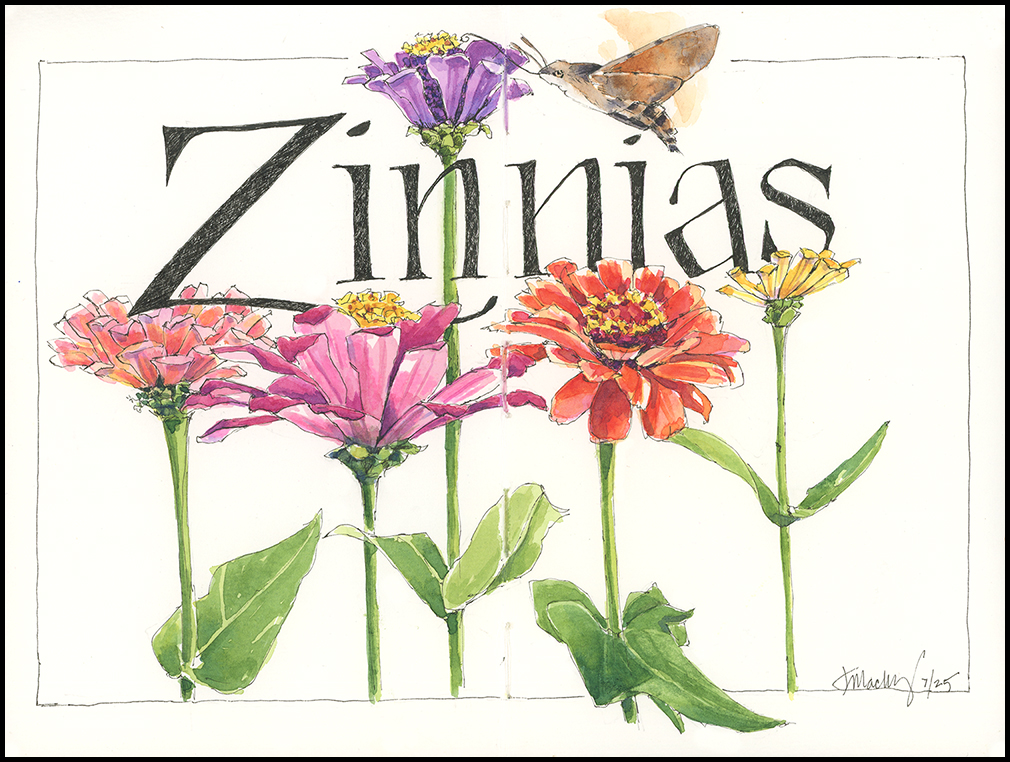
Tips & Techniques- I love adding wildlife to my flower paintings. Bees, butterflies, moths, beetles, dragonflies, caterpillars, or birds add a lively element and are part of the story of what’s going on in the garden. If they’re not there, I don’t make them up, but when they are it’s nice to have a record of it. (Materials: Micron 005 pen and watercolor in Handbook Co. 140lb Watercolor Journal)
Farmers Market Quest
I’ve been visiting farm stands and farmers markets for several weeks, looking for fresh subjects for my Farmers Market sketchbook series. I accidentally discovered The King Farm near South Dartmouth, Massachusetts, when we made a wrong turn and pulled into the parking lot to get our bearings. A large tent revealed a bonanza of produce, baked goods, and two long tables with containers of mix and match flowers. Last week, I found buckets of colorful flowers from Damsel Garden at the Kinderhook Farmers Market. I love the riot of colors and textures and the abundance of it all.
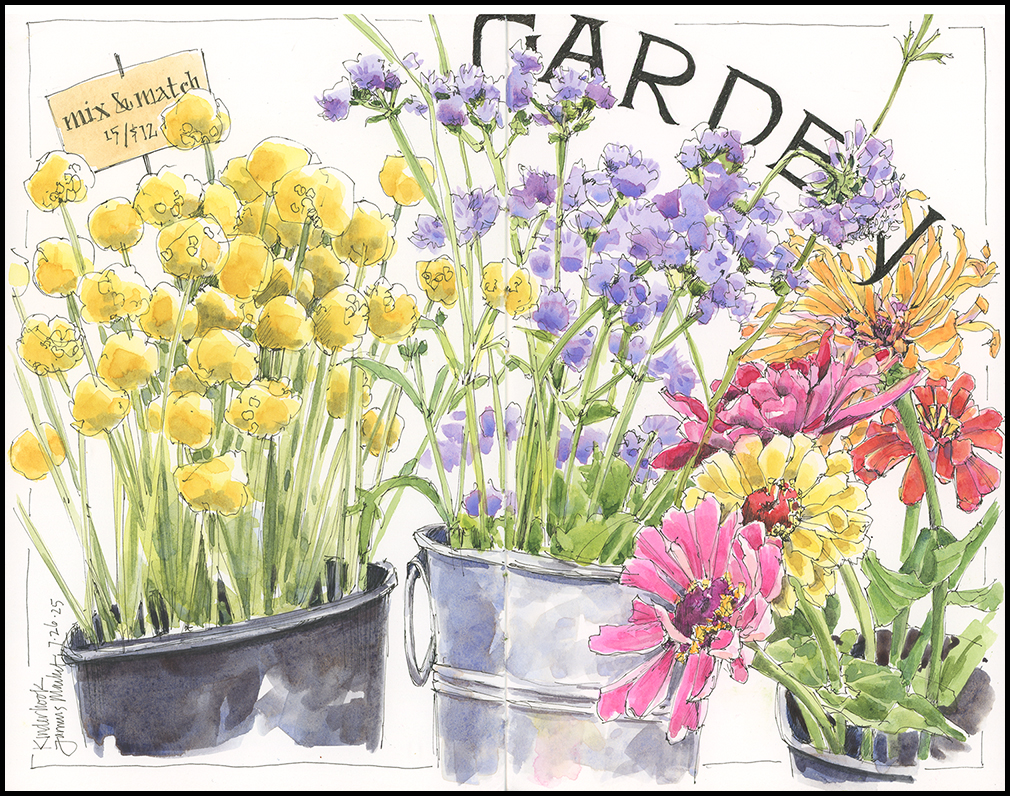
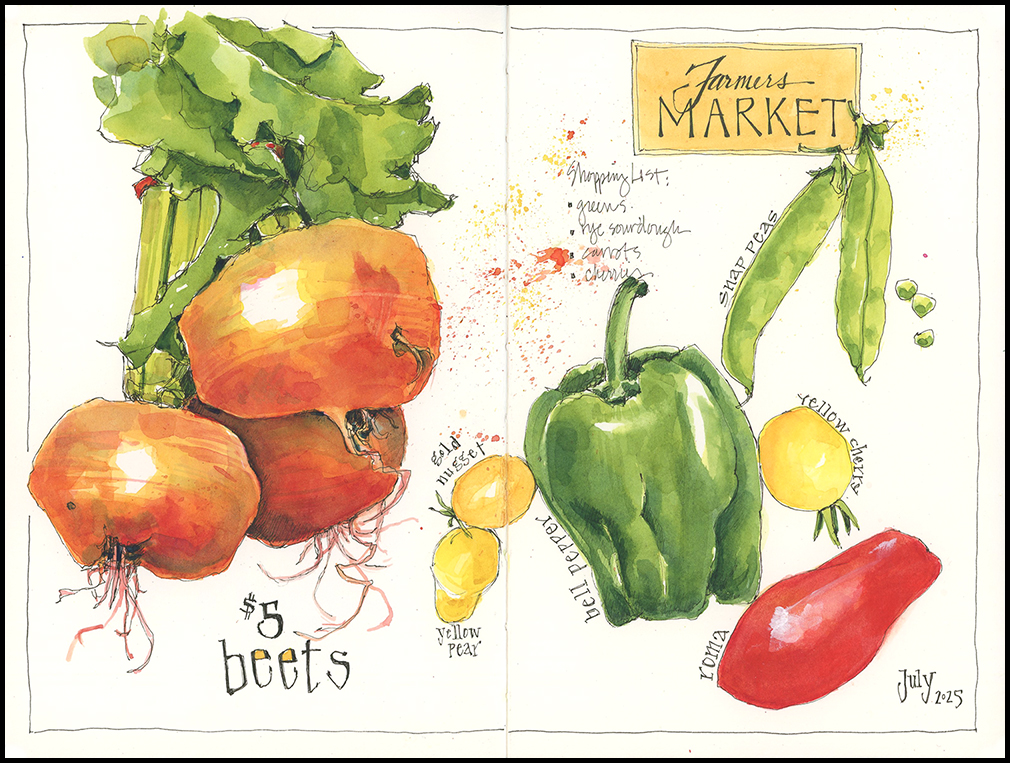
Tips & Techniques- You can’t go wrong! Pick up some farm fresh produce and start sketching. Vegetables and fruits are forgiving and complacent subjects– not only will they stay put, no one will know if your carrots or peas don’t look exactly like the ones in front of you. Vegetables, fruits, and flowers give you full artistic license to create a composition that suits you and you can walk away and come back to your drawing or painting as your times allows. The only thing you need to ensure is that no one eats your subject before you are finished. Materials: Damsel Garden Flowers on Stillman & Birn Zeta Sketchbook; Mixed Vegetables on Handbook Co. Watercolor Journal)
In the Garden- July
I have hopelessly neglected my garden this year in favor of other activities, and it is now a rather messy tangle. Delighted that last year’s morning glories reseeded themselves, I didn’t have the heart to cull them and now they are climbing not only the arbor but also most of the flowers. Still, from a distance, and with a bit of artistic license, it’s a colorful and lively scene, and not altogether too bad.
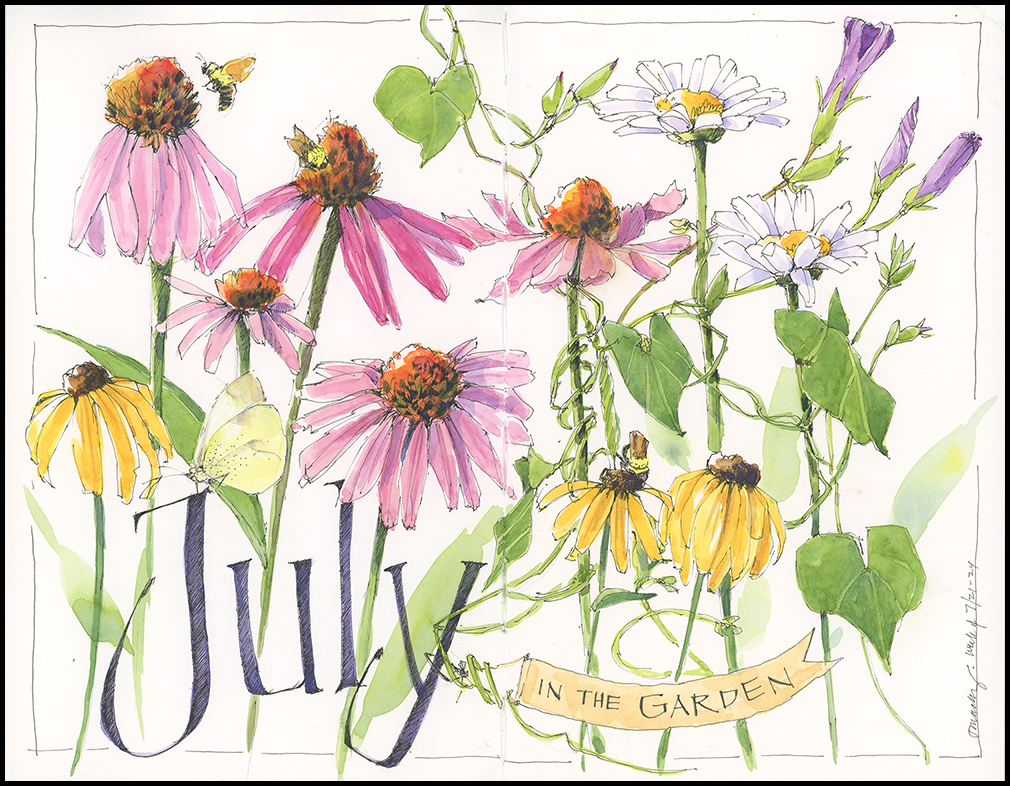
Tips and Techniques-When I first started journaling, I didn’t quite understand the concept of editing what I was looking at to create a pleasing or more interesting composition. With time and experience, I’ve come to love the flexibility of picking and choosing elements to include on a page like this and adding big text as a graphic element. Even though I do this type of layout frequently—either in the garden or along the roadside—the pages come out differently each time and are a nice record of what’s growing throughout the year.


 Drawn In