
Left Behind
What a treasure to find the shell of a northern moon snail, a perfect whorl nearly four inches end to end, decorated with a few barnacles. I love the heft of it in my hand. I love turning it over and over to study it from different angles. The huge snail that built it is long gone, but how nice that this was left behind.

Tips and Techniques– I did this page directly with a Micron 005 sepia pen and a light wash of sepia watercolor, plus a bit of yellow ochre and burnt sienna on the left hand shell. This approach was inspired by an excellent Botanical Sketching workshop I took last weekend with the highly accomplished trio Wendy Hollender, Lara Call Gastinger, and Giacomina Ferrillo. I love the look of sepia, but rarely use it, so it was great to try it during the workshop and then work with it again on my own.
Vinalhaven Sketchbook 2023
Moss-carpeted forests, spruce spires reaching the sky.
Mushrooms after rain: scarlet, orange, purple, yellow.
Granite boulders that sprout gardens of ferns and grey-green lichens.
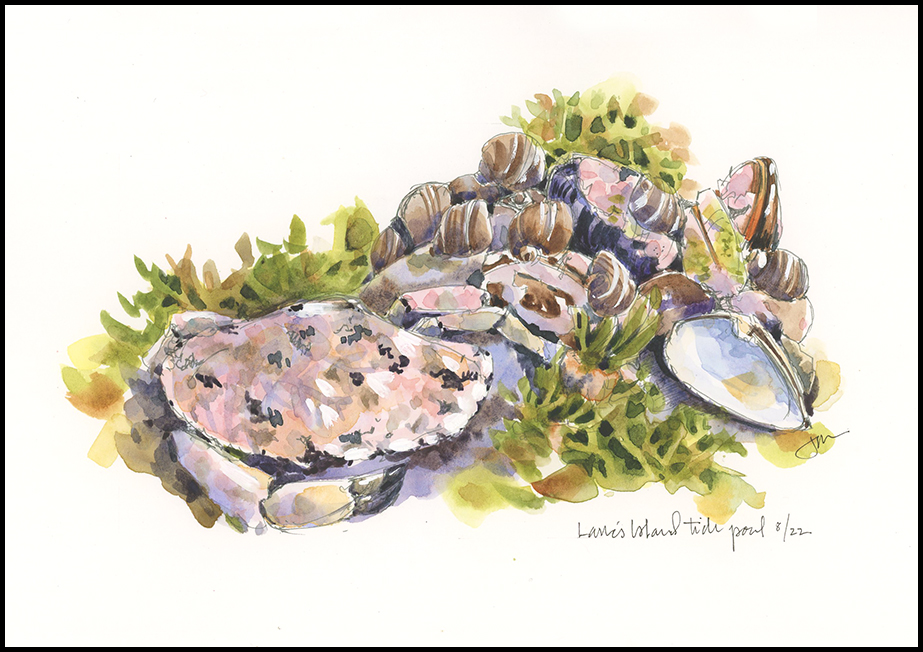
Rocky pools brimming with life caught between the tides.
Migrating shorebirds and seabirds.
Quarry swimming. Quiet. No stop lights. No chain stores. No cell coverage.
Ferries. Fog.
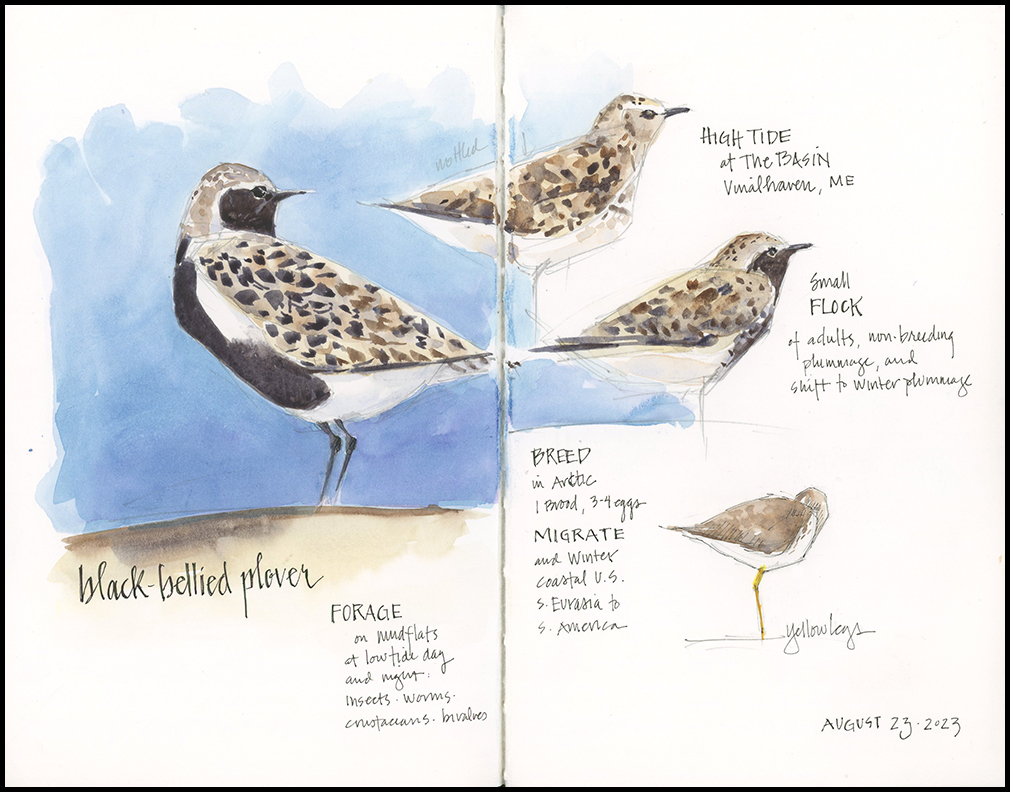
These are the things that draw me to the island of Vinalhaven, Maine. I hope your summer has taken you to some of your favorite places, too.



Clamming
If you’ve ever enjoyed a clam roll or chowder or steamers, then you know the flavor of Mya arenaria, the soft shell clam. Before these mollusks reach your table, they eek out a life burrowed in soft mud or sand, filtering tiny plankton from sea water. Most clams today won’t reach their potential life span of 10-12 years, nor will they reach anyone’s plate, because they will be eaten first by highly invasive green crabs or other predators. Here’s a look at the ins and outs of clams and a few of the other creatures that share their watery home; sketched while sinking into the dark muck myself during a program on soft shell clams, hosted by the Vinalhaven Land Trust in Maine.
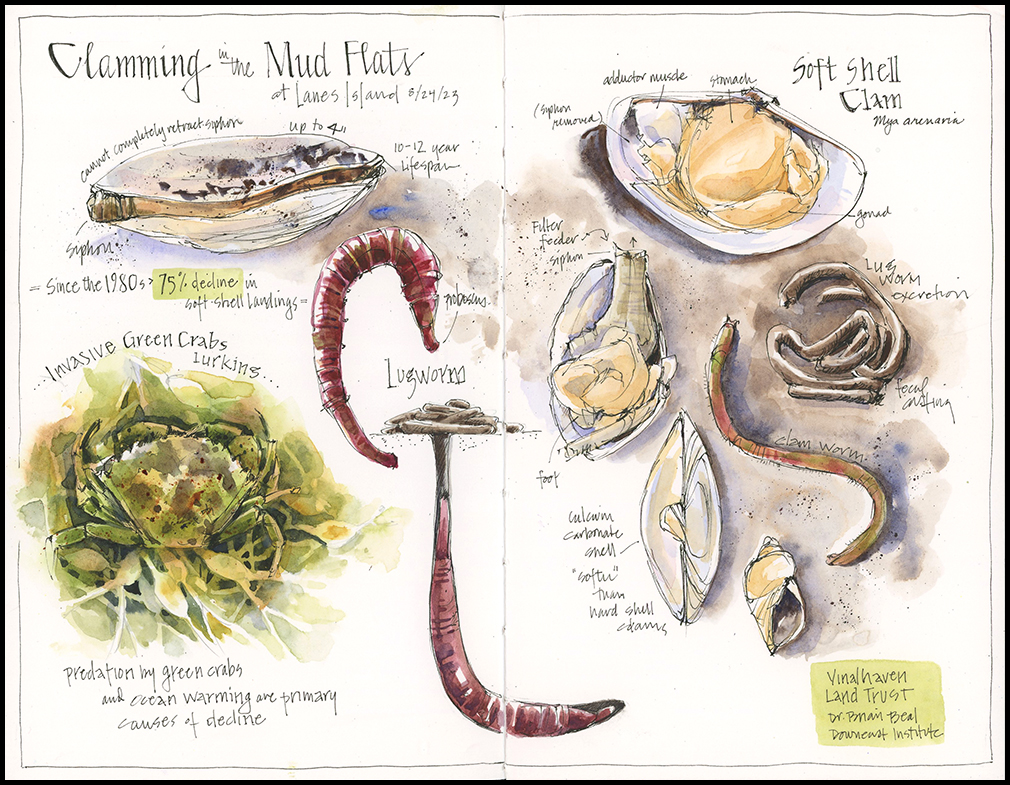
Tips and Techniques– Rocky coastlines, mud flats, spruce forests, and tidal basins were my muse last week while vacationing on the island of Vinalhaven in Maine. I brought my sketchbook on all our outings, including hikes, canoeing, and intertidal explorations. What I find works best for sketching on the go in varied environments is to pair down to just a sketchbook and a pen or pencil, a small set of paints, and a water brush. These fit in a waterproof Ziplock bag and are light enough to carry easily. If time is tight or conditions are too challenging, I just make an ink sketch, which I paint later. Don’t lug too many art supplies with you. Stick to the basics and you’ll likely come home with fresh sketches from your travels or time in the field.
Painting Exuberance
If last week I praised precision, this week I extol the value of putting some exuberance on the page. Especially when it comes to sketching your favorite subjects, or new-found discoveries in nature or, even better, both—some loose pen and paint and a splash of spatter can help to bring energy to your page.
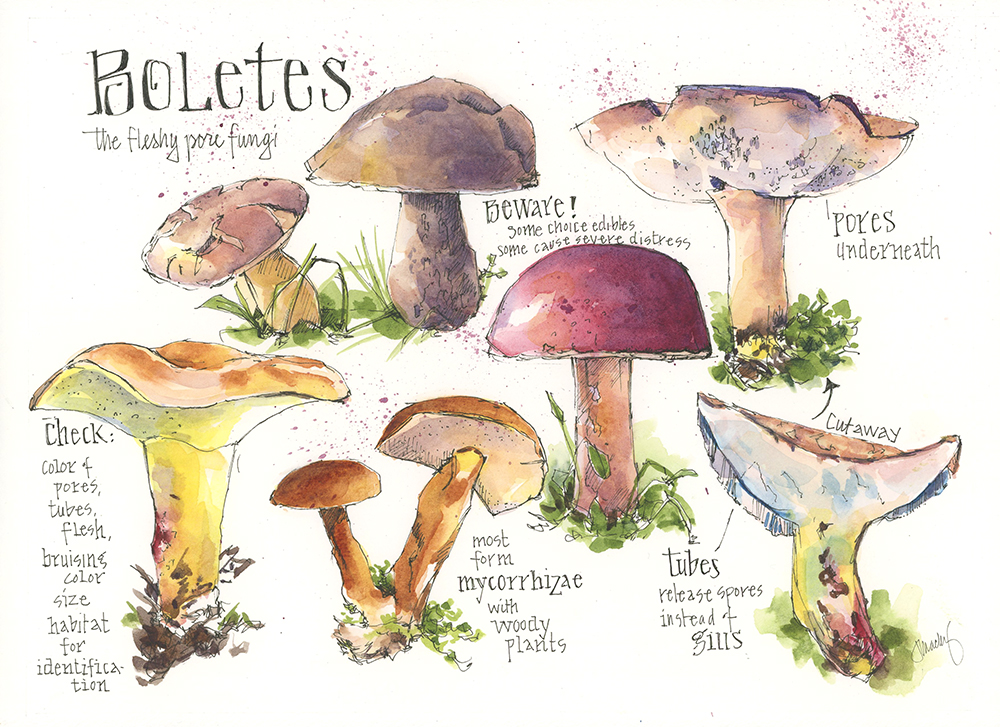
I painted this as a demo for a recent class on mushrooms, a subject deserving of enthusiasm. I’ve since headed to Maine, where I stepped out of the car and found black trumpets and violet cortinarius mushrooms pushing up through rain-soaked woods. I haven’t had time to paint them, but I have a whole week ahead to explore with sketchbook in hand. Expect more exuberance in the paintings to come.
In Praise of Precision
It’s nearly mushroom season here in New York, the only time of year that I’m rooting for humidity and rain. I typically work fast to keep up with sketching the variety of mushrooms under our grove of oaks, but for now, I’m taking my time. There’s so much subtlety and beauty in the simple form of a mushroom. It’s a pleasure to look closely and capture it on paper.
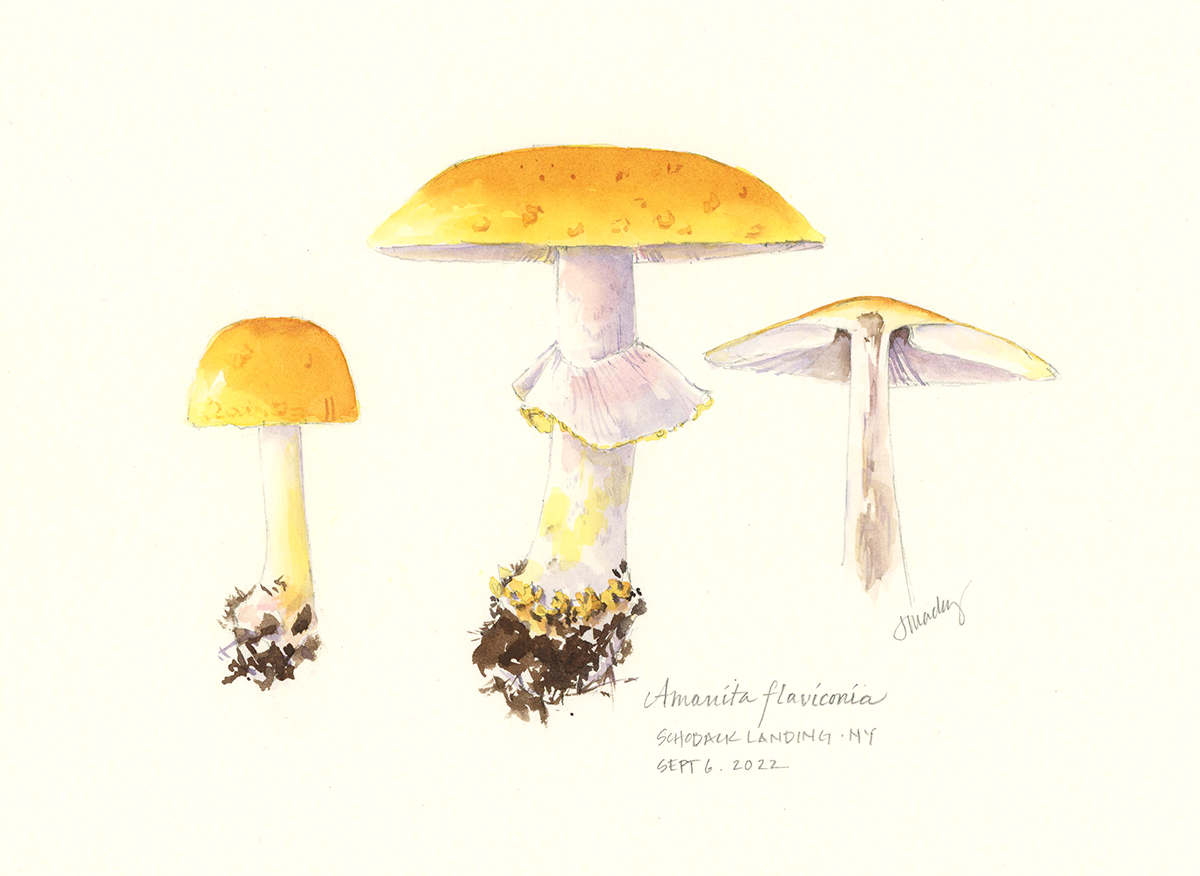
Tips and Techniques— I did this painting as a demo for my online Mushroom Explosion in Watercolor class using a photo I took last fall. A light-colored or white mushroom offers a great lesson in observation, capturing subtle colors, glazing, doing graded washes in small spaces, and precision. These are foundational skills that are perfect to practice with mushrooms, but that also translate to many other nature subjects. Take your time when you can. Choose simple forms and master them and then move on to more complex subjects. The time you spend learning to look and be precise will serve you well.
Ripe Tomatoes
August is tomato season. And it’s worth the wait. I spent a lovely hour yesterday in the garden sketching ripening San Marzanos and later made my first tomato pie of the year. Today, I’m happy to share both with you…though you’ll have to make your own for the best flavor.
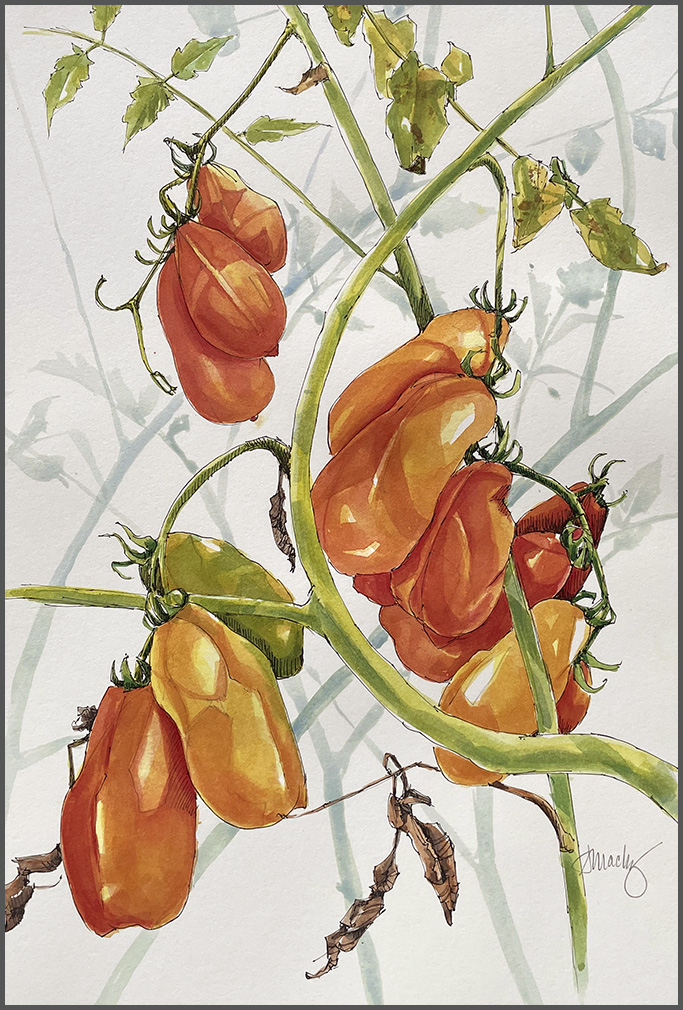

Tips and Techniques– I did this painting on hot press 140lb Fluid 100 watercolor paper. The sheet is 12 x16” and the painting is about 9×12”. I wanted to give myself more room than my 8.5×11” sketchbook affords, while also trying out this paper. What’s nice about hot press paper is that a pen will glide across it nicely if you want to use ink for the initial drawing; what’s tricky is that it doesn’t like a lot of water. You can paint fine details, but you can’t get a big beautiful wet wash the way you can using cold press. If you haven’t used hot press paper, you might try getting a small block or sheet to test it and see what you think. (p.s., It’s 1 1/2 teaspoons of baking powder in the recipe)
Eastern Phoebe
Nesting season is winding down for most songbirds, though more industrious species are still working on raising a second brood. By mid-summer the young of the year are active and you often see them flitting around testing their wings in the yard or perched together on telephone wires. Hopefully, the Eastern phoebes that were raised in this nest are among them. I took a photo of the nest back in May and finally had a chance to paint it with my class Bird, Nest, Eggs.

Tips and Techniques– Bird nests are made of all sorts of materials. When sketching one, take a close look at both the outside and inner cup and try to identify what they are made of. You’ll likely find finer grasses, plant down, or feathers on the inside and courser fibers, bark, mosses, lichen, bark, or twigs on the outside. The more you look, the more you’ll see, and the more true to the bird your sketch will be.
COMING UP: Mushroom Explosion in Watercolor, August 10 and 17 at Winslow Art Center, and Bird Nest Basics, September 13 at the online Wild Wonder Conference.
Unexpected Encounter
One evening a few months ago my neighbors came over to check on me. They had heard a terrifying scream coming from the wooded creek next to our house and, knowing my inclination to wander there, thought I might have been attacked. Finding me unharmed, we speculated that they may have heard a bobcat. I had rather forgotten about the incident until one morning this week when, to my surprise, I discovered three bobcat kittens, lounging in the road about 30 yards from our driveway. We eyed each other from a distance for several minutes—the world suddenly intimate and yet enlarged with a greater sense of the life that we so rarely see. And then the moment was gone. A car came along and sent the kittens scampering into the field.
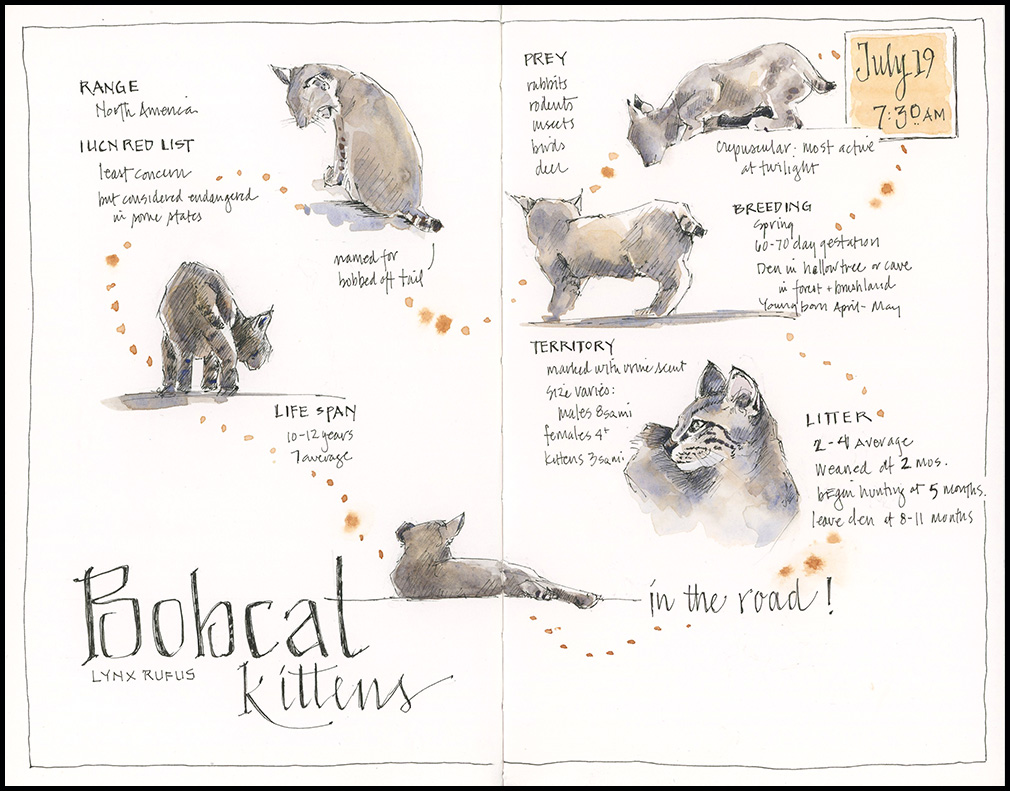
Tips and Techniques– Use your sketchbook to learn. When you encounter something that you don’t know much about, combine sketches with notes to record facts, folklore, or quotes about your subject. Don’t worry if your handwriting isn’t elegant. Remember that your sketchbook is for you. When you fill it with your own personal notes and drawings—it will be a perfect reflection of your encounters and musings.
Iceland Travel Sketches
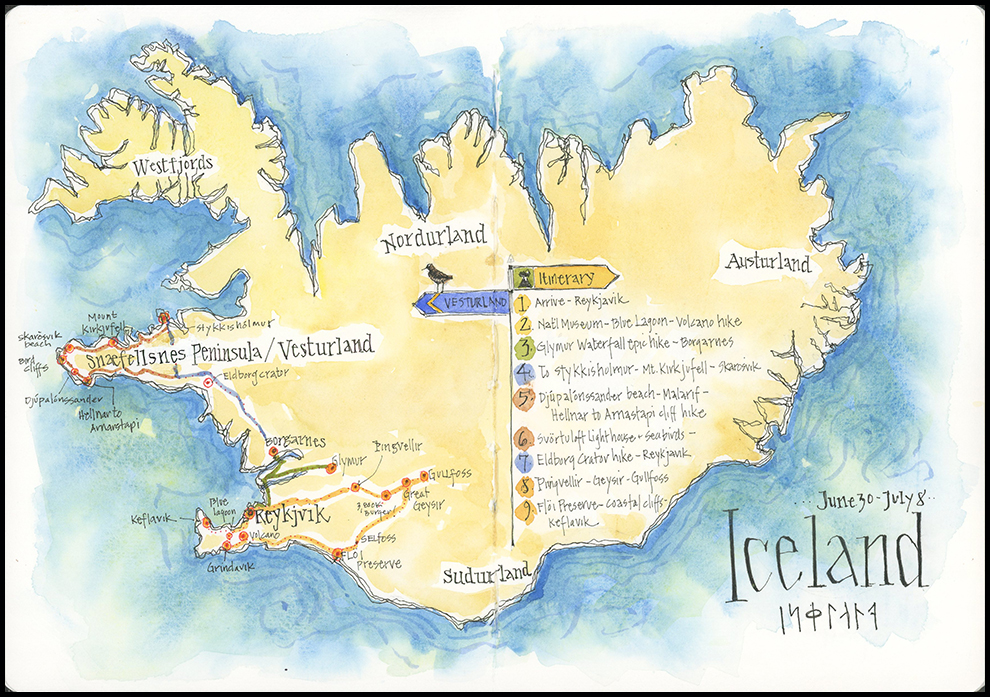
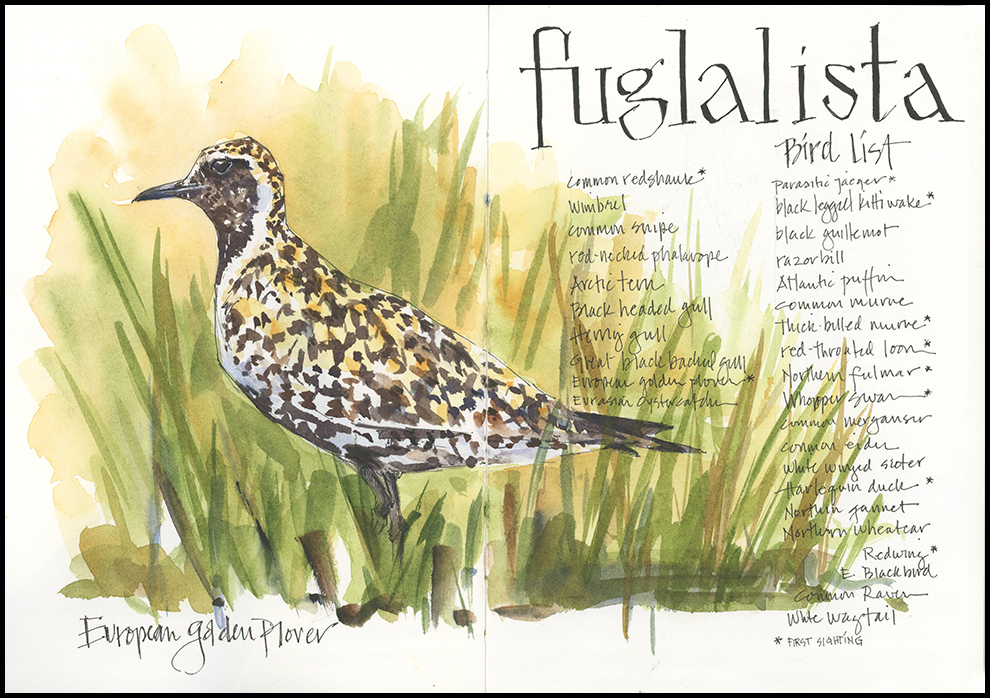
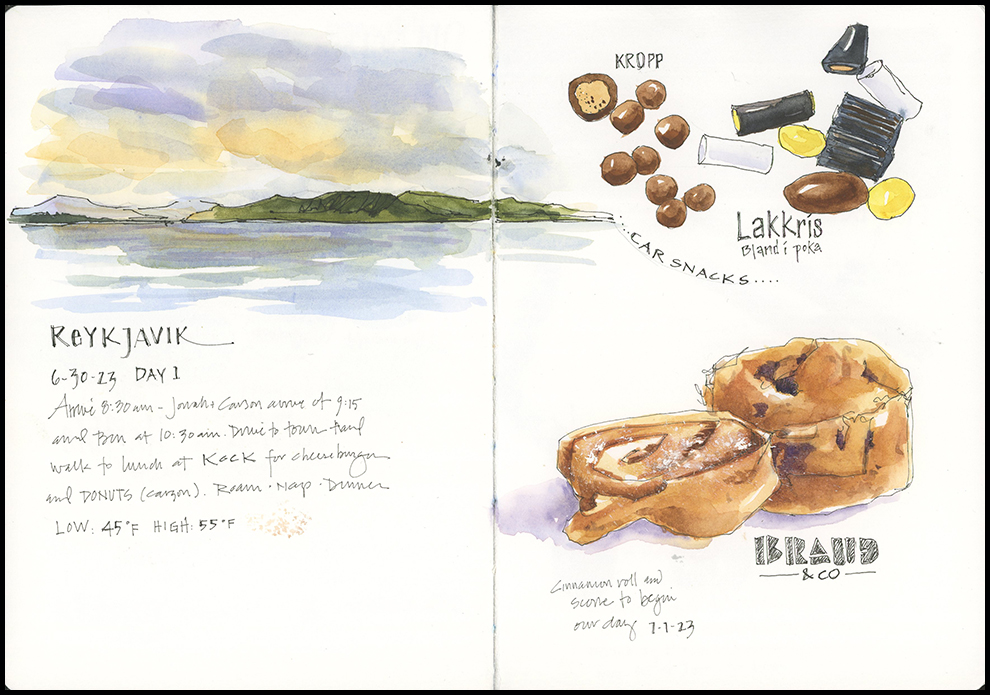
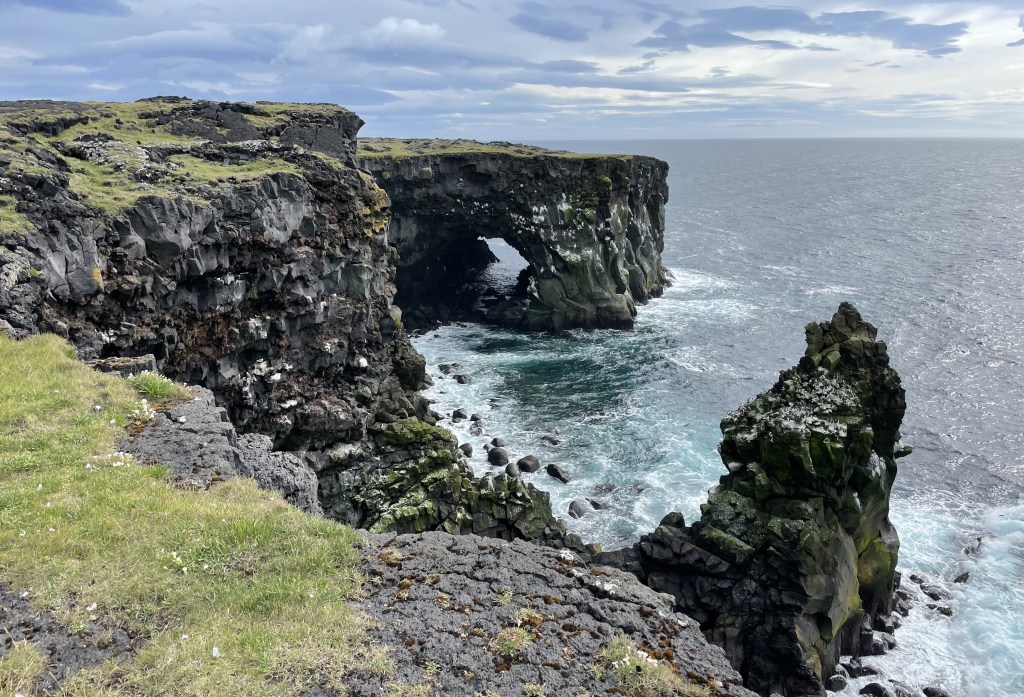
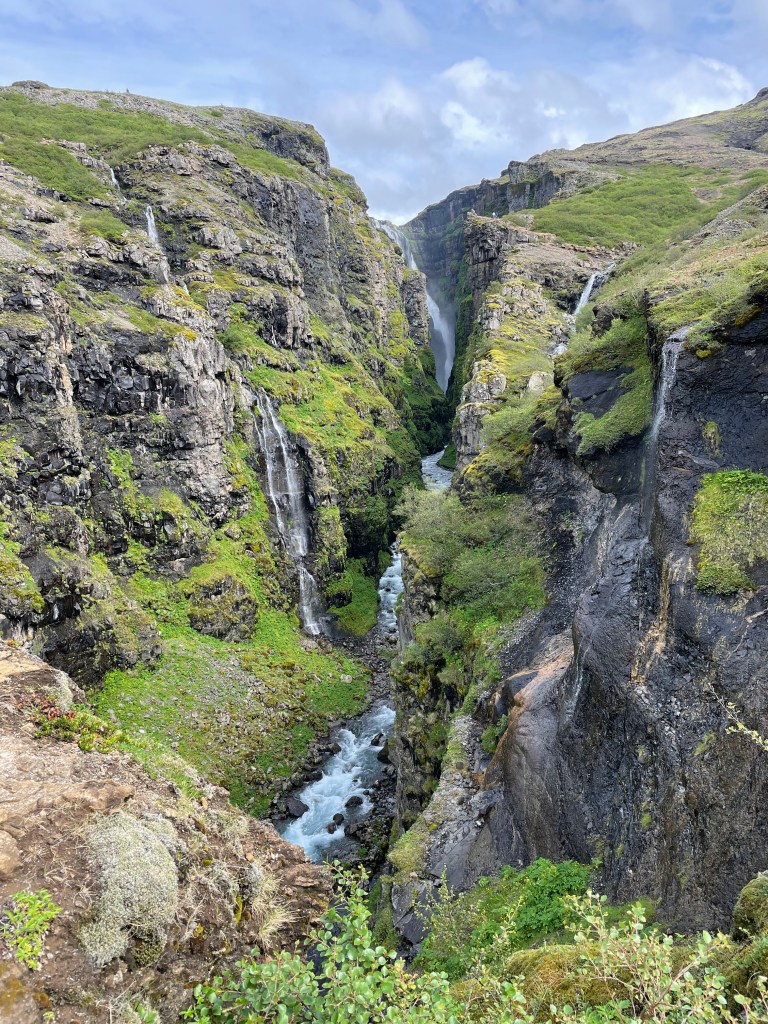
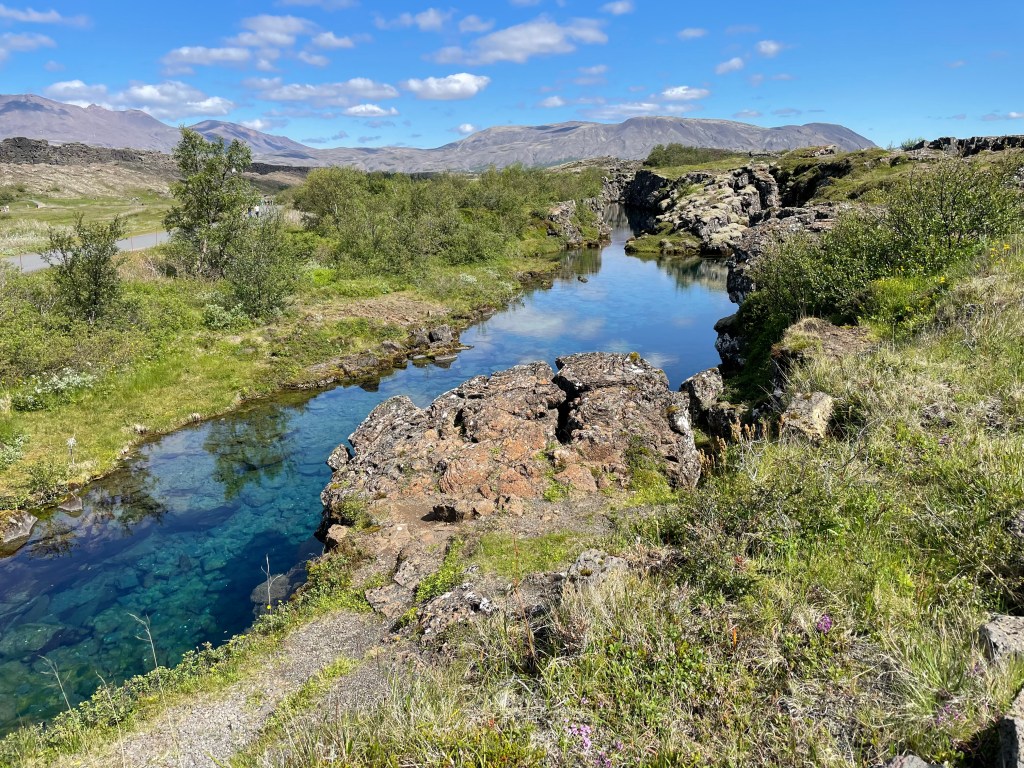
Iceland is all drama: volcanos, lava flows, cinder cones, geysers, tectonic plates, waterfalls, sheer cliffs, glaciers, frigid waters, shifting weather. It’s a place of all or nothing. All darkness, all daylight, all in, or stay home. But it’s also a place of great subtlety, where keeping your eyes wide open makes all the difference.
My family spent a week exploring just a small fraction of the country. I took many photos but managed just a handful of sketches. Despite my best preparations and intentions, cold weather, gusty winds, big hikes, and traveling with five family members made sketching difficult. Alas, I’m sharing what I have from our grand adventure with the encouragement to put Iceland on your bucket list if you’re game for wearing a wool hat, down jacket, and raincoat in July.
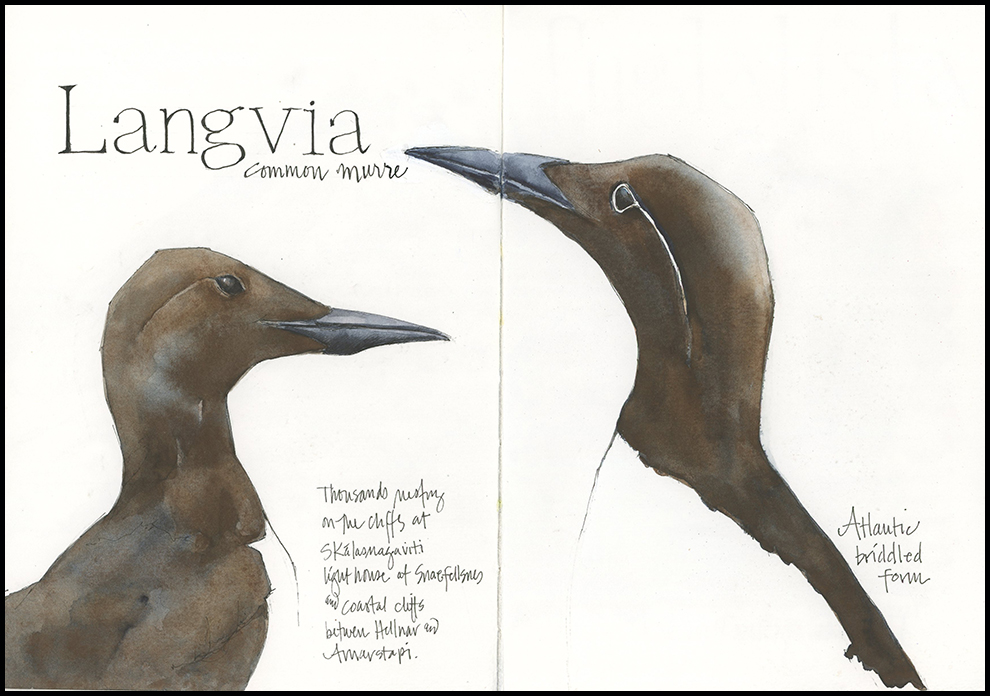
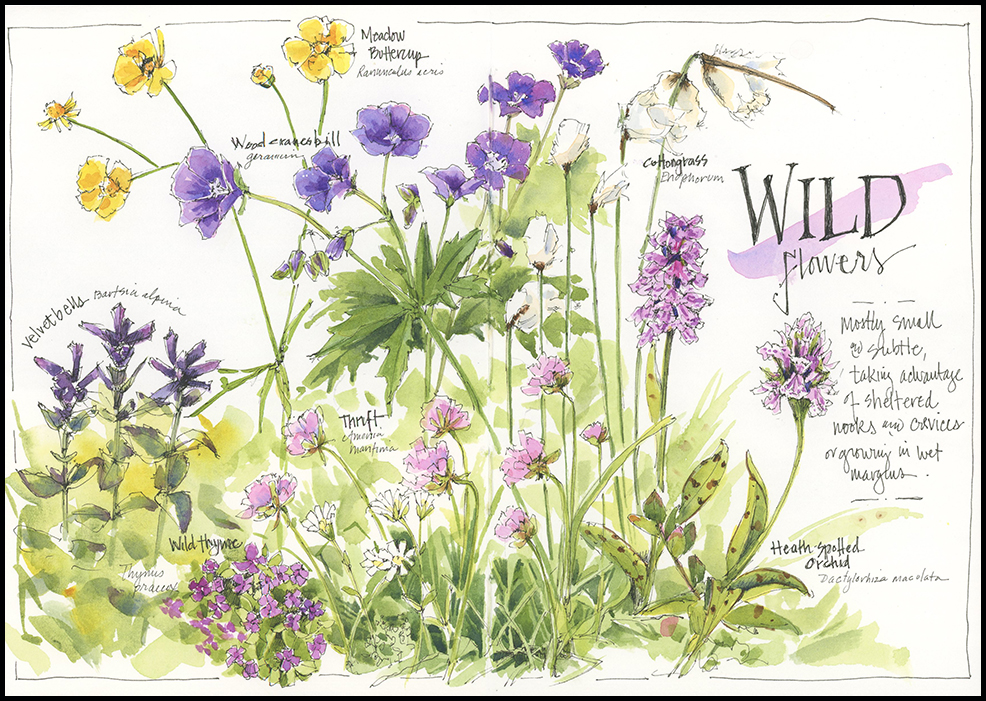
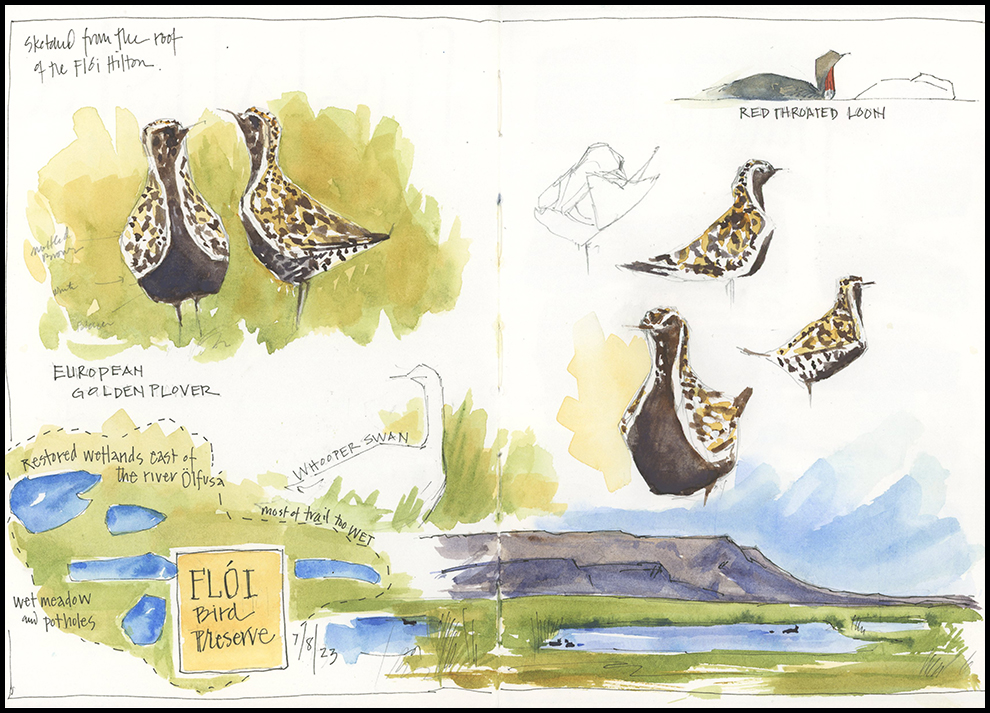
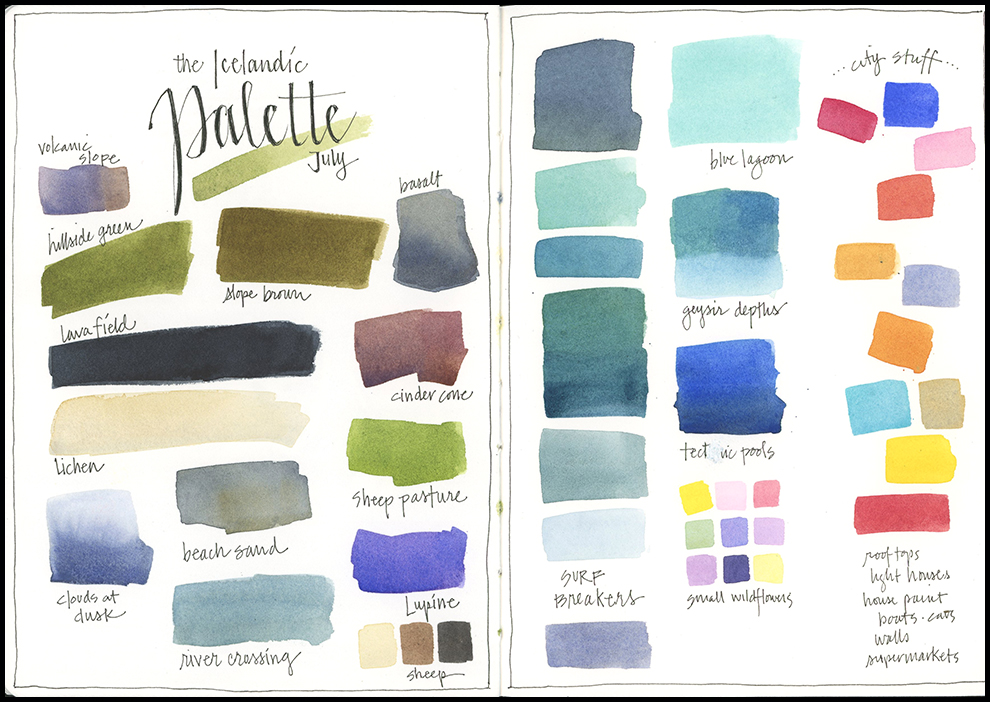

And a few photos of some of the dramatic landscapes that I wish I’d had time to paint.

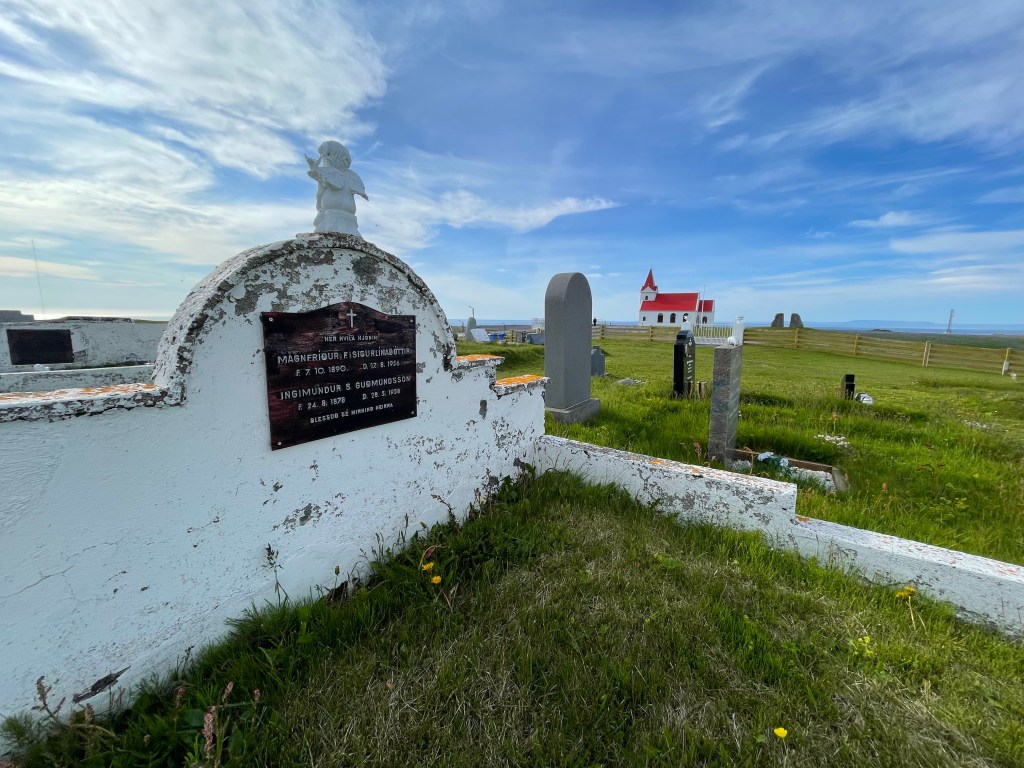
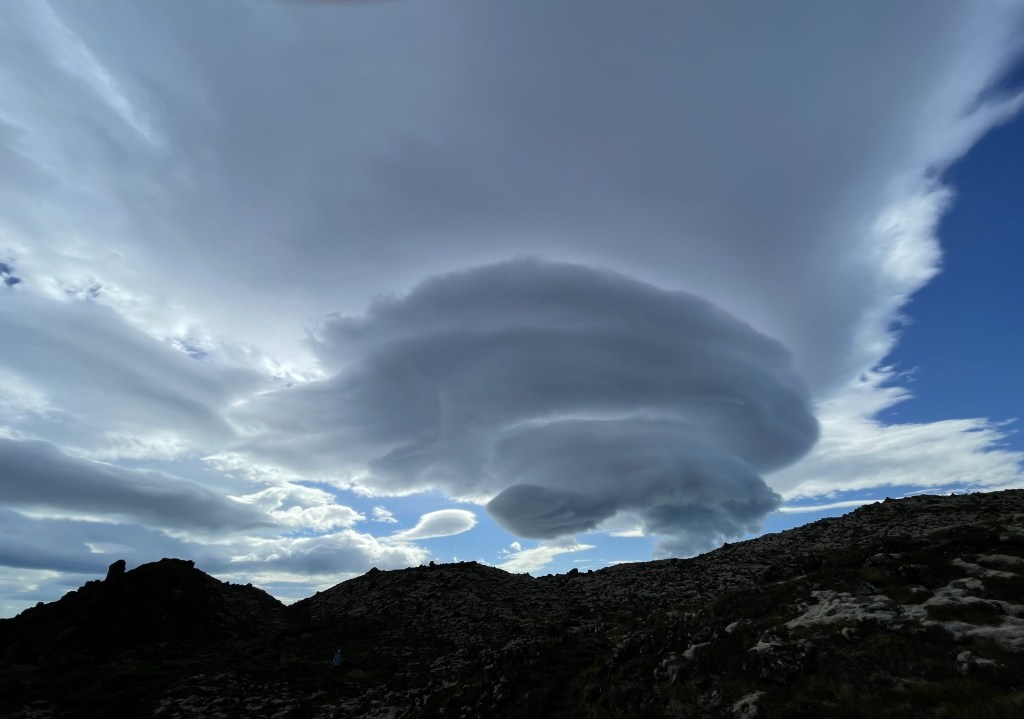
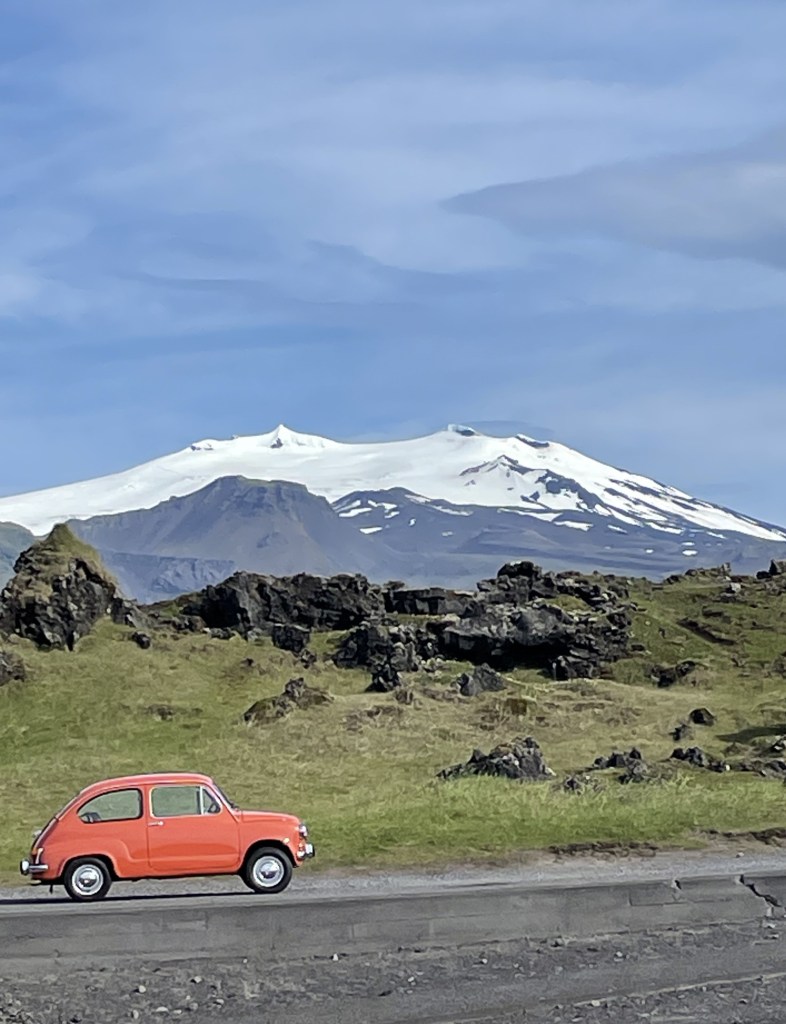
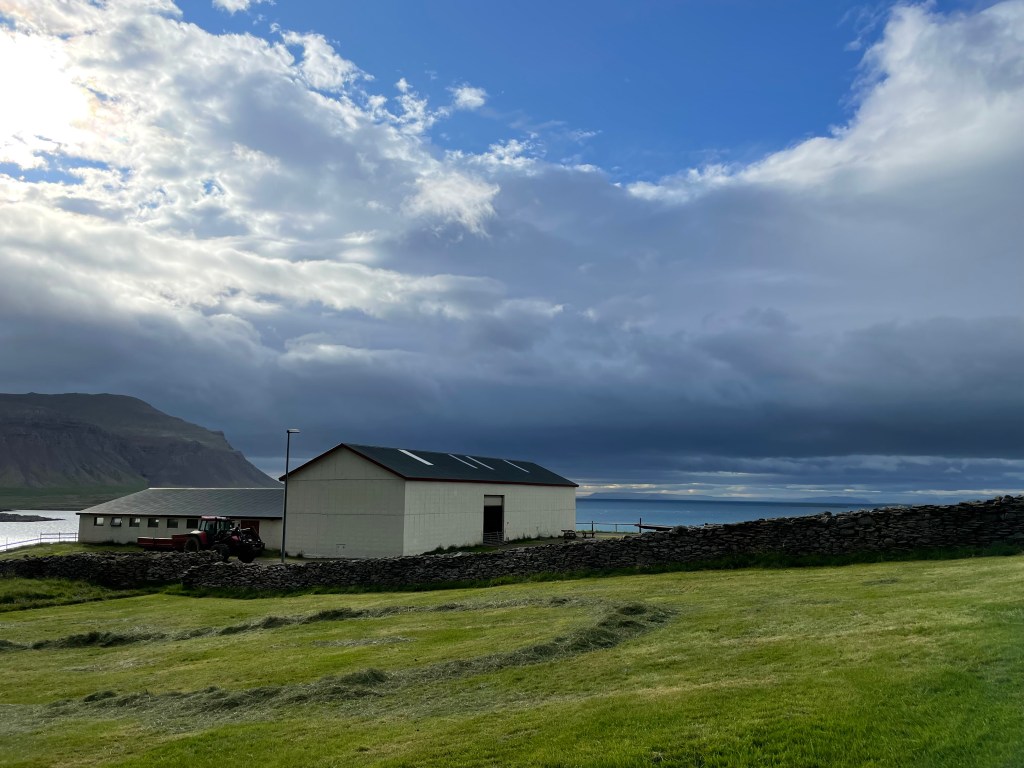
Up for an adventure and lots of painting? Join me for Sketching the Fall Nature of Italy, September 30 – October 7. There are a few spots left!
Bird, Nest, Eggs
Orioles sing from the treetops in our yard, their melodic whistles descending from high in the cottonwoods. They have likely woven their intricate hanging nest up there. Hidden by greenery, we are not likely to ever find it. But I like to imagine it, nonetheless. Orioles lay eggs with beautifully scrolled markings and after hatching the young remain nestled inside the pendulous nest for about two weeks. Altogether, bird, nest, and eggs are striking. They made a perfect subject for a recent art class at Winslow Art Center and I like having this page to commemorate their unseen presence.
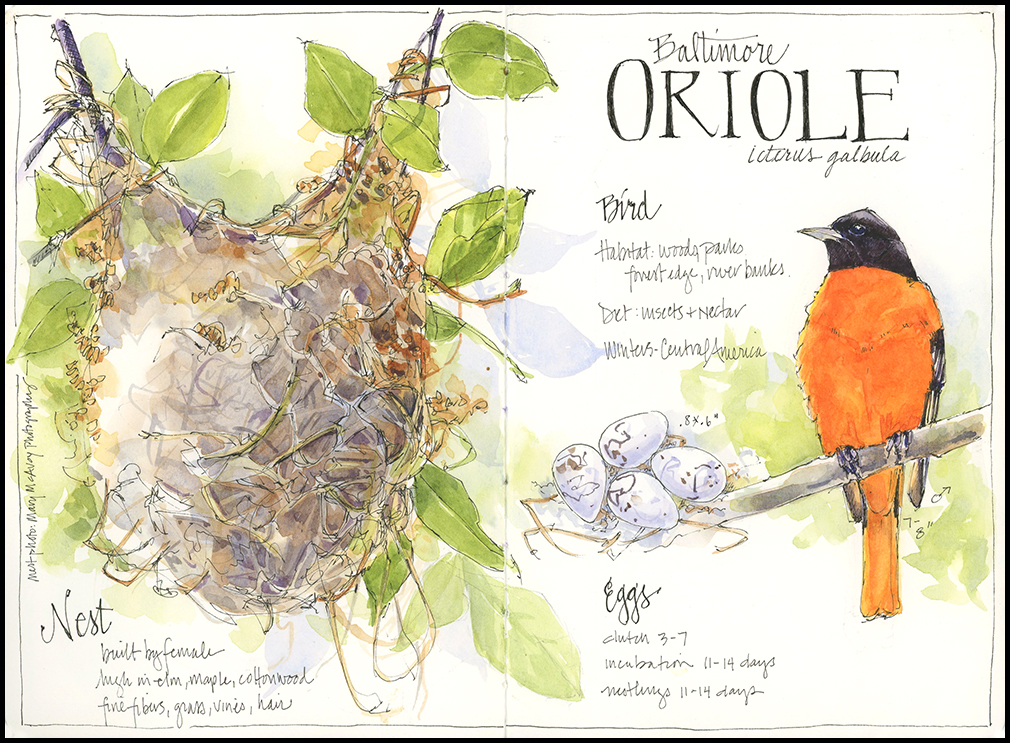
Thanks to Mary McAvoy Photography for use of her nest photo.
Tips and Techniques– An oriole’s nest is a complex tangle of fine woven fibers. It’s important not to get lost in all the detail when painting it. I start with the basic shape and pay attention to lights and darks to give the nest form and dimension. Texture comes from both the ink drawing and later stages of the watercolor. I have another Bird, Nest, Eggs class coming up in July, focused on the Eastern Phoebe, another bird with a lovely nest. Registration is open.
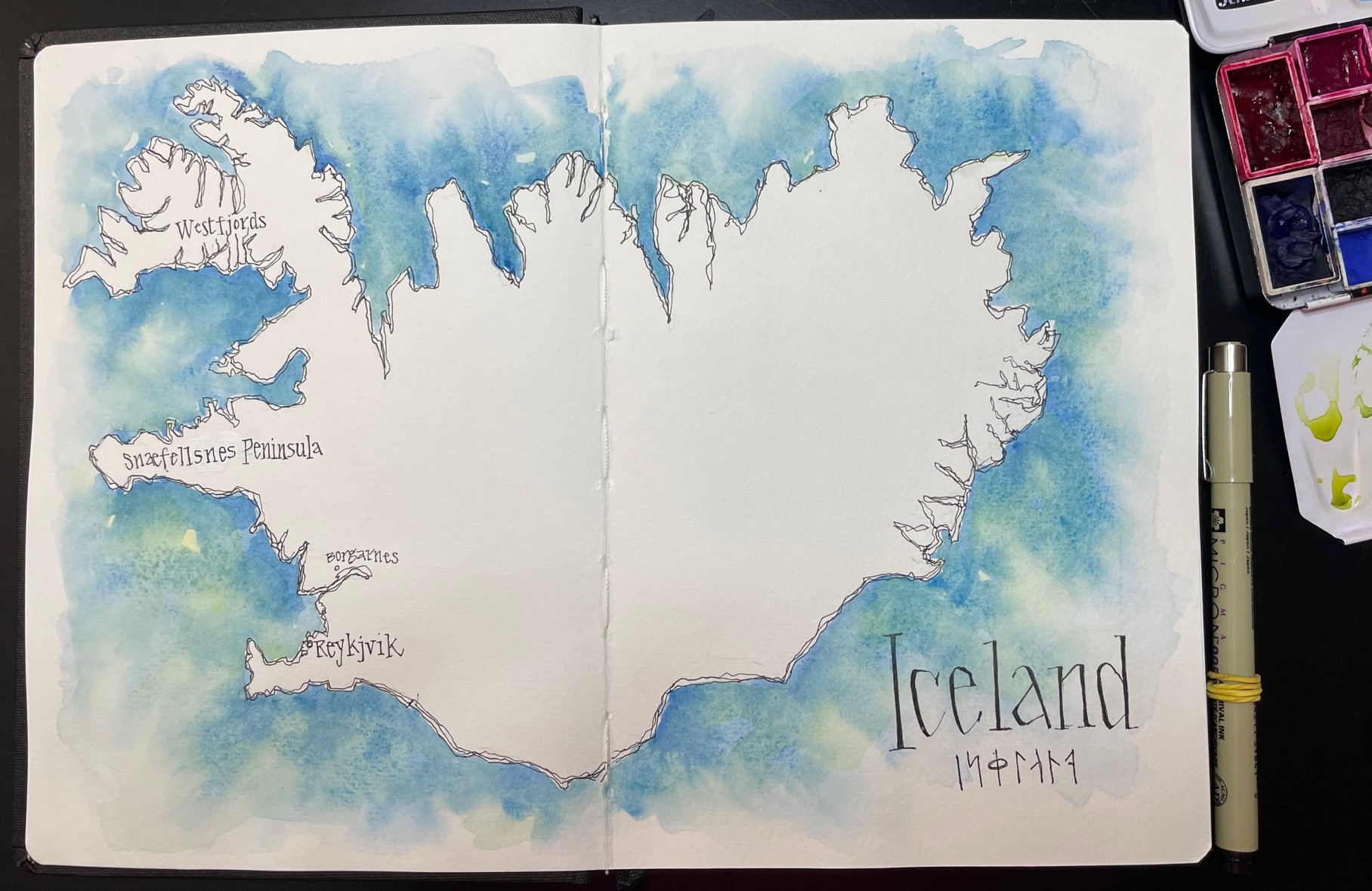
I’ll be taking a break from this blog over the next two weeks as I take off for an exciting trip to Iceland. See you with a map filled in when I return.


 Drawn In