
Captivated by Water Lilies
The beauty of water lilies is most closely associated with French Impressionist artist Claude Monet. From the late 1890s to his death in 1926, Monet created nearly 250 oil paintings of the many moods and changing light of the water lily pond in his garden. Water lilies have also captivated botanists, whose pressed plant specimens are preserved in herbarium collections around the world. Since I have neither pond nor oils nor pretense of becoming an Impressionist painter, I was drawn instead to the dried form of Nymphaea odorata, the white water lily. It’s not as showy or colorful when pressed, but I find it beautiful, nonetheless, with its simple curves and striking, subtle colors.

Tips and Techniques- Before beginning a painting, play around with different paint combinations to see what will work best for your subject. I made this painting almost entirely with just three colors: ultramarine blue, alizarin crimson, and quinacridone gold. This combination created muted and transparent colors that worked perfectly for the green and maroon leaves and the brown rhizome and stems. Diluted with lots of water, it also produced the subtle tones of the flowers and dragonfly wings. Using a limited palette makes it easier to create subtle shifts in color and create harmony throughout a painting.
The Last of the Garden
We put our garden to bed last weekend, composting what remained of stalks and dried leaves and scattering coneflower seeds in the meadow. Still, there were a few flowers, now faded and dried, but nonetheless impressive, that I culled from the rest. I love the curve of their petals and leaves and the hint of color left in a few of the zinnias. They’ve been on my desk all week, reminding me to look for beauty not only in its prime, but in every season.
Wishing you a Happy Thanksgiving. I’m grateful for your support for my artwork and for your many generous comments all year long.
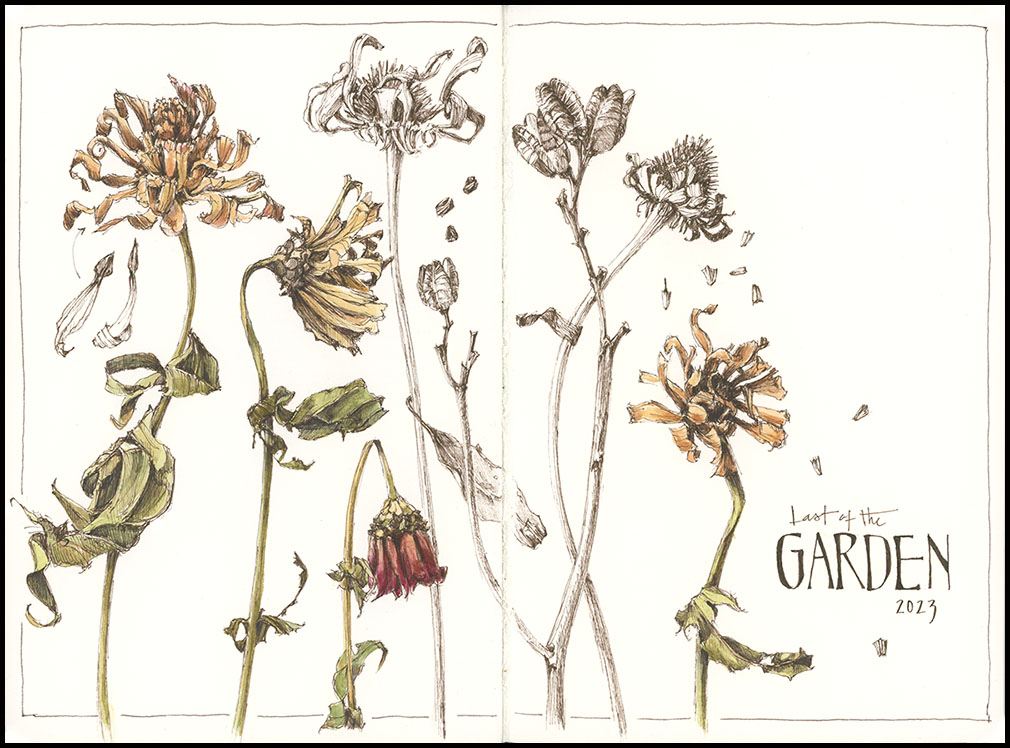
Tips and Techniques– This page taught me how much you can get from a nearly spent pen. I used two Micron 005 brown pens that were nearly out of ink yet managed to make lot of fine lines and subtle shading. This size brown Micron is not easy to find, which is why I’m using these to the last drop of ink– I had to order more online. If you are interested in trying one, you may need to do the same. More art supplies, you say? Now, that’s a good day.
Incredulous
The colors and patterns that adorn the bodies and wings of beetles, moths, and dragonflies are nothing short of astonishing. My reaction to seeing them is like hearing an incredulous story: you can’t make this stuff up. And, in fact, you don’t need to…all you need to do is look.
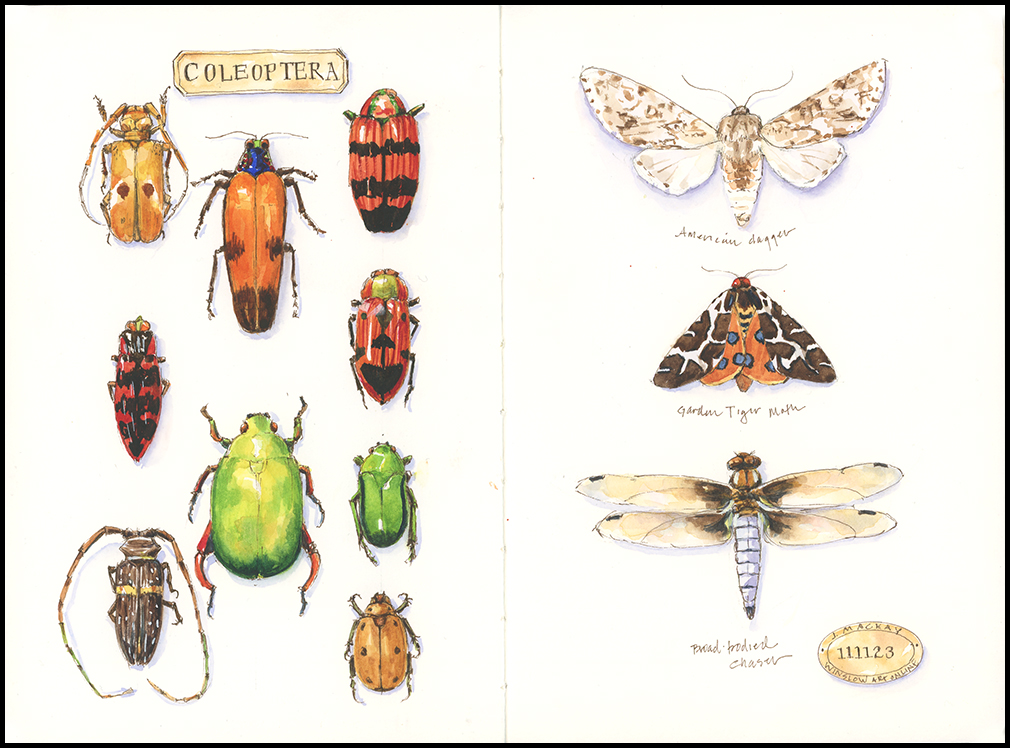
Tips and Techniques– When painting insects I start with the lightest “ground” color(s) on the body or wings. Sometimes the base layer is best created with a wet-in-wet wash of one or more colors that merge right on the paper. Once dry, I lay down the patterns on top of the base layer in a series of dry washes with a small brush. If the surface is shiny or iridescent, I leave a bit of white paper to produce that effect. Insects are classified in the phylum arthropods, and their three pairs of jointed legs resemble the claws of lobsters and crabs—which are also arthropods.
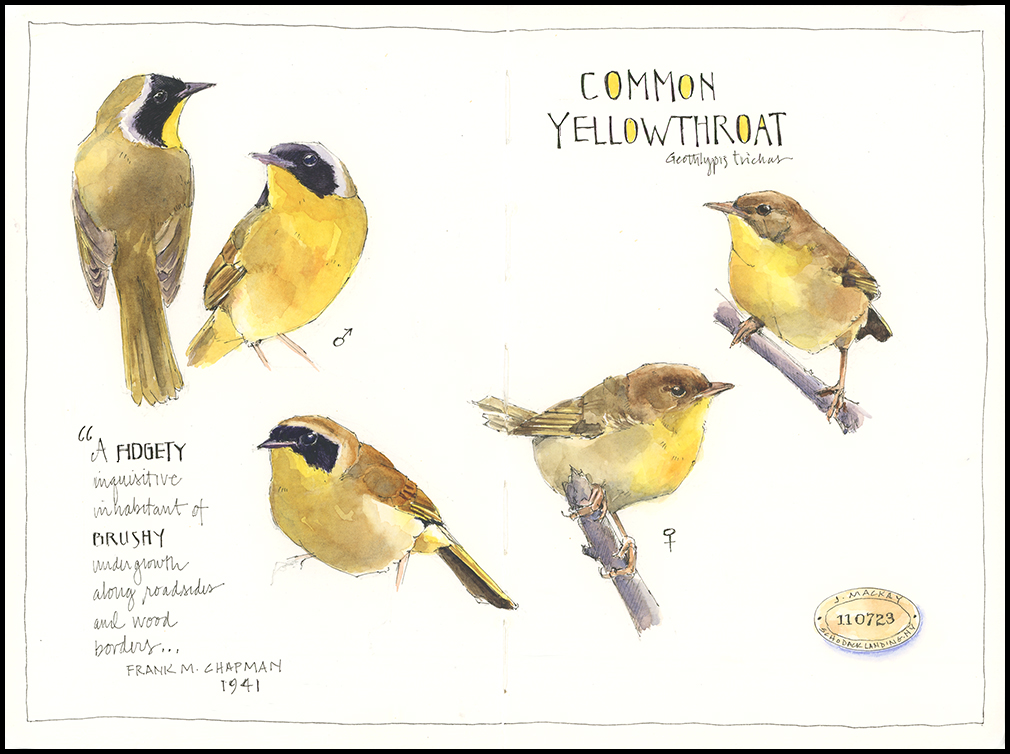
Passing on a Sense of Wonder
“What Bird Is That? A Pocket Museum of the Land Birds of the Eastern United Stated Arranged According to Season” by Frank M. Chapman, published in 1941, sits on my bookshelf next to several other old field guides. This guide is special not only because of its lively descriptions of birds, but also because it previously belonged to my mother-in-law, Alice, who I never knew. The book makes me think about the ties that connect us to generations past and future. Chapman, as curator of ornithology at the American Museum of Natural History, pioneer of early field guides, and originator of the Christmas Bird Count, left a legacy of bird scholarship and enthusiasm; Alice passed on the simple pleasure of watching backyard birds. As for me, I am currently teaching a class encouraging participants to draw from their wonderment for nature to create their own “Paper Museum.” I like thinking that someone in the future may pick up one of these journals and find a sense of connection and joy in its pages.
Juncos Return
When the Dark-eyes Juncos return each year it’s a sure sign that fall is waning into winter. A small flock arrives like clockwork when the oak and beech leaves are the only ones still hanging on. Their white tail feathers give them away as they flash across the road and dart into the brush. I welcome them with mixed feelings—I hate to see October go, but I’m glad to watch them all winter, small black bodies puffed up against new snow or hopping out from under the porch on cold mornings. They’ll be our companions until spring winds send them northward and the season shifts again.
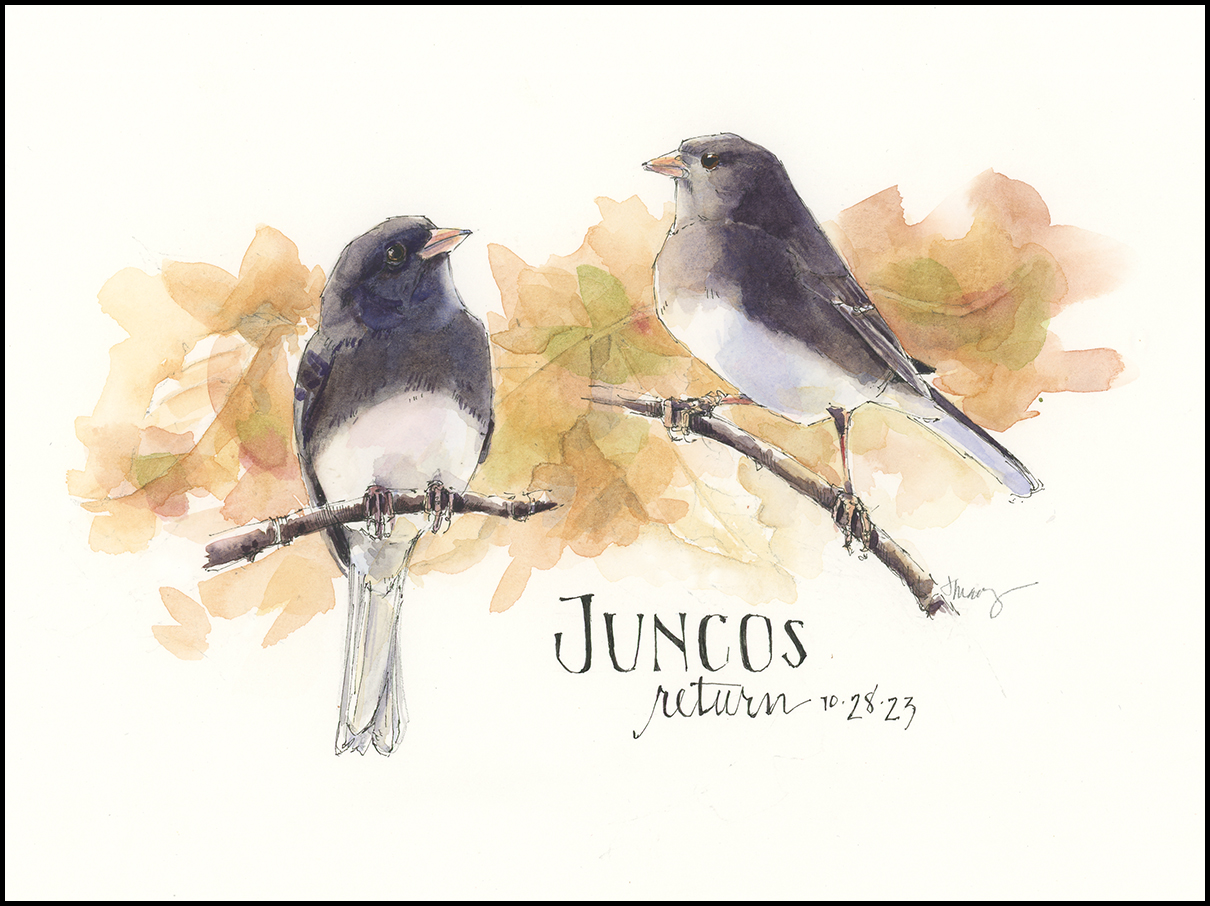
Tips and Techniques– I painted these juncos yesterday during my workshop “Knowing When to Stop” at Winslow Art Center’s free Autumn Art in Action Festival. At each stage of a painting, I evaluate color, values, details, shadows, and composition, slowing building up layers of paint until I’m satisfied with each of those things. These criteria help me make decisions about what to do next and can help prevent paintings that are under-or-overworked. If you struggle with knowing when to stop, try looking through that lens and see if it helps.
Am I finished?
I could have used twice as long and four times the size of my sketchbook to really convey how gigantic this Honey Locust at Thomas Cole Historic Site in Catskill, New York is. Instead, my time for art has been very short this weekend, so I decided to stop here. I may add watercolor, but I’m not sure– I like it as an ink sketch, but I can envision some fall color on the page, too. Pausing seems like the best choice for the moment.
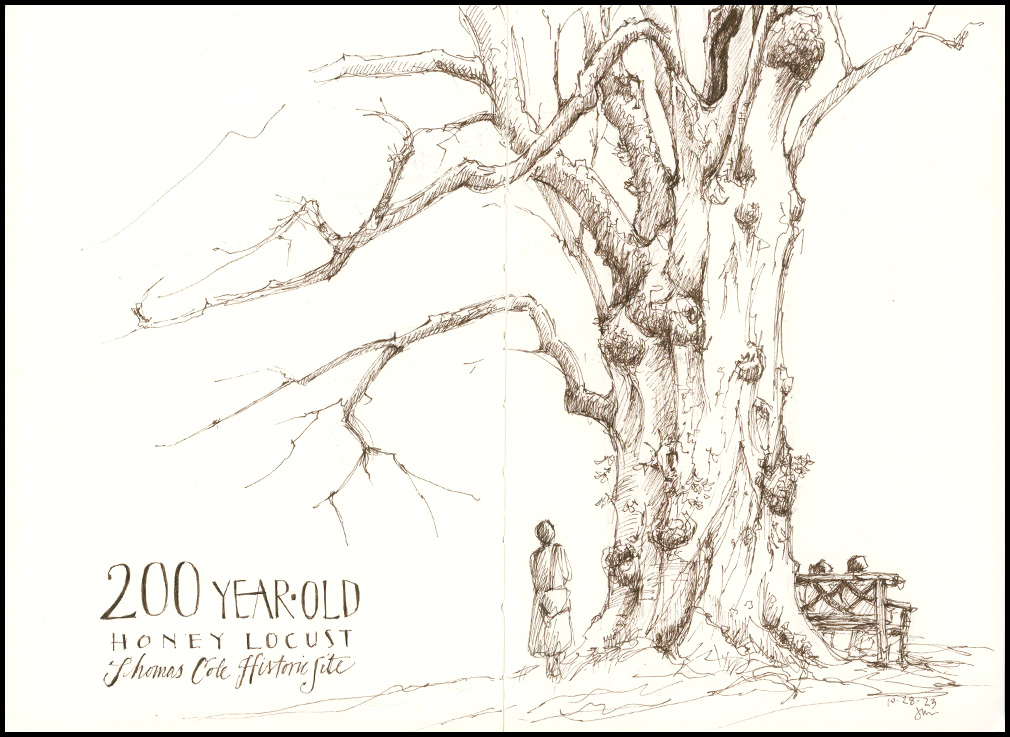
I’ll be exploring the topic of Knowing When to Stop and call a painting done next Saturday 11/4 during Winslow Art Center’s free Autumn Art in Action Festival. The session will explore ways to assess your paintings during the middle and late stages so that you will avoid underworking or overworking. I’ll begin with a partially finished painting in ink and watercolor and demonstrate finishing techniques. Feel free to bring a mid-to-late stage painting to evaluate and work along.
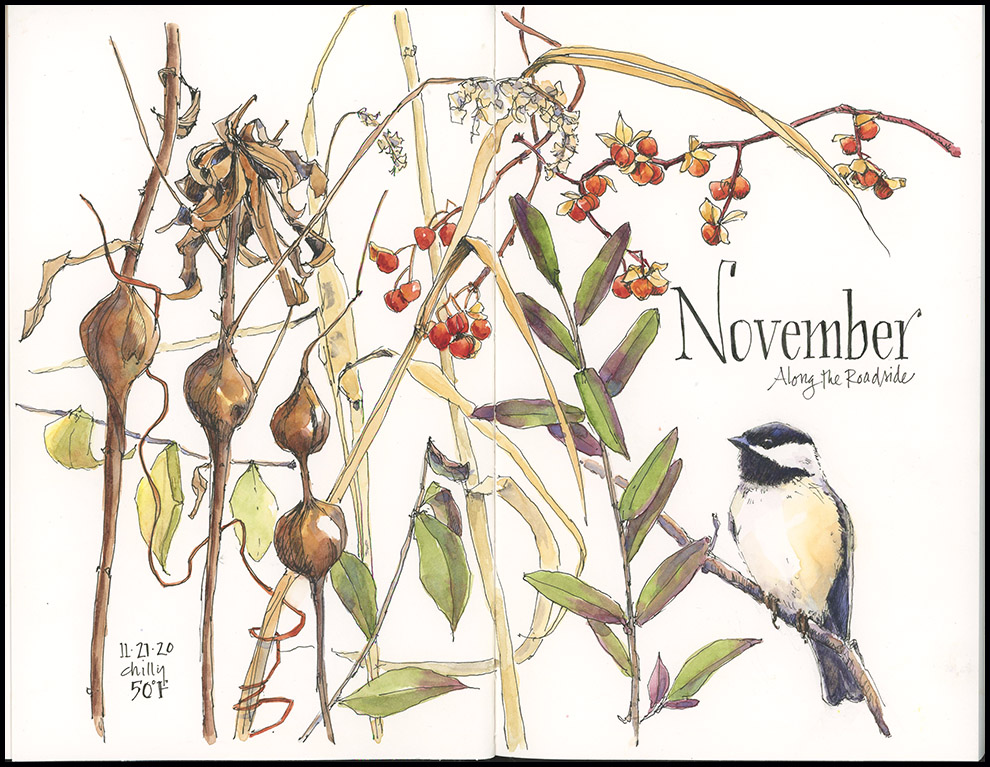
Also coming up: EXPLORING HOME: Sketching Through the Seasons
Opening Reception Sunday, Nov. 5 at 2:30pm
November 1-30, Kinderhook Memorial Library, 18 Hudson St., Kinderhook, NY
This show features sketches and watercolors done within a 10-mile radius of my house. Kinderhook is a small town but there are several excellent lunch options, including Saisonnier, Morningbird Café, and Broadstreet Bagels; farm stores– Golden Harvest & Harvest Spirits and Samascott Farm Market, and places to hike nearby. Make an afternoon or day of it if you’re nearby—I’d love to see you.
Fall Collection II
There is still a lot of nice fall color here in New York, but this weekend’s rain brought a lot of leaves down and, by next weekend, I expect I’ll be seeing a lot farther into the woods. I’ve been picking up pieces of fall—nuts, fruits, berries, leaves, flowers—for weeks and stowing them in small collections on my desk, on the back porch, and on windowsills. I did another page like this a few weeks ago, but the collection has continued to grow. It’s nearly time to let it go back outside, but first, a sketch to save the season before it goes.

Tips and Techniques– The nice thing about a page like this is that you can work on it and let it build a little at a time. Don’t feel the need to rush. You can sketch directly outside or bring things home to work on when you have time. If there’s a gap in your composition, go for a walk. Soon, you’ll be noticing more and more, your page will fill, and your windowsills will start to look like mine.
You’re Invited…ART EXHIBIT: EXPLORING HOME: Sketching Through the Seasons
Opening Reception Sunday, Nov. 5 at 2:30pm
November 1-30, Kinderhook Memorial Library, 18 Hudson St., Kinderhook, NY
This show features sketches and watercolors done within a 10-mile radius of my house. Kinderhook is a small town but there are several excellent lunch options, farm stores, and places to hike nearby. I’m happy to share options for making this a day trip or a weekend getaway.
Perfetto
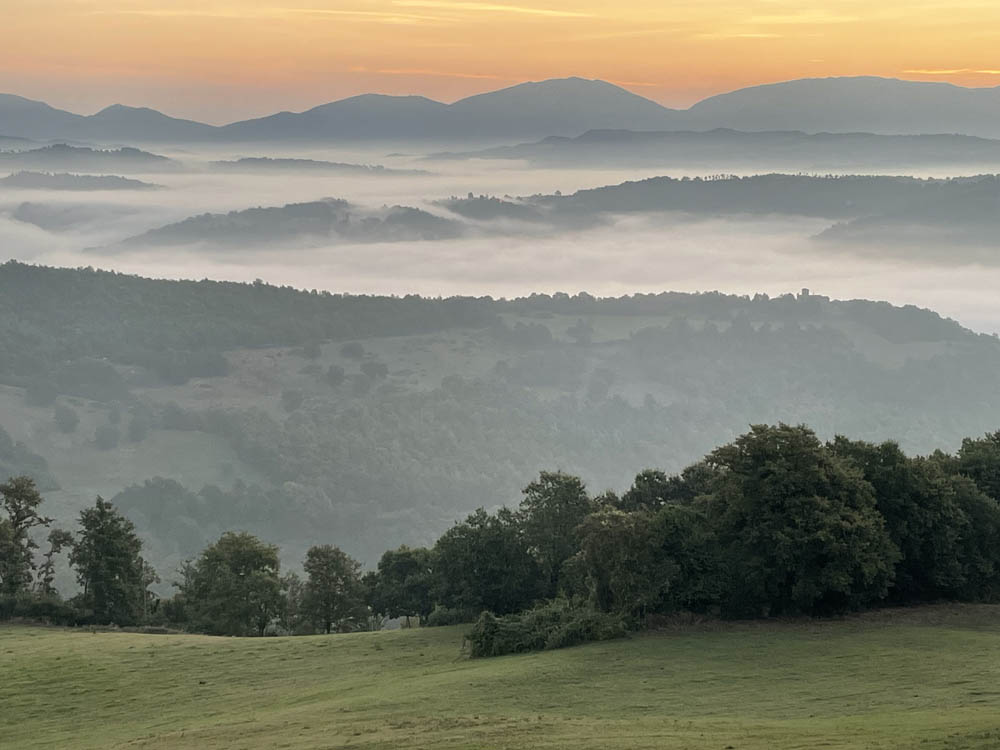
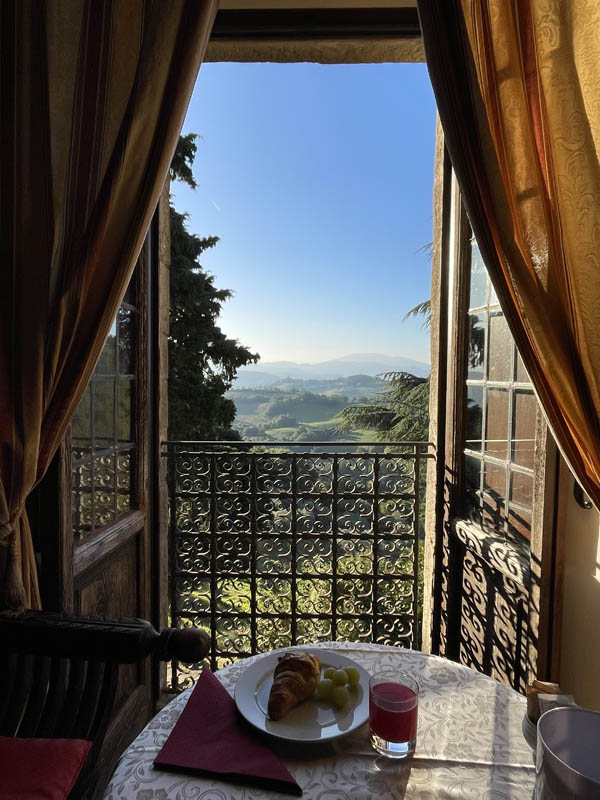
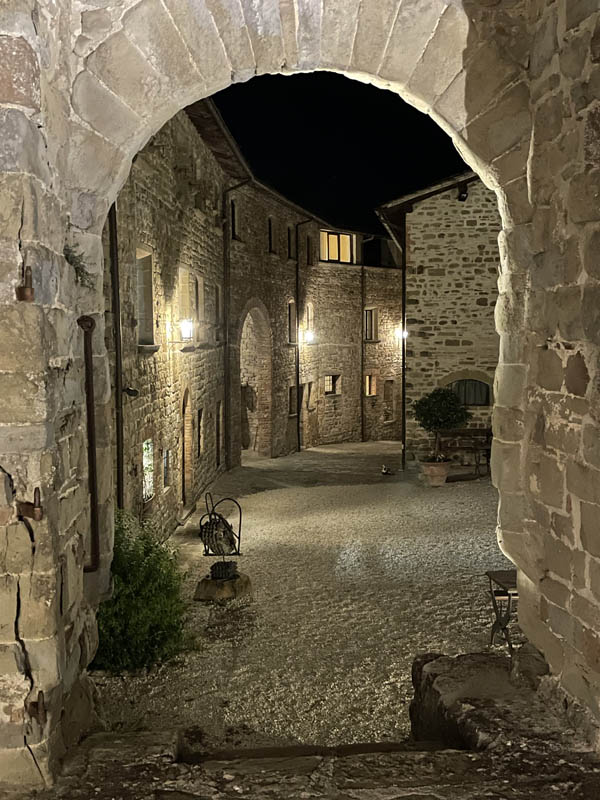
In Italian, perfect. I am grateful to share sketches and photos of an extraordinary week teaching Sketching the Fall Nature of Umbria with Winslow Arts Center. The weather, the setting, the accommodations and, most importantly, the workshop participants were, in a word, perfetto.
I thought I’d write a longer post to share the experience with you. Feel free to skip the details and enjoy the images if you prefer.
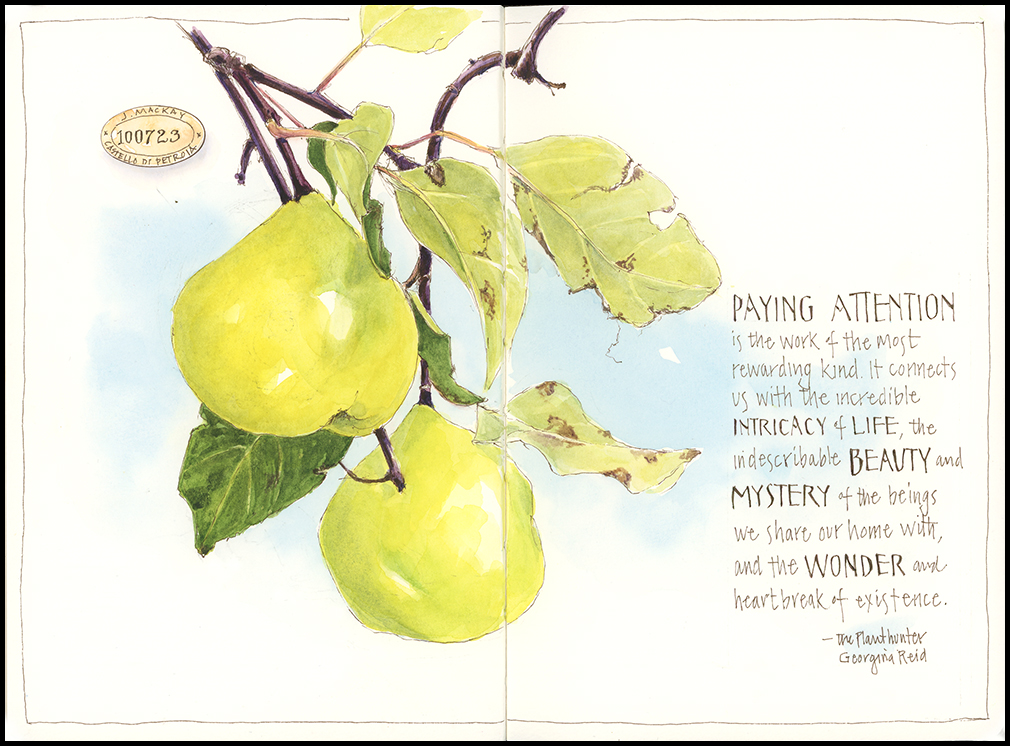
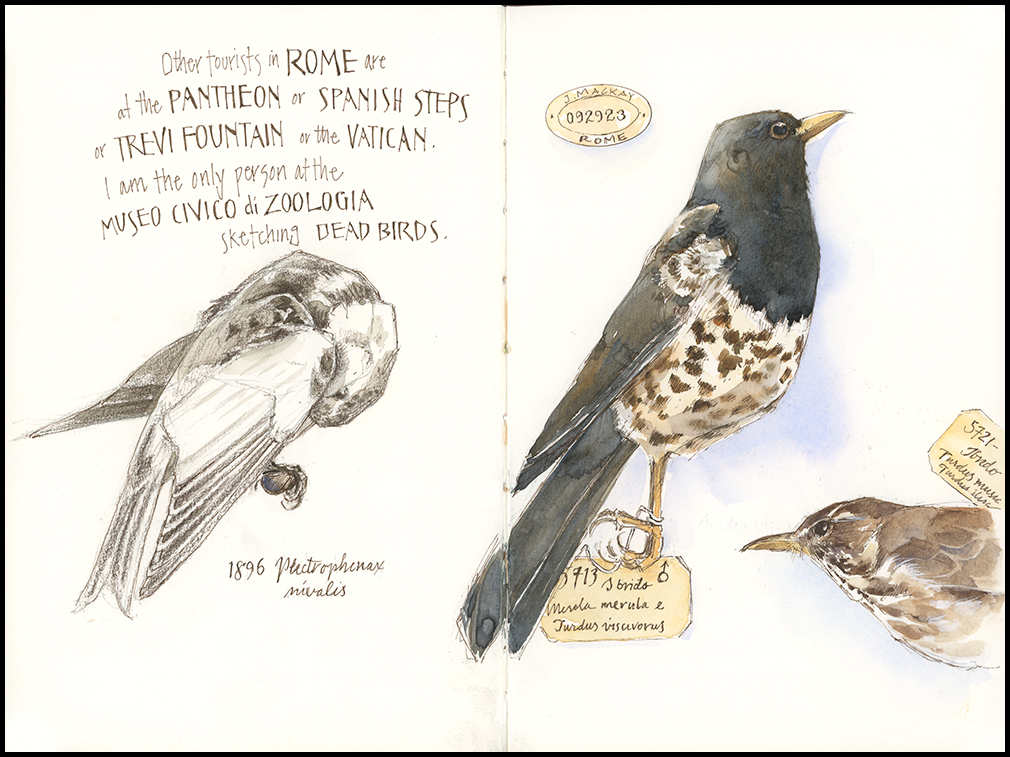
1. Friday- My husband Dan and I fly nine hours to Rome the day before the workshop begins, arriving at 1:30am Eastern time/6:30am in Italy. With the day stretching before us, we drop our bags at the hotel and enjoy our first cappuccino. Because we had seen the more prominent historic sites last spring, we choose to get well off the beaten path and visit the Museo Civico di Zoologia, primarily to see its 19th century ornithology collection. Alas, I am the only visitor to Rome who is sketching dead birds, but I am not disappointed—the collection is interesting and extensive. Later, we walk back through the city, catch sunset outside of the Vatican, eat dinner at a sidewalk cafe, and head to our hotel to crash.
2. Saturday- Workshop participants convene at 12:30pm at a cafe for lunch. At 2pm, we pile into a van for the 2.5-hour drive to Umbria. The first glimpse of the castle courtyard is a treat— you can’t quite believe that this is where you will spend the next week.
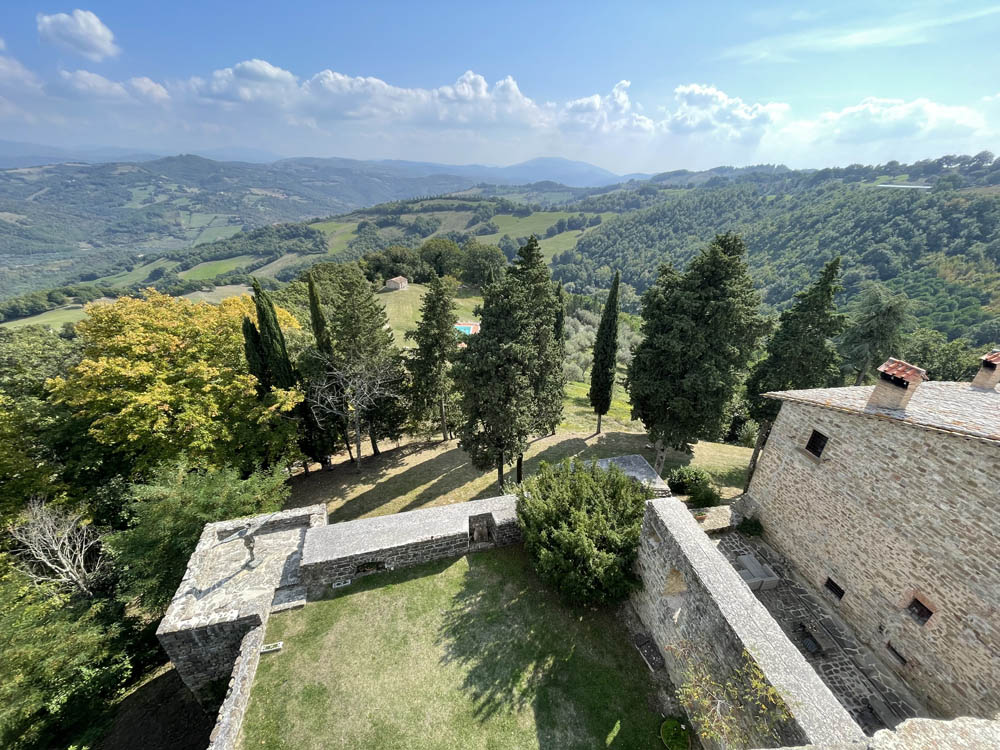
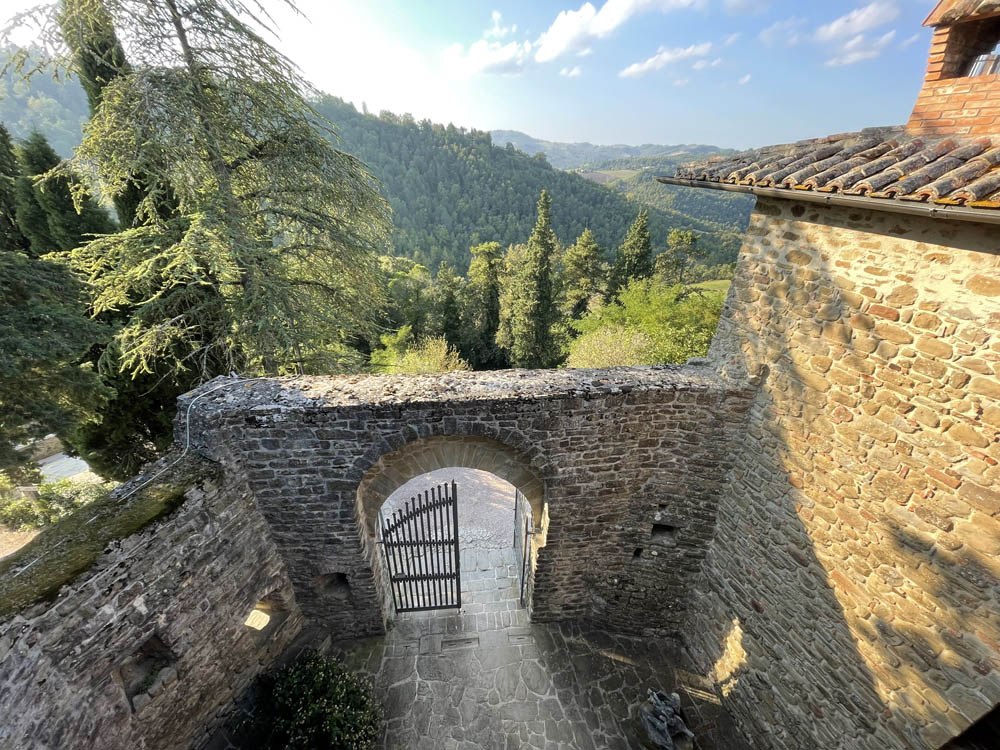
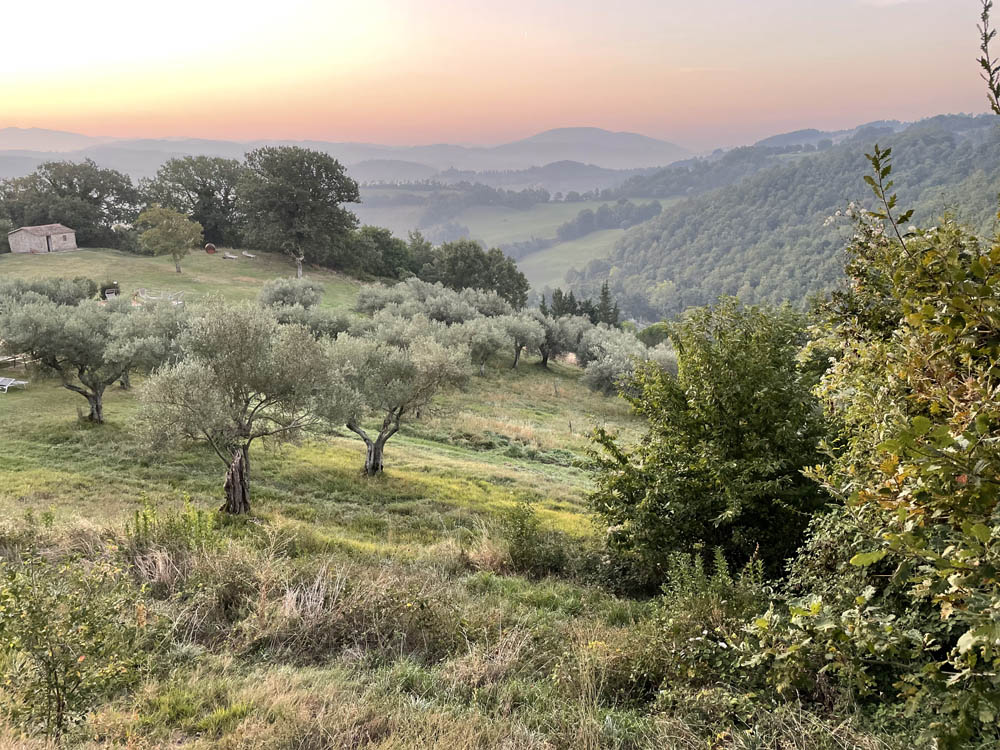
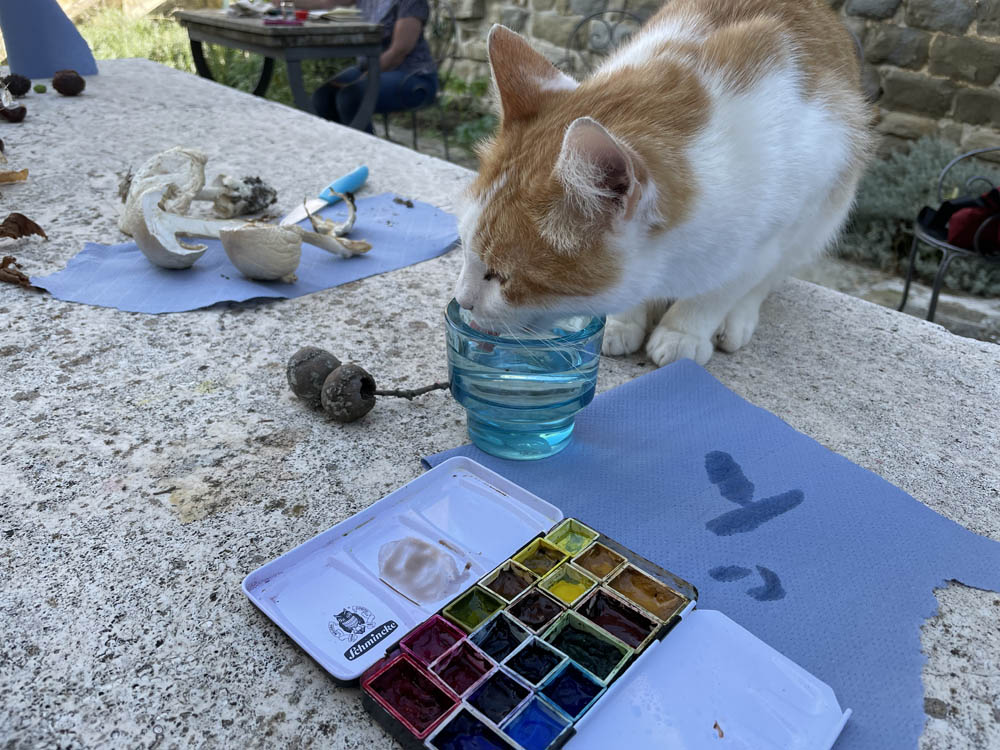
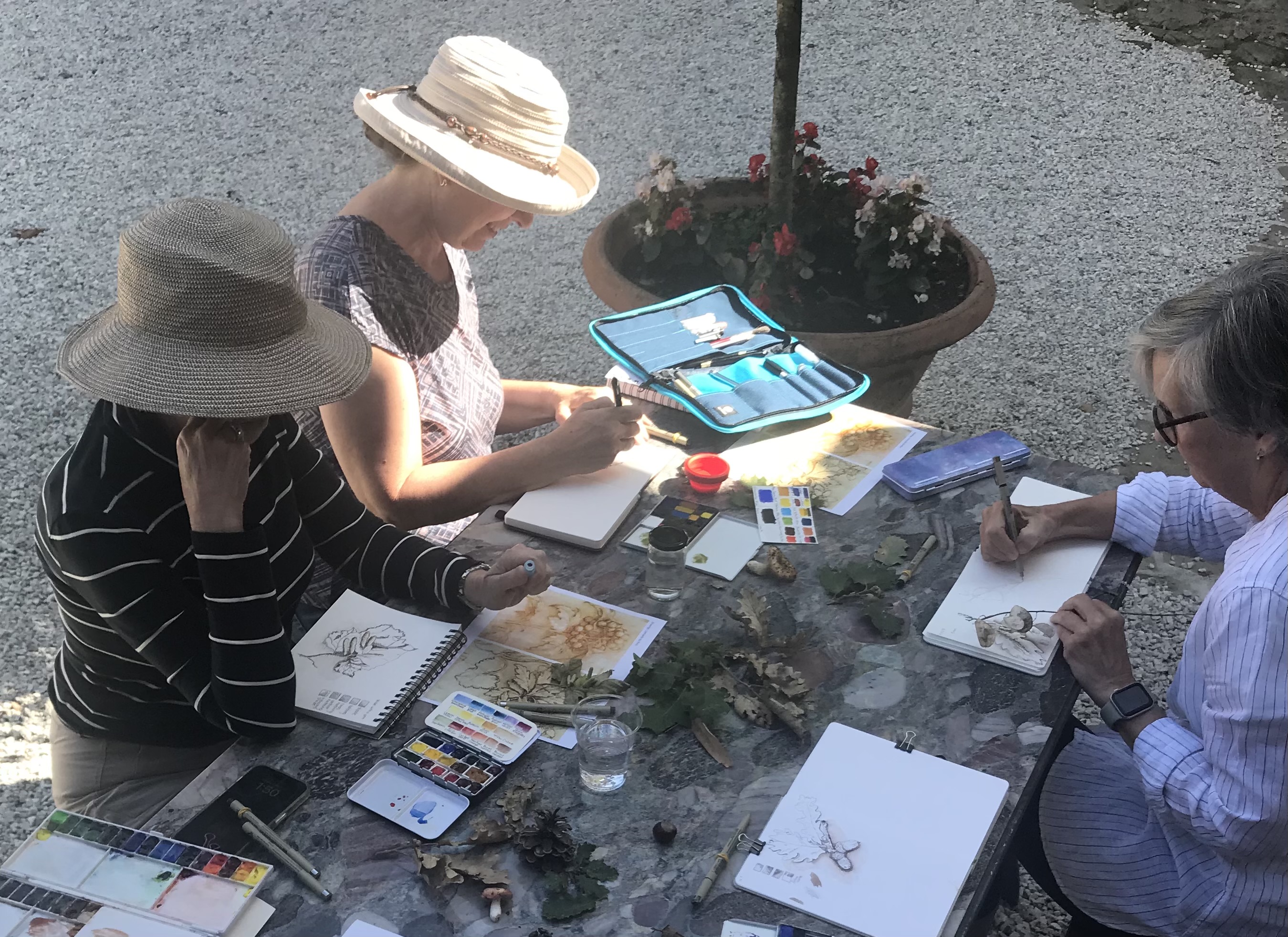
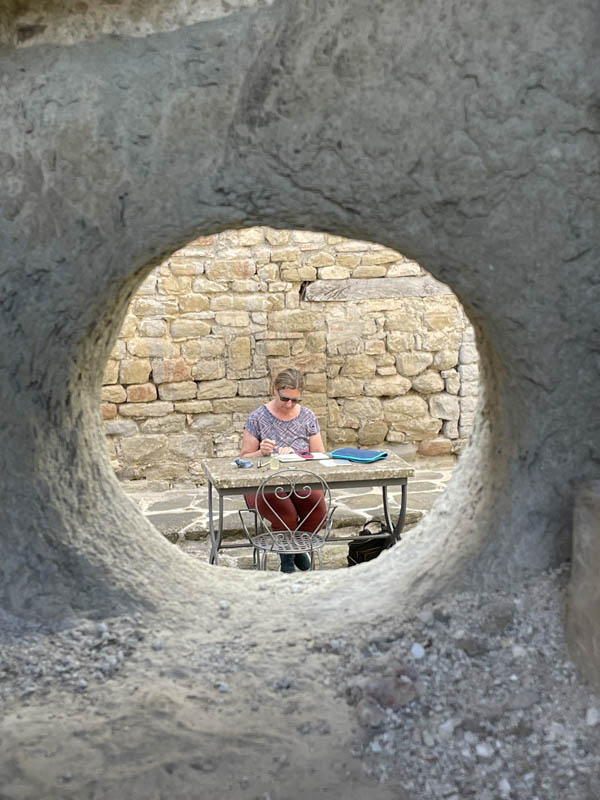
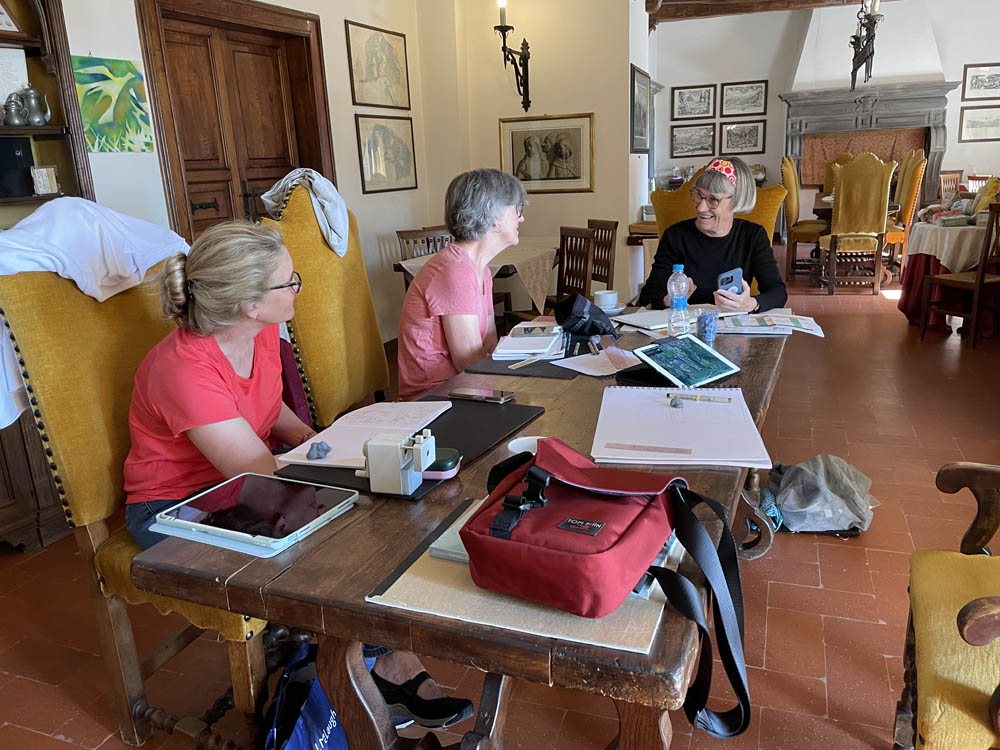
3. Sunday-Friday- The workshop begins in earnest and for the next week, we explore, paint, eat, learn, drink wine, and eat and paint some more. It’s delightful to be in the company of people who unapologetically geek out on art supplies and talk as passionately about brushes and paper as they do about travel, literature, or cooking. Throughout the workshop, I introduce a variety of Italian influences from art, culture, and the castle itself to infuse into our sketches.
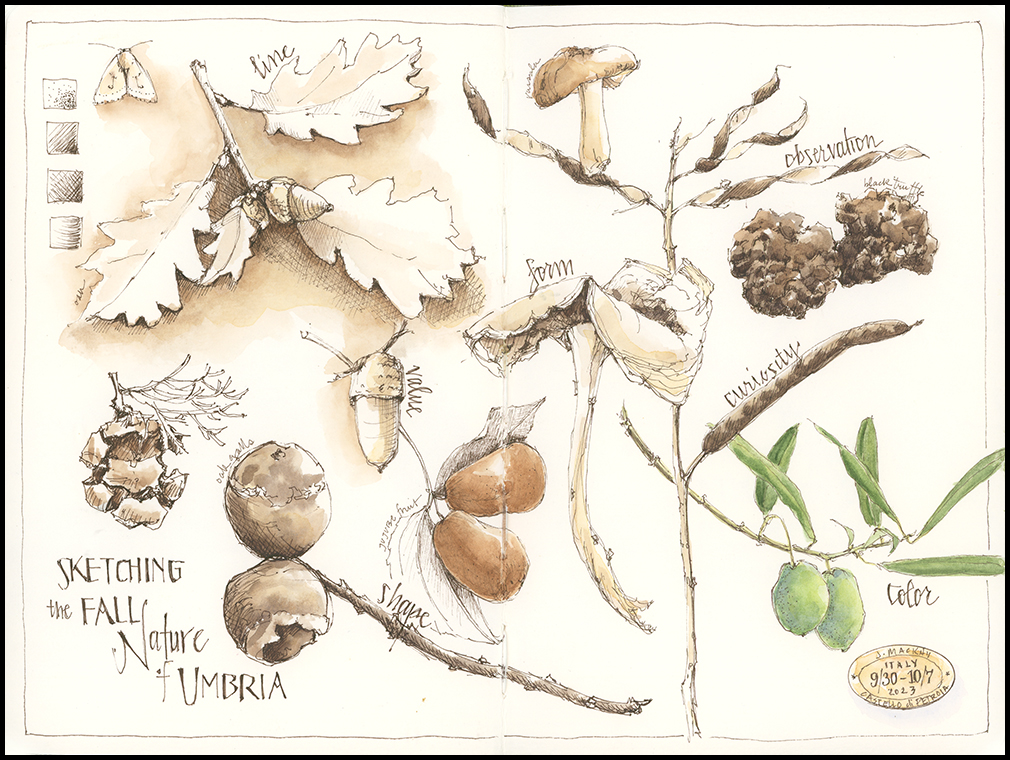

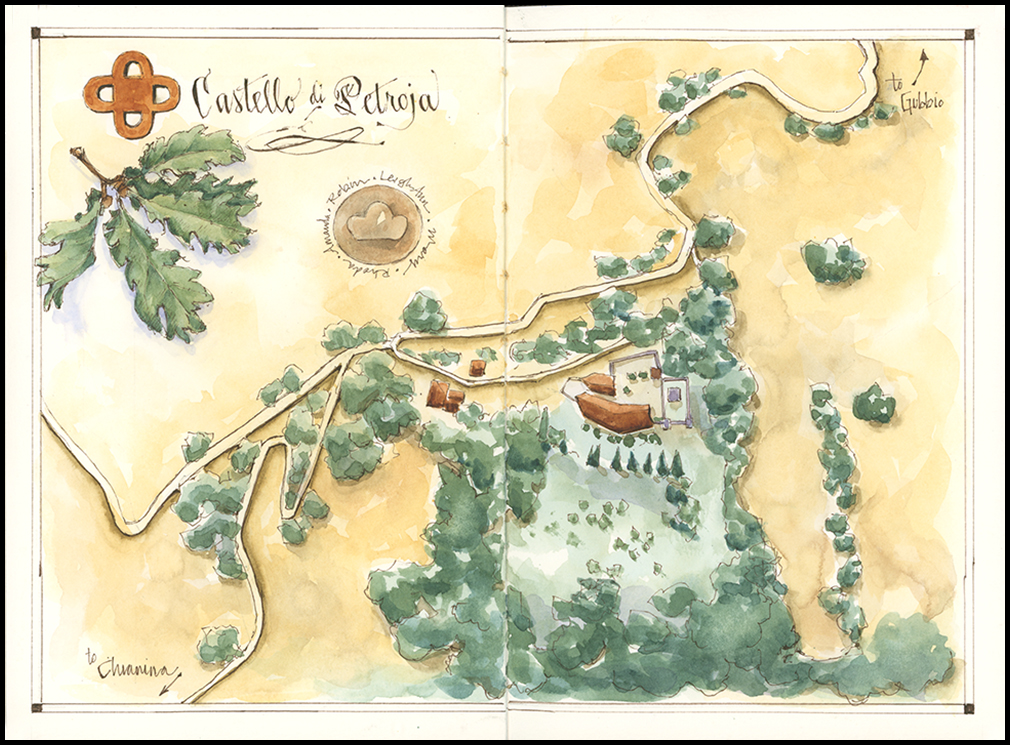
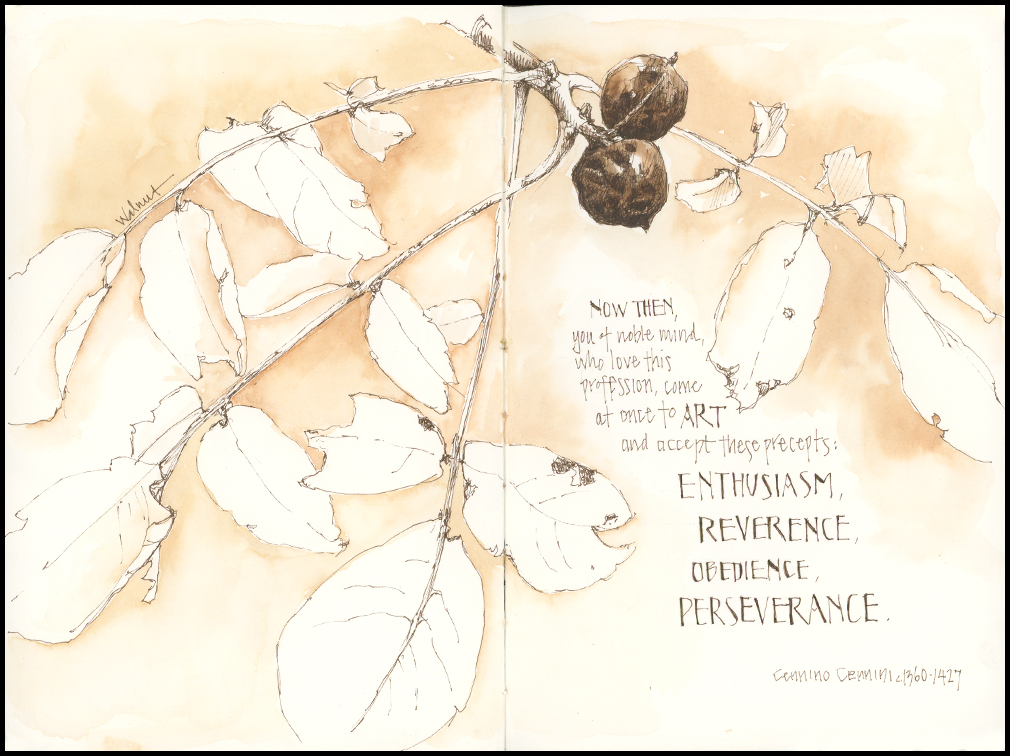
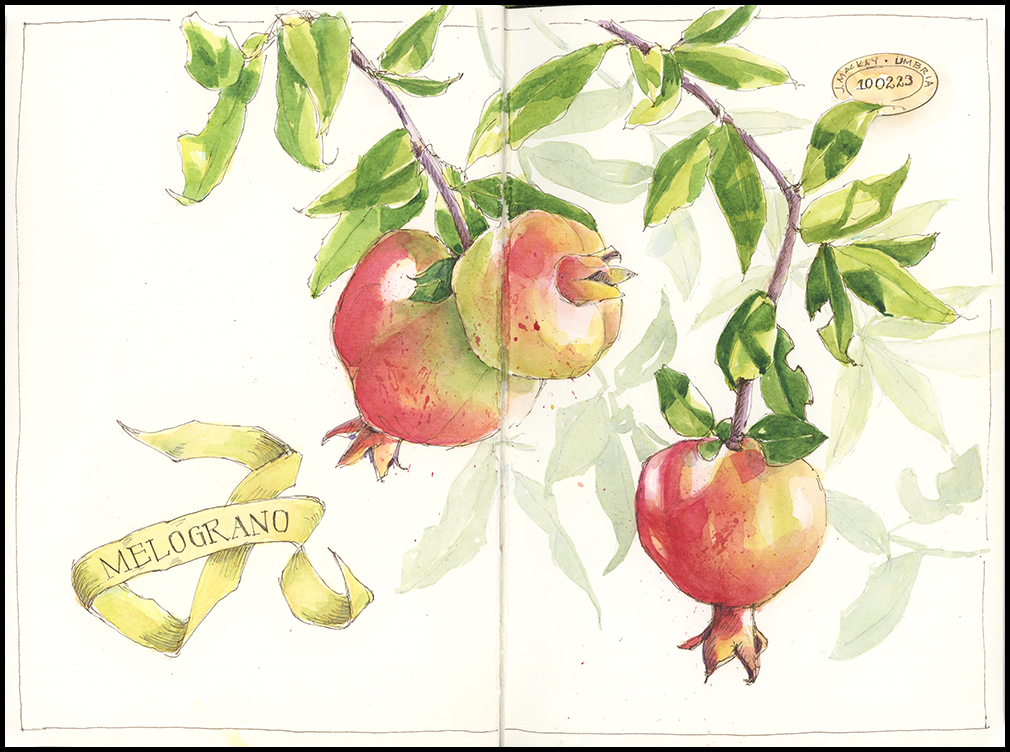
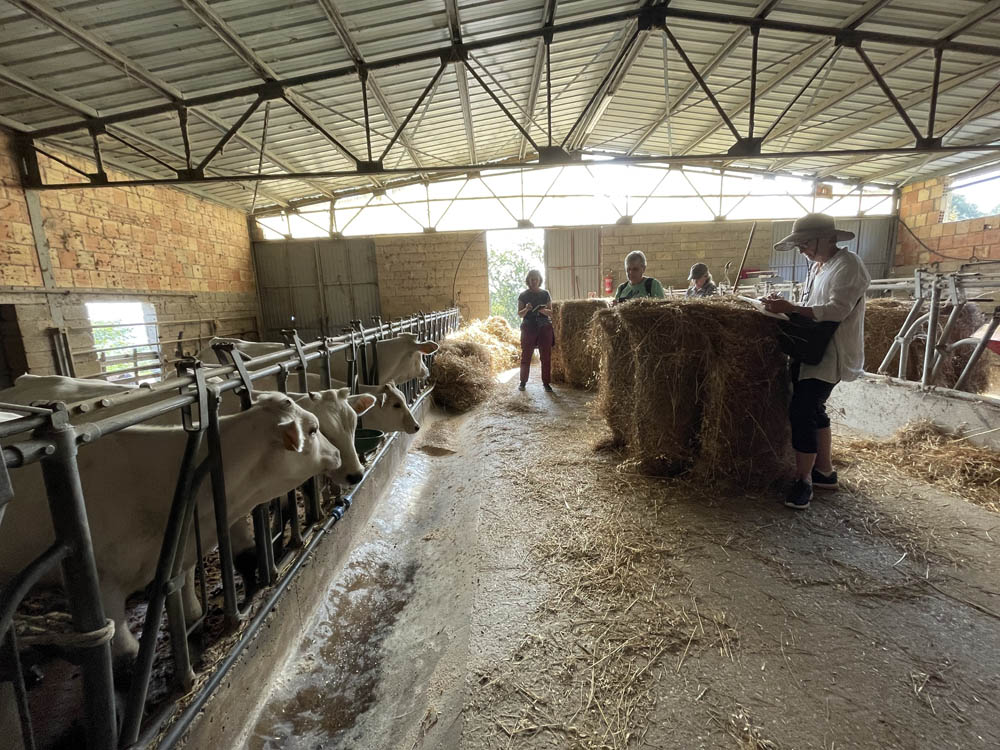
4. We aim to capture a sense of place as well as our experiences here. The group joins me in my enthusiasm for mushrooms and pomegranates and tries their hand at sketching hawks and owls during a falconry demonstration, Chianina cattle from the castle’s farm, breakfast, maps, and more.
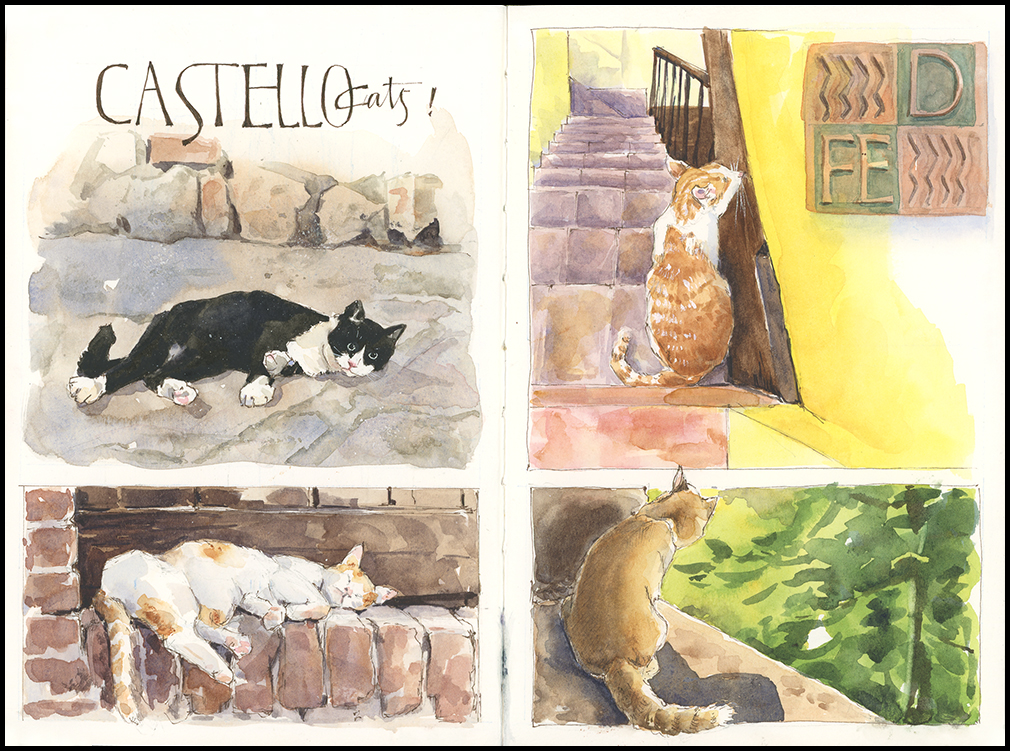
5. We take a midweek day trip to the medieval city of Gubbio. Narrow stone roadways, stairways, and buildings that cling to a steep hillside are the hallmarks of this city, and the views from the piazza and basilica overlooking it all are stunning. After several hours of walking and visiting historic sites, I find a gate in a stone wall that leads to a large park. Its winding shaded pathways offer respite from heat, stone, and uphill climbs, and a perfect place to sketch trees.
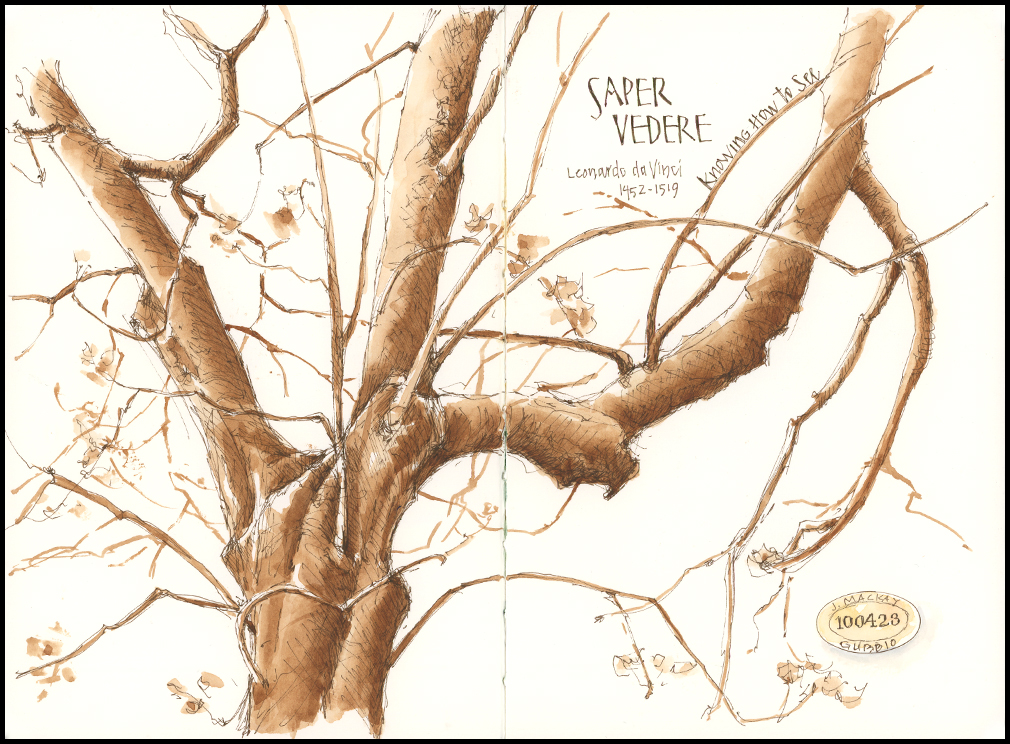
6. The workshop ends on Friday evening with a final show of artwork, some finished and some in progress. The diligence, talent, progress made, and aspirations of each artist are visible in the lines and paint of each journal page. What a joy to be here with such a thoughtful and talented group, to nurture their artistic journeys, and to share this special place. Thanks for coming along virtually.


Finished – Unfinished
I found this Jack-in-the- Pulpit at the edge of our woods a week ago but it didn’t make last week’s Fall Collection. With its bright red berries and arcing leaf, it deserved its own page. Still, its three faded leaflets paled in comparison with the fruit, so I decided to let the berries get the attention. Finished? Unfinished? I think finished, especially after the moth showed up on our porch ceiling and made its way onto the page.

Tips and Techniques– Decision, decisions! Right from the start of every piece, you are making decisions that affect its outcome. Embrace them. Bring your creativity to bear on the subject, composition, and materials to express what you see and what interests you.
p.s. I’ll be taking the next two weeks off of posting as I’m heading to Castello di Petroia in the heart of Italy later this week to teach Sketching the Nature of Italy in Watercolor. I hope to have some good things to share upon my return.
Registration is open for COLLECTING NATURE IN YOUR SKETCHBOOK (online), Thursdays, October 19, November 2, 9, 30 through Winslow Art Center. This is a series and you can sample one or two sessions or sign up for all four at a discounted rate.
Fall Collection 2023
My desk is littered with signs of the changing season. It started with a walnut and an acorn and quickly turned into a full-on collection. I love recording these small treasures, though I’m happy to clean up and have my desk back, too.

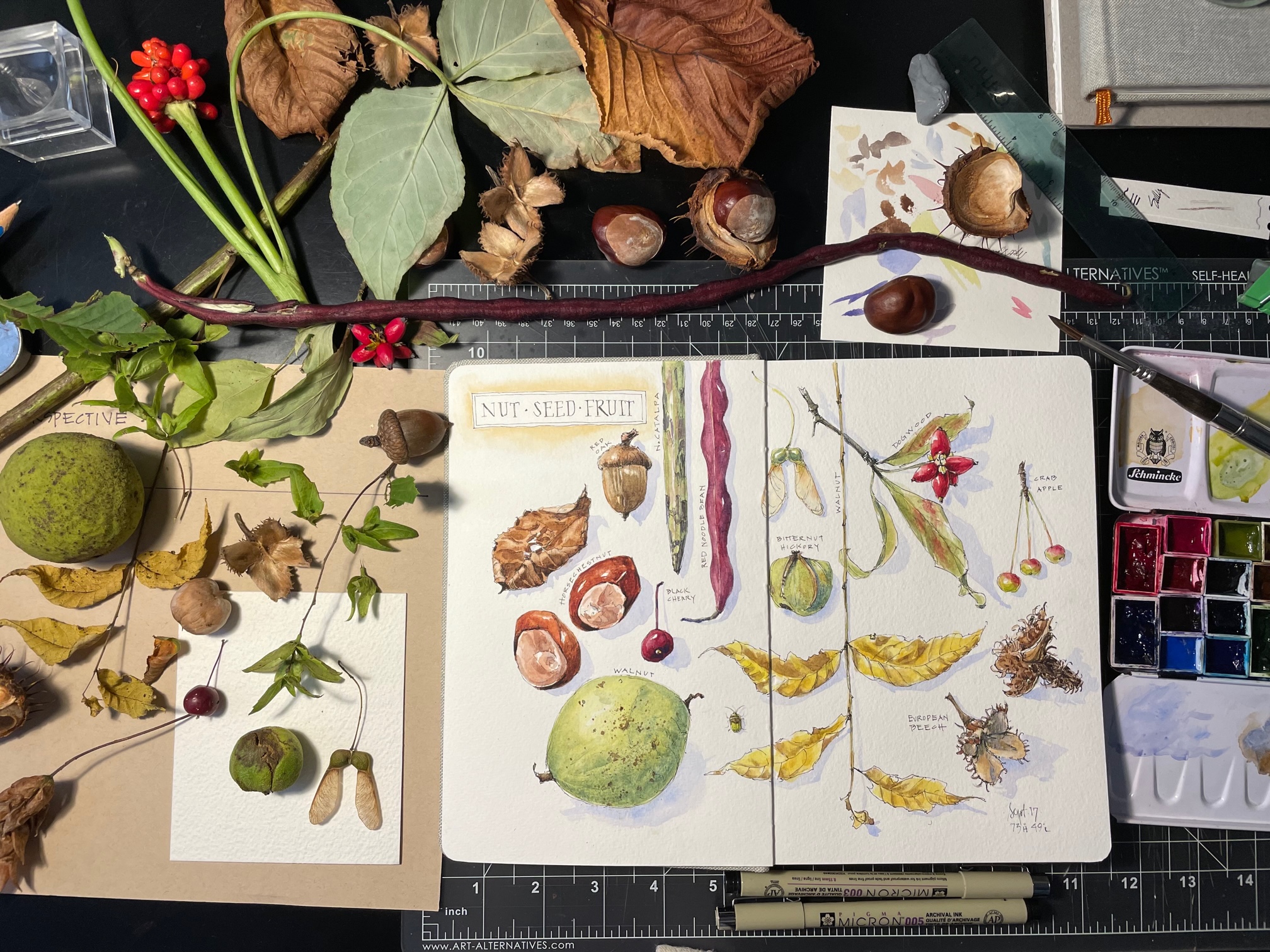
Tips and Techniques– What treasures are you seeing as the season changes? Take a walk or a hike and see how many tree nuts, seeds, and fruits you can find. What’s nice about sketching things like this is that they are easy to bring home and work with as time allows. You can add things as you collect them until the page is full and a beautiful seasonal display appears in your sketchbook.
Coming soon! COLLECTING NATURE IN YOUR SKETCHBOOK
Thursdays, October 19, November 2, 9, 30. Sign up for one or all of the sessions in this series. Taking inspiration from the Paper Museum of 17th century Roman collector Cassiano dal Pozzo, this series explores ways to record a variety of subjects with intention, beauty, and cohesion in your sketchbook. See details on the Workshops page.


 Drawn In